In any rigging operation, few tools are more essential than a sling. Among them, wire rope lifting slings stand out for their strength, durability, and versatility. Whether you’re lifting massive structural components or executing delicate maneuvers in tight quarters, having the right sling, built to the right specifications, is critical.
At LGH, we go beyond the basics to ensure that every wire rope sling in our fleet meets the highest wire rope sling ANSI specifications, industry standards, and safety expectations.
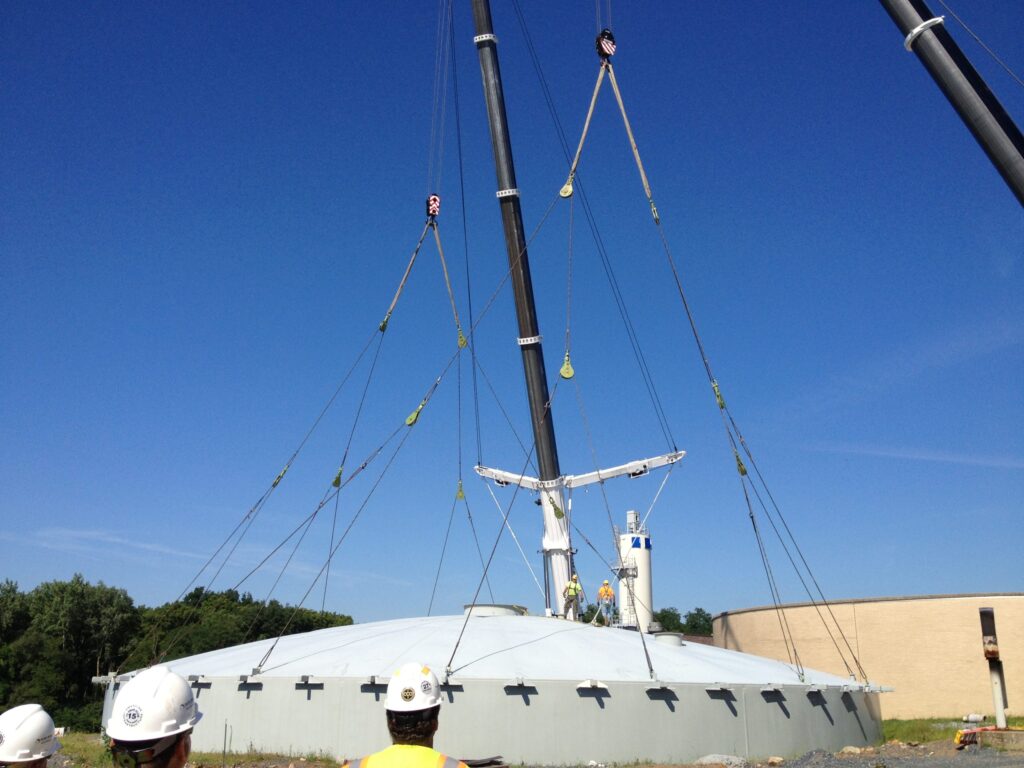
A wire rope sling from LGH.
What Makes Wire Rope Slings So Strong?
A wire rope lifting sling derives its strength from tightly wound strands of high-tensile steel wires twisted around a core—either a single wire, fiber, or independent wire rope core. These strands typically consist of 19 to 109 wires, arranged in specific patterns to balance strength, flexibility, abrasion resistance, and crush resistance.
Safe working loads (SWL) ranging from 5.6 to 485 tons
These slings are built to handle the rigors of industrial lifting across construction, petrochemical, power generation, and more.
Common Wire Rope Configurations: 6×19 vs. 6×36
Typical 6×19 wire rope sling construction features 6 complete strands of wire twisted around a center core strand.
The 6×19 class (six strands of 15–26 wires each) offers superior abrasion and crush resistance. It’s ideal when you need rigidity and resilience, and is available in sizes from ¾” to 1⅛” OD.
The 6×36 class (six strands of 27–49 wires each) prioritizes flexibility while still offering reliable crush resistance. It’s best for applications where sling movement and adaptability are key.
At LGH, we stock both 6×19 and 6×36 wire rope slings in sizes up to 4” OD, including options manufactured by trusted names like LiftAll.
Lang Lay vs. Regular Lay Wire Rope
Wire rope slings are also defined by the direction in which their strands are twisted. This is referred to as the “lay” of the rope.
Regular Lay: Wires are twisted in one direction and strands in the opposite. Offers flexibility, ease of spooling, and better crush resistance. Ideal for most rigging slings.
Lang Lay: Both wires and strands are twisted in the same direction, creating a diagonal appearance. These ropes have greater abrasion resistance and a longer service life but are stiffer and harder to handle.
Both types come in right lay (clockwise) or left lay (counterclockwise) orientations, depending on your winch and drum setup.
Side-by-side comparison shows the difference between Lang and regular lay wire rope slings.
Both regular and Lang lay can be spun clockwise (right lay) or counterclockwise (left lay) as seen in the photo above. The starting point and spooling direction of your winch drum will determine which direction is appropriate for your project.
Proper Lubrication = Longer Life
During manufacturing, wire rope lifting slings are fully lubricated to reduce internal friction and prevent corrosion. Ongoing maintenance is crucial, using a combination of:
Penetrating lubricants (to reach the core)
Coating lubricants (to seal the outer layers and repel moisture)
Neglecting lubrication accelerates wear, weakens the wire rope, and increases the chance of sling failure.
Wire rope slings and sheave blocks from LGH on the jobsite
ANSI Specifications and Safety
To ensure compliance with wire rope sling ANSI specifications, users should always verify:
Sling diameter
Construction type (6×19, 6×36, braided, etc.)
Core type (IWRC, fiber core)
Rated capacity/SWL
Lay direction
Proper end fittings and hardware compatibility
Understanding these specs helps reduce risks and ensures your wire rope rigging is both efficient and compliant.
Selecting the Right Sling for the Job
Each application has different requirements. When choosing between wire rope lifting slings or other types of linfting slings, consider:
Not sure where to start? Our team is always available to help you identify the correct wire rope sling configuration for your specific project.
Looking for a Reliable Wire Rope Sling Rental?
LGH carries one of North America’s largest inventories of wire rope lifting slings and associated rigging equipment—available for fast rental. Whether you need a single-part sling or a high-capacity braided configuration, we’ve got you covered.
Contact LGH to speak with a rental specialist or call 800-878-7305 to get started.
LGH is North America’s largest single organization devoted exclusively to the provision of lifting and moving equipment for rent. LGH holds the most comprehensive inventory for hoisting, rigging, jacking, pulling, material handling, and safety equipment. With over 90,000 pieces, discover your next project solution at RentLGH.com.