Wire Rope Sling Inspection: What to Check Before Every Lift

Wire rope slings are durable, versatile, and built for demanding lifting applications. But like any piece of rigging equipment, they can wear, fatigue, corrode, or become damaged over time.
That is why wire rope sling inspection is so important.
A wire rope sling may not have a fixed expiration date, but it still needs regular inspection before use and throughout its service life. Jobsite conditions, lift frequency, load type, storage, abrasion, heat exposure, and corrosion can all affect sling condition.
In this blog post, we’ll explain what to check during a wire rope sling inspection, when to remove a sling from service, and how proper storage and handling can help extend sling life.
What Should You Check During a Wire Rope Sling Inspection?
During a wire rope sling inspection, check the entire sling body, eyes, fittings, sleeves, hooks, tags, and terminations. Look for broken wires, kinks, birdcaging, crushing, corrosion, heat damage, worn outer wires, damaged fittings, distorted hooks, slipped splices, missing identification, or any condition that creates doubt about the sling’s integrity.
A wire rope sling should be removed from service if damage exceeds applicable removal criteria or if the sling cannot be confirmed safe for use.
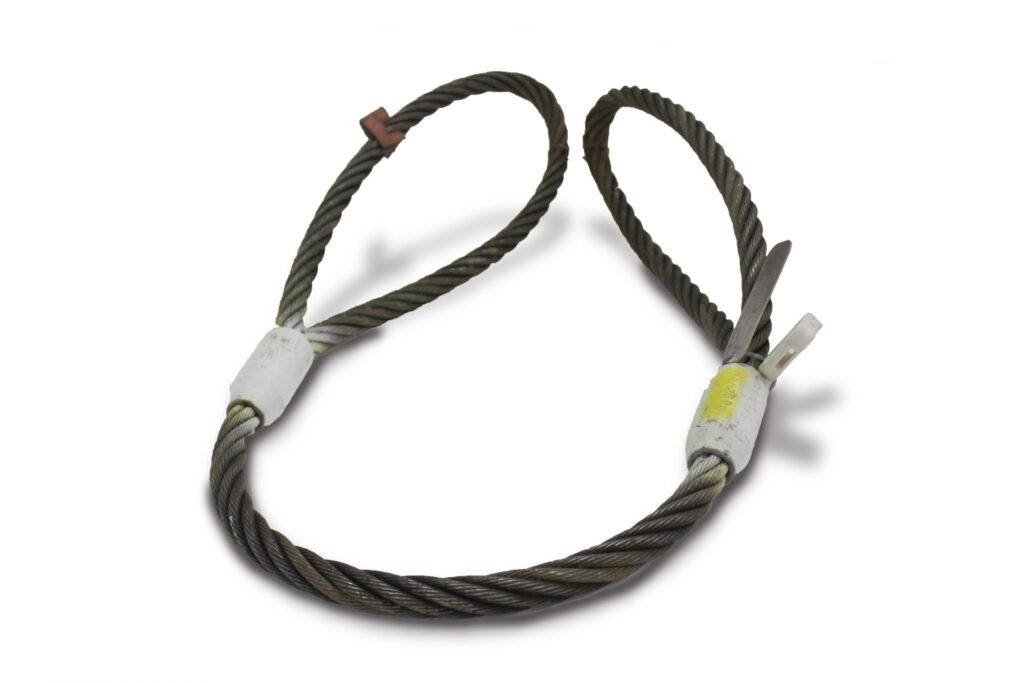
A wire rope sling from LGH
Why Wire Rope Inspection Matters
Wire rope is more than a simple piece of steel cable. It is a carefully engineered assembly made from individual wires, strands, and a core. Each part works together to provide strength, flexibility, and load control.
Because wire rope slings are exposed to bending, abrasion, crushing, moisture, chemicals, dirt, heat, and repeated loading, damage is not always limited to the most visible areas.
Regular wire rope inspection helps crews:
- Identify damage before a lift begins
- Prevent use of unsafe rigging equipment
- Reduce the risk of sling failure
- Protect the load, equipment, and workers
- Maintain inspection documentation
- Extend sling service life through proper care
A quick visual check is helpful, but a proper inspection should cover the full sling from end to end.
Basic Wire Rope Sling Construction

6×19 IWRC wire rope sling.
Wire rope consists of multiple steel wires arranged into strands and wrapped around a central core. Two common core types include:
- Independent Wire Rope Core, or IWRC: A steel core that provides higher strength, durability, and better heat resistance.
- Fiber Core: A synthetic or natural fiber core that offers greater flexibility but lower heat resistance than steel-core rope.
In many industrial lifting applications, IWRC wire rope slings are commonly used because they provide strength and durability for heavy-duty work. Learn more about wire rope sling construction, standards, and best practices from this blog post.
Hand Spliced vs. Mechanically Spliced Wire Rope Slings
Wire rope slings are often fabricated with an eye at each end. The eye can be formed through hand splicing or mechanical splicing.
A hand-spliced wire rope sling has a narrower profile and may be useful in applications with tight clearances. However, hand splicing may provide less capacity depending on the sling design and application.
A mechanically spliced wire rope sling uses a pressed metal sleeve to form the eye. Mechanical splices are common because they provide consistent performance, strength, and efficient production.
During inspection, pay close attention to the sling eyes, sleeves, fittings, and terminations because these areas can experience concentrated stress and wear.
Wire Rope Sling Inspection Checklist
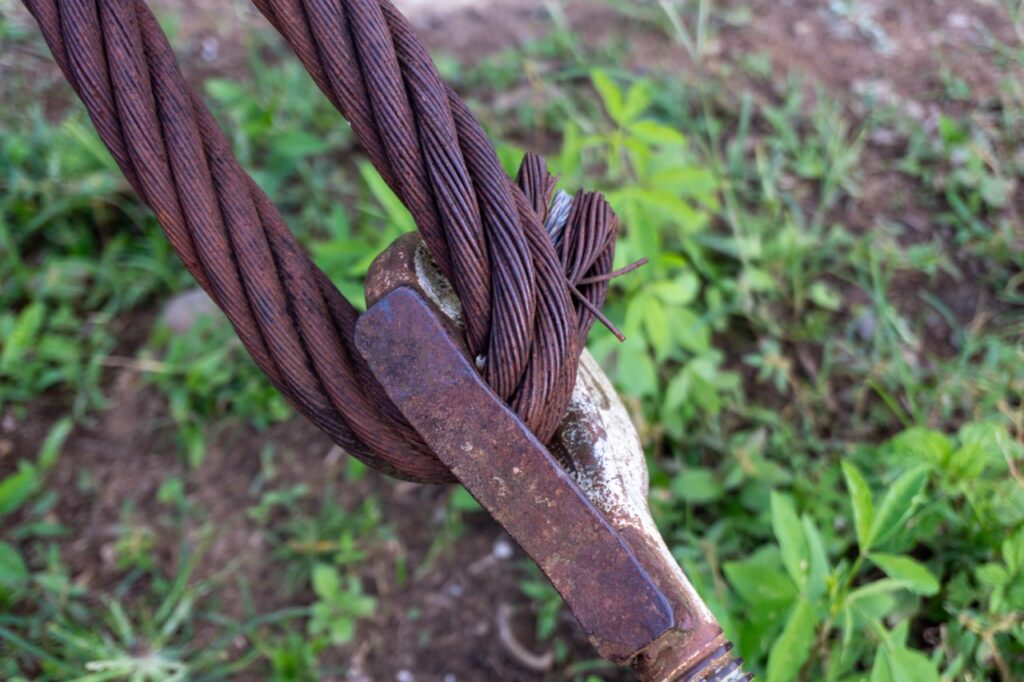
An example of a damaged wire rope sling.
Before using a wire rope sling, lay it out so the full length is visible. Clean off dirt, grease, or debris if needed so damage can be seen clearly.
During inspection, check for:
- Missing or illegible identification tags
- Broken wires
- Worn outer wires
- Kinks
- Birdcaging
- Crushing
- Core deformation
- Strand unlaying
- Severe corrosion
- Heat damage
- Weld spatter
- Damaged sleeves
- Slipped splices
- Distorted hooks
- Damaged fittings
- Cracked, bent, or worn hardware
- Any condition that creates doubt about safe use
Inspect the entire sling, not just the areas that are easiest to see. Pay extra attention to high-wear zones, load contact areas, eyes, hooks, fittings, sleeves, and terminations.
When Should a Wire Rope Sling Be Removed from Service?
A wire rope sling should be removed from service when inspection shows broken wires, excessive wear, kinking, birdcaging, crushing, heat damage, severe corrosion, damaged fittings, slipped splices, distorted hooks, missing identification, or any other condition that may affect safe use.
Common removal-from-service conditions include:
- Too many broken wires in one rope lay or one strand
- Excessive wear on outer wires
- Kinks, crushing, birdcaging, or core deformation
- Heat damage, discoloration, burn marks, or weld spatter
- Severe corrosion on the rope or attachments
- Hooks that are distorted, twisted, cracked, or damaged
- Damaged sleeves or slipped eye splices
- Evidence of strand unlaying or mechanical imbalance
- Missing or illegible sling identification
- Any visible damage that creates uncertainty
If a sling fails inspection, it should be tagged “Do Not Use,” removed from service immediately, and handled according to your company’s safety procedures.
Common Signs of Wire Rope Sling Damage
During wire rope sling inspection, crews should look closely for damage that affects the rope body, eyes, sleeves, hooks, fittings, and terminations. Some damage may be easy to spot, while other conditions may require a closer look at high-wear areas or load contact points.
Common signs of wire rope sling damage include:
-
Broken wires or worn outer wires: Broken wires can indicate fatigue or localized damage. Excessive outer wire wear can reduce rope diameter and weaken the sling.
-
Kinks, birdcaging, crushing, or core deformation: These conditions show that the rope structure has been damaged. Do not try to force the sling back into shape and continue using it.
-
Heat damage, corrosion, or chemical exposure: Discoloration, burn marks, weld spatter, rust, pitting, stiffness, loss of lubrication, or unusual surface texture can all indicate damage.
-
Damaged eyes, sleeves, hooks, or fittings: Look for cracked or deformed sleeves, slipped eye splices, excessive wear at bearing points, bent or twisted hooks, damaged hook latches, cracks, deformation, or signs of overload.
If any damage creates doubt about the sling’s integrity, remove the sling from service and have it evaluated according to your company’s safety procedures.
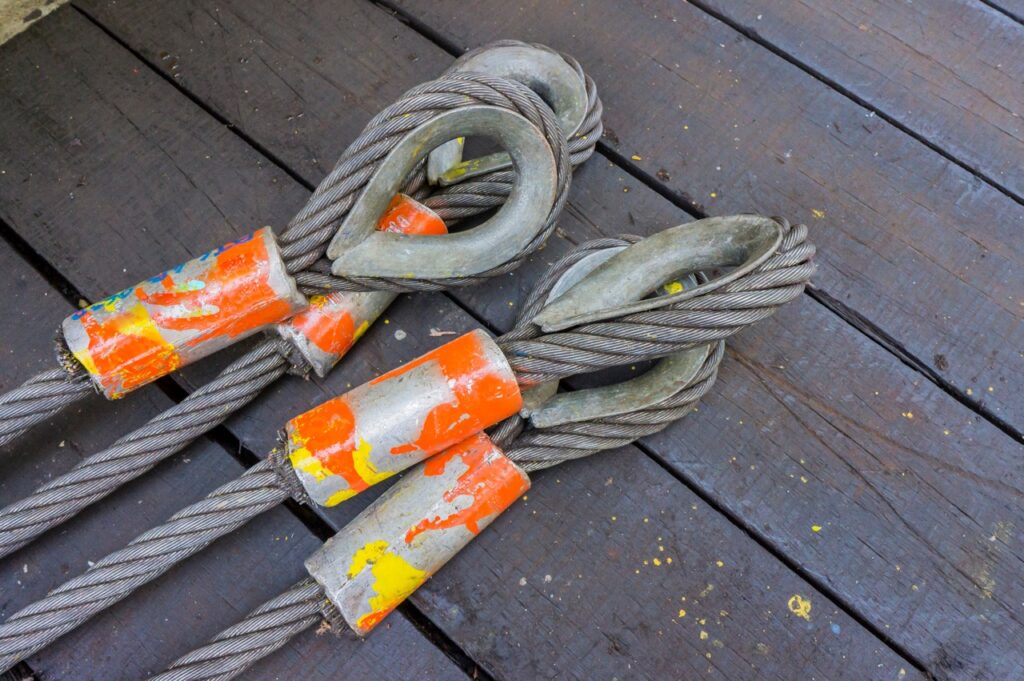
Always check for damaged eyes, sleeves, hooks, and fittings on wire rope slings.
How Often Should Wire Rope Slings Be Inspected?
Wire rope slings should be inspected before use, and they should also receive periodic inspections based on service conditions. The more frequently a sling is used, and the harsher the environment, the more often it should be inspected.
Inspection frequency may depend on:
- Frequency of use
- Severity of service
- Load types
- Exposure to heat, moisture, chemicals, or corrosion
- History of the sling
- Manufacturer guidance
- Company safety procedures
- Applicable standards and regulations
For severe service or frequent use, inspections may need to occur more often than they would for occasional use in a clean environment.
Proper Wire Rope Sling Storage
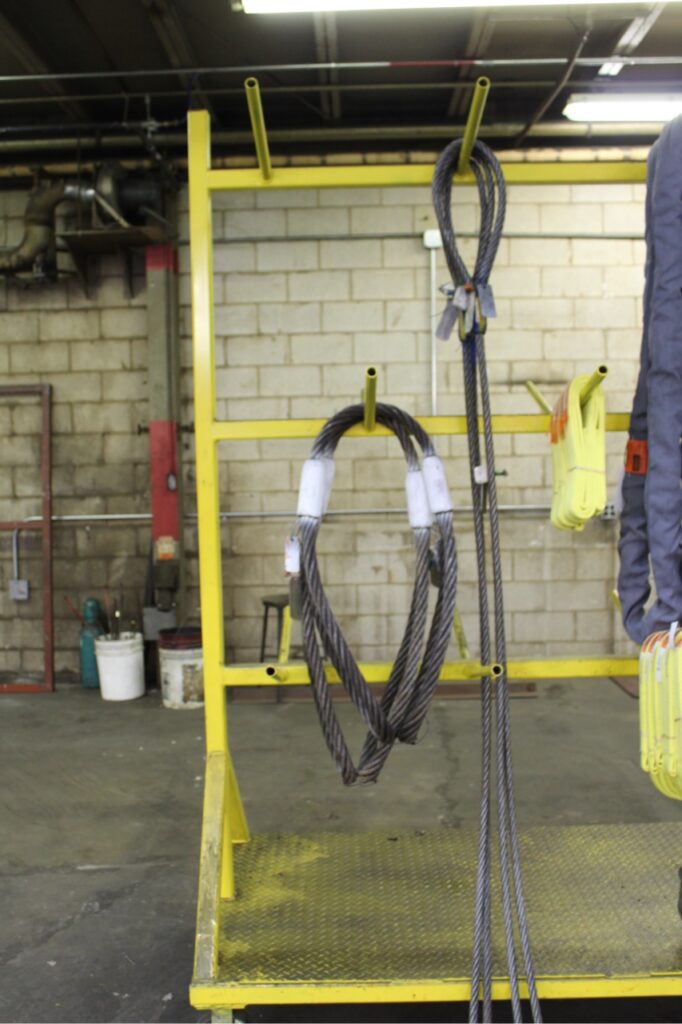
Good storage helps extend sling life and reduce preventable damage. Wire rope slings should be stored in a clean, dry location where they are protected from moisture, chemicals, extreme temperatures, and physical damage.
Best practices include:
- Keep slings off the ground.
- Store slings on racks when possible.
- Keep slings away from standing water.
- Avoid chemical exposure.
- Protect slings from excessive heat.
- Do not store slings under loads or machinery.
- Avoid sharp bends, crushing, or kinking during storage.
- Reapply proper lubrication when needed and approved.
Storage does not replace inspection. Even properly stored slings should be inspected before use.
Can Wire Rope Slings Be Repaired?
Wire rope sling repairs should only be performed by the original manufacturer or a qualified service provider. Repairs must meet the required specifications, and the sling must be properly tested, tagged, and documented before returning to service.
Not all damage can be repaired. If the wire rope body is damaged by heat, corrosion, crushing, wear, or deformation, the sling may need to be scrapped rather than repaired.
Never attempt field repairs, welding, modification, or makeshift fixes on a wire rope sling.
Rent Wire Rope Slings from LGH
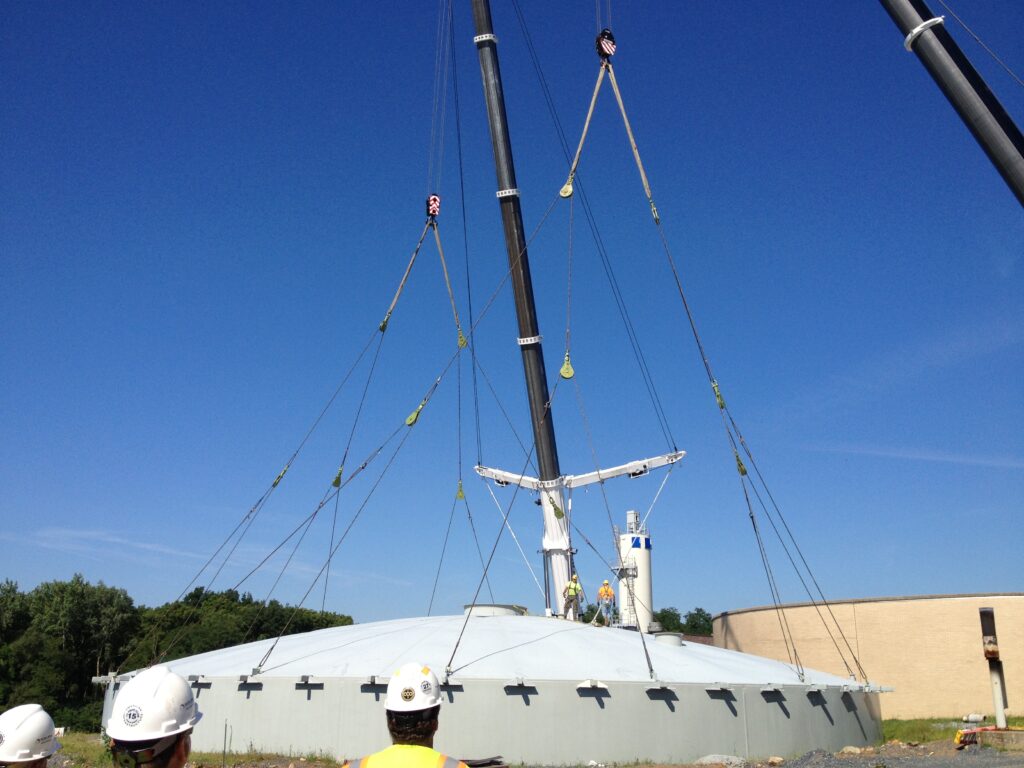
Wire rope slings and sheave blocks from LGH, being used to lift a water tank.
LGH offers wire rope slings and other below-the-hook rigging equipment for rent. Our rental specialists can help match the right sling, shackle, hoist, beam, or rigging hardware to your lifting application.
LGH rental equipment is tested, certified, and job-ready, helping crews access the rigging equipment they need without taking on long-term ownership, storage, inspection, and maintenance responsibilities.
Conclusion
Wire rope sling inspection is a critical part of safe lifting. Before use, crews should inspect the full sling body, eyes, sleeves, hooks, fittings, and identification tags for damage, wear, deformation, corrosion, heat exposure, broken wires, and other removal-from-service conditions.
Wire rope inspection should never be rushed. If a sling looks questionable, remove it from service and have it evaluated according to your company’s safety procedures and applicable standards.
For help selecting wire rope slings or other rigging equipment for your next lift, contact LGH today or call 800-878-7305 to speak with a rental specialist.
LGH is North America’s largest single organization devoted exclusively to the provision of lifting and moving equipment for rent. LGH holds the most comprehensive inventory for hoisting, rigging, jacking, pulling, material handling, and safety equipment. With over 90,000 pieces, discover your next project solution at RentLGH.com.
Wire Rope Sling Inspection: What to Check Before Every Lift
Wire rope slings are durable, versatile, and built for demanding lifting applications. But like any piece of rigging equipment, they can wear, fatigue, corrode, or become damaged over time.
That is why wire rope sling inspection is so important.
A wire rope sling may not have a fixed expiration date, but it still needs regular inspection before use and throughout its service life. Jobsite conditions, lift frequency, load type, storage, abrasion, heat exposure, and corrosion can all affect sling condition.
In this blog post, we’ll explain what to check during a wire rope sling inspection, when to remove a sling from service, and how proper storage and handling can help extend sling life.
What Should You Check During a Wire Rope Sling Inspection?
During a wire rope sling inspection, check the entire sling body, eyes, fittings, sleeves, hooks, tags, and terminations. Look for broken wires, kinks, birdcaging, crushing, corrosion, heat damage, worn outer wires, damaged fittings, distorted hooks, slipped splices, missing identification, or any condition that creates doubt about the sling’s integrity.
A wire rope sling should be removed from service if damage exceeds applicable removal criteria or if the sling cannot be confirmed safe for use.
A wire rope sling from LGH
Why Wire Rope Inspection Matters
Wire rope is more than a simple piece of steel cable. It is a carefully engineered assembly made from individual wires, strands, and a core. Each part works together to provide strength, flexibility, and load control.
Because wire rope slings are exposed to bending, abrasion, crushing, moisture, chemicals, dirt, heat, and repeated loading, damage is not always limited to the most visible areas.
Regular wire rope inspection helps crews:
- Identify damage before a lift begins
- Prevent use of unsafe rigging equipment
- Reduce the risk of sling failure
- Protect the load, equipment, and workers
- Maintain inspection documentation
- Extend sling service life through proper care
A quick visual check is helpful, but a proper inspection should cover the full sling from end to end.
Basic Wire Rope Sling Construction
6×19 IWRC wire rope sling.
Wire rope consists of multiple steel wires arranged into strands and wrapped around a central core. Two common core types include:
- Independent Wire Rope Core, or IWRC: A steel core that provides higher strength, durability, and better heat resistance.
- Fiber Core: A synthetic or natural fiber core that offers greater flexibility but lower heat resistance than steel-core rope.
In many industrial lifting applications, IWRC wire rope slings are commonly used because they provide strength and durability for heavy-duty work. Learn more about wire rope sling construction, standards, and best practices from this blog post.
Hand Spliced vs. Mechanically Spliced Wire Rope Slings
Wire rope slings are often fabricated with an eye at each end. The eye can be formed through hand splicing or mechanical splicing.
A hand-spliced wire rope sling has a narrower profile and may be useful in applications with tight clearances. However, hand splicing may provide less capacity depending on the sling design and application.
A mechanically spliced wire rope sling uses a pressed metal sleeve to form the eye. Mechanical splices are common because they provide consistent performance, strength, and efficient production.
During inspection, pay close attention to the sling eyes, sleeves, fittings, and terminations because these areas can experience concentrated stress and wear.
Wire Rope Sling Inspection Checklist
An example of a damaged wire rope sling.
Before using a wire rope sling, lay it out so the full length is visible. Clean off dirt, grease, or debris if needed so damage can be seen clearly.
During inspection, check for:
- Missing or illegible identification tags
- Broken wires
- Worn outer wires
- Kinks
- Birdcaging
- Crushing
- Core deformation
- Strand unlaying
- Severe corrosion
- Heat damage
- Weld spatter
- Damaged sleeves
- Slipped splices
- Distorted hooks
- Damaged fittings
- Cracked, bent, or worn hardware
- Any condition that creates doubt about safe use
Inspect the entire sling, not just the areas that are easiest to see. Pay extra attention to high-wear zones, load contact areas, eyes, hooks, fittings, sleeves, and terminations.
When Should a Wire Rope Sling Be Removed from Service?
A wire rope sling should be removed from service when inspection shows broken wires, excessive wear, kinking, birdcaging, crushing, heat damage, severe corrosion, damaged fittings, slipped splices, distorted hooks, missing identification, or any other condition that may affect safe use.
Common removal-from-service conditions include:
- Too many broken wires in one rope lay or one strand
- Excessive wear on outer wires
- Kinks, crushing, birdcaging, or core deformation
- Heat damage, discoloration, burn marks, or weld spatter
- Severe corrosion on the rope or attachments
- Hooks that are distorted, twisted, cracked, or damaged
- Damaged sleeves or slipped eye splices
- Evidence of strand unlaying or mechanical imbalance
- Missing or illegible sling identification
- Any visible damage that creates uncertainty
If a sling fails inspection, it should be tagged “Do Not Use,” removed from service immediately, and handled according to your company’s safety procedures.
Common Signs of Wire Rope Sling Damage
During wire rope sling inspection, crews should look closely for damage that affects the rope body, eyes, sleeves, hooks, fittings, and terminations. Some damage may be easy to spot, while other conditions may require a closer look at high-wear areas or load contact points.
Common signs of wire rope sling damage include:
-
Broken wires or worn outer wires: Broken wires can indicate fatigue or localized damage. Excessive outer wire wear can reduce rope diameter and weaken the sling.
-
Kinks, birdcaging, crushing, or core deformation: These conditions show that the rope structure has been damaged. Do not try to force the sling back into shape and continue using it.
-
Heat damage, corrosion, or chemical exposure: Discoloration, burn marks, weld spatter, rust, pitting, stiffness, loss of lubrication, or unusual surface texture can all indicate damage.
-
Damaged eyes, sleeves, hooks, or fittings: Look for cracked or deformed sleeves, slipped eye splices, excessive wear at bearing points, bent or twisted hooks, damaged hook latches, cracks, deformation, or signs of overload.
If any damage creates doubt about the sling’s integrity, remove the sling from service and have it evaluated according to your company’s safety procedures.
Always check for damaged eyes, sleeves, hooks, and fittings on wire rope slings.
How Often Should Wire Rope Slings Be Inspected?
Wire rope slings should be inspected before use, and they should also receive periodic inspections based on service conditions. The more frequently a sling is used, and the harsher the environment, the more often it should be inspected.
Inspection frequency may depend on:
- Frequency of use
- Severity of service
- Load types
- Exposure to heat, moisture, chemicals, or corrosion
- History of the sling
- Manufacturer guidance
- Company safety procedures
- Applicable standards and regulations
For severe service or frequent use, inspections may need to occur more often than they would for occasional use in a clean environment.
Proper Wire Rope Sling Storage
Good storage helps extend sling life and reduce preventable damage. Wire rope slings should be stored in a clean, dry location where they are protected from moisture, chemicals, extreme temperatures, and physical damage.
Best practices include:
- Keep slings off the ground.
- Store slings on racks when possible.
- Keep slings away from standing water.
- Avoid chemical exposure.
- Protect slings from excessive heat.
- Do not store slings under loads or machinery.
- Avoid sharp bends, crushing, or kinking during storage.
- Reapply proper lubrication when needed and approved.
Storage does not replace inspection. Even properly stored slings should be inspected before use.
Can Wire Rope Slings Be Repaired?
Wire rope sling repairs should only be performed by the original manufacturer or a qualified service provider. Repairs must meet the required specifications, and the sling must be properly tested, tagged, and documented before returning to service.
Not all damage can be repaired. If the wire rope body is damaged by heat, corrosion, crushing, wear, or deformation, the sling may need to be scrapped rather than repaired.
Never attempt field repairs, welding, modification, or makeshift fixes on a wire rope sling.
Rent Wire Rope Slings from LGH
Wire rope slings and sheave blocks from LGH, being used to lift a water tank.
LGH offers wire rope slings and other below-the-hook rigging equipment for rent. Our rental specialists can help match the right sling, shackle, hoist, beam, or rigging hardware to your lifting application.
LGH rental equipment is tested, certified, and job-ready, helping crews access the rigging equipment they need without taking on long-term ownership, storage, inspection, and maintenance responsibilities.
Conclusion
Wire rope sling inspection is a critical part of safe lifting. Before use, crews should inspect the full sling body, eyes, sleeves, hooks, fittings, and identification tags for damage, wear, deformation, corrosion, heat exposure, broken wires, and other removal-from-service conditions.
Wire rope inspection should never be rushed. If a sling looks questionable, remove it from service and have it evaluated according to your company’s safety procedures and applicable standards.
For help selecting wire rope slings or other rigging equipment for your next lift, contact LGH today or call 800-878-7305 to speak with a rental specialist.
LGH is North America’s largest single organization devoted exclusively to the provision of lifting and moving equipment for rent. LGH holds the most comprehensive inventory for hoisting, rigging, jacking, pulling, material handling, and safety equipment. With over 90,000 pieces, discover your next project solution at RentLGH.com.
Wire Rope Sling Inspection: What to Check Before Every Lift
Wire rope slings are durable, versatile, and built for demanding lifting applications. But like any piece of rigging equipment, they can wear, fatigue, corrode, or become damaged over time.
That is why wire rope sling inspection is so important.
A wire rope sling may not have a fixed expiration date, but it still needs regular inspection before use and throughout its service life. Jobsite conditions, lift frequency, load type, storage, abrasion, heat exposure, and corrosion can all affect sling condition.
In this blog post, we’ll explain what to check during a wire rope sling inspection, when to remove a sling from service, and how proper storage and handling can help extend sling life.
What Should You Check During a Wire Rope Sling Inspection?
During a wire rope sling inspection, check the entire sling body, eyes, fittings, sleeves, hooks, tags, and terminations. Look for broken wires, kinks, birdcaging, crushing, corrosion, heat damage, worn outer wires, damaged fittings, distorted hooks, slipped splices, missing identification, or any condition that creates doubt about the sling’s integrity.
A wire rope sling should be removed from service if damage exceeds applicable removal criteria or if the sling cannot be confirmed safe for use.
A wire rope sling from LGH
Why Wire Rope Inspection Matters
Wire rope is more than a simple piece of steel cable. It is a carefully engineered assembly made from individual wires, strands, and a core. Each part works together to provide strength, flexibility, and load control.
Because wire rope slings are exposed to bending, abrasion, crushing, moisture, chemicals, dirt, heat, and repeated loading, damage is not always limited to the most visible areas.
Regular wire rope inspection helps crews:
- Identify damage before a lift begins
- Prevent use of unsafe rigging equipment
- Reduce the risk of sling failure
- Protect the load, equipment, and workers
- Maintain inspection documentation
- Extend sling service life through proper care
A quick visual check is helpful, but a proper inspection should cover the full sling from end to end.
Basic Wire Rope Sling Construction
6×19 IWRC wire rope sling.
Wire rope consists of multiple steel wires arranged into strands and wrapped around a central core. Two common core types include:
- Independent Wire Rope Core, or IWRC: A steel core that provides higher strength, durability, and better heat resistance.
- Fiber Core: A synthetic or natural fiber core that offers greater flexibility but lower heat resistance than steel-core rope.
In many industrial lifting applications, IWRC wire rope slings are commonly used because they provide strength and durability for heavy-duty work. Learn more about wire rope sling construction, standards, and best practices from this blog post.
Hand Spliced vs. Mechanically Spliced Wire Rope Slings
Wire rope slings are often fabricated with an eye at each end. The eye can be formed through hand splicing or mechanical splicing.
A hand-spliced wire rope sling has a narrower profile and may be useful in applications with tight clearances. However, hand splicing may provide less capacity depending on the sling design and application.
A mechanically spliced wire rope sling uses a pressed metal sleeve to form the eye. Mechanical splices are common because they provide consistent performance, strength, and efficient production.
During inspection, pay close attention to the sling eyes, sleeves, fittings, and terminations because these areas can experience concentrated stress and wear.
Wire Rope Sling Inspection Checklist
An example of a damaged wire rope sling.
Before using a wire rope sling, lay it out so the full length is visible. Clean off dirt, grease, or debris if needed so damage can be seen clearly.
During inspection, check for:
- Missing or illegible identification tags
- Broken wires
- Worn outer wires
- Kinks
- Birdcaging
- Crushing
- Core deformation
- Strand unlaying
- Severe corrosion
- Heat damage
- Weld spatter
- Damaged sleeves
- Slipped splices
- Distorted hooks
- Damaged fittings
- Cracked, bent, or worn hardware
- Any condition that creates doubt about safe use
Inspect the entire sling, not just the areas that are easiest to see. Pay extra attention to high-wear zones, load contact areas, eyes, hooks, fittings, sleeves, and terminations.
When Should a Wire Rope Sling Be Removed from Service?
A wire rope sling should be removed from service when inspection shows broken wires, excessive wear, kinking, birdcaging, crushing, heat damage, severe corrosion, damaged fittings, slipped splices, distorted hooks, missing identification, or any other condition that may affect safe use.
Common removal-from-service conditions include:
- Too many broken wires in one rope lay or one strand
- Excessive wear on outer wires
- Kinks, crushing, birdcaging, or core deformation
- Heat damage, discoloration, burn marks, or weld spatter
- Severe corrosion on the rope or attachments
- Hooks that are distorted, twisted, cracked, or damaged
- Damaged sleeves or slipped eye splices
- Evidence of strand unlaying or mechanical imbalance
- Missing or illegible sling identification
- Any visible damage that creates uncertainty
If a sling fails inspection, it should be tagged “Do Not Use,” removed from service immediately, and handled according to your company’s safety procedures.
Common Signs of Wire Rope Sling Damage
During wire rope sling inspection, crews should look closely for damage that affects the rope body, eyes, sleeves, hooks, fittings, and terminations. Some damage may be easy to spot, while other conditions may require a closer look at high-wear areas or load contact points.
Common signs of wire rope sling damage include:
-
Broken wires or worn outer wires: Broken wires can indicate fatigue or localized damage. Excessive outer wire wear can reduce rope diameter and weaken the sling.
-
Kinks, birdcaging, crushing, or core deformation: These conditions show that the rope structure has been damaged. Do not try to force the sling back into shape and continue using it.
-
Heat damage, corrosion, or chemical exposure: Discoloration, burn marks, weld spatter, rust, pitting, stiffness, loss of lubrication, or unusual surface texture can all indicate damage.
-
Damaged eyes, sleeves, hooks, or fittings: Look for cracked or deformed sleeves, slipped eye splices, excessive wear at bearing points, bent or twisted hooks, damaged hook latches, cracks, deformation, or signs of overload.
If any damage creates doubt about the sling’s integrity, remove the sling from service and have it evaluated according to your company’s safety procedures.
Always check for damaged eyes, sleeves, hooks, and fittings on wire rope slings.
How Often Should Wire Rope Slings Be Inspected?
Wire rope slings should be inspected before use, and they should also receive periodic inspections based on service conditions. The more frequently a sling is used, and the harsher the environment, the more often it should be inspected.
Inspection frequency may depend on:
- Frequency of use
- Severity of service
- Load types
- Exposure to heat, moisture, chemicals, or corrosion
- History of the sling
- Manufacturer guidance
- Company safety procedures
- Applicable standards and regulations
For severe service or frequent use, inspections may need to occur more often than they would for occasional use in a clean environment.
Proper Wire Rope Sling Storage
Good storage helps extend sling life and reduce preventable damage. Wire rope slings should be stored in a clean, dry location where they are protected from moisture, chemicals, extreme temperatures, and physical damage.
Best practices include:
- Keep slings off the ground.
- Store slings on racks when possible.
- Keep slings away from standing water.
- Avoid chemical exposure.
- Protect slings from excessive heat.
- Do not store slings under loads or machinery.
- Avoid sharp bends, crushing, or kinking during storage.
- Reapply proper lubrication when needed and approved.
Storage does not replace inspection. Even properly stored slings should be inspected before use.
Can Wire Rope Slings Be Repaired?
Wire rope sling repairs should only be performed by the original manufacturer or a qualified service provider. Repairs must meet the required specifications, and the sling must be properly tested, tagged, and documented before returning to service.
Not all damage can be repaired. If the wire rope body is damaged by heat, corrosion, crushing, wear, or deformation, the sling may need to be scrapped rather than repaired.
Never attempt field repairs, welding, modification, or makeshift fixes on a wire rope sling.
Rent Wire Rope Slings from LGH
Wire rope slings and sheave blocks from LGH, being used to lift a water tank.
LGH offers wire rope slings and other below-the-hook rigging equipment for rent. Our rental specialists can help match the right sling, shackle, hoist, beam, or rigging hardware to your lifting application.
LGH rental equipment is tested, certified, and job-ready, helping crews access the rigging equipment they need without taking on long-term ownership, storage, inspection, and maintenance responsibilities.
Conclusion
Wire rope sling inspection is a critical part of safe lifting. Before use, crews should inspect the full sling body, eyes, sleeves, hooks, fittings, and identification tags for damage, wear, deformation, corrosion, heat exposure, broken wires, and other removal-from-service conditions.
Wire rope inspection should never be rushed. If a sling looks questionable, remove it from service and have it evaluated according to your company’s safety procedures and applicable standards.
For help selecting wire rope slings or other rigging equipment for your next lift, contact LGH today or call 800-878-7305 to speak with a rental specialist.
LGH is North America’s largest single organization devoted exclusively to the provision of lifting and moving equipment for rent. LGH holds the most comprehensive inventory for hoisting, rigging, jacking, pulling, material handling, and safety equipment. With over 90,000 pieces, discover your next project solution at RentLGH.com.