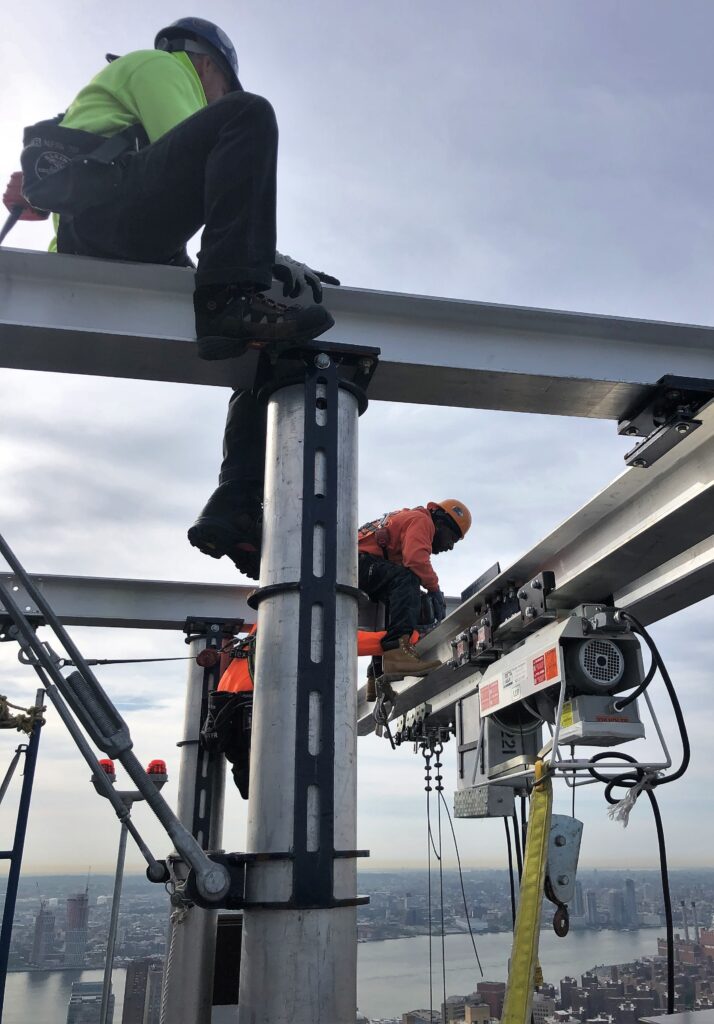
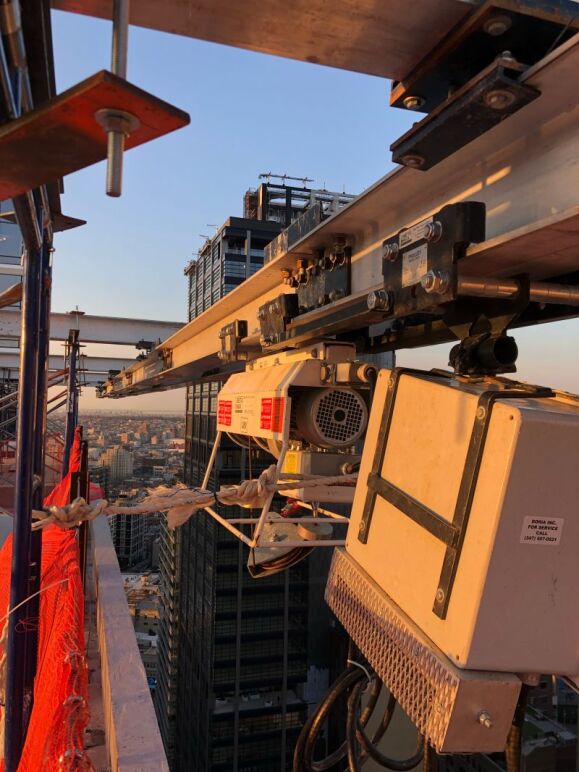
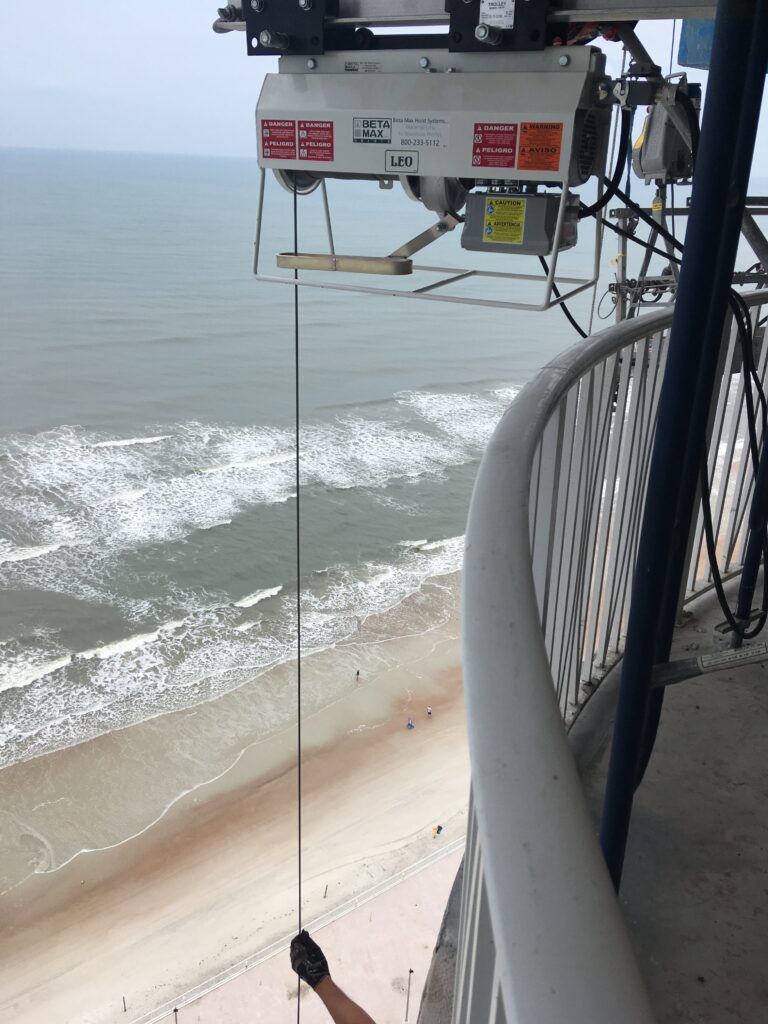
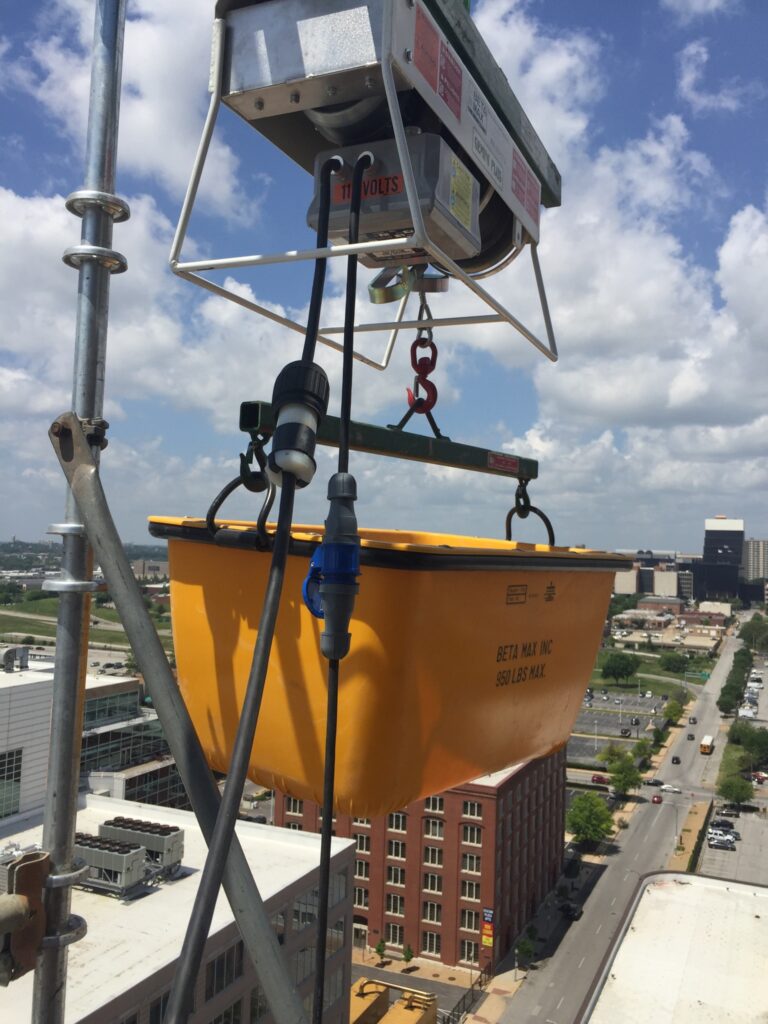
Learning how to use a Beta Max hoist starts with proper setup, inspection, power supply, and safe operation. Beta Max hoists are portable electric cable hoists commonly used on scaffolding, construction sites, maintenance projects, and other material handling applications where crews need to move materials vertically.
These hoists are known for their portability, speed, and versatility, but they still require the right setup and operating procedures. Before installing or operating a Beta Max electric cable hoist, crews should always review the manufacturer’s manual, use-and-care instructions, and jobsite safety requirements.
In this blog, we’ll also highlight two LGH YouTube videos. The first explains how to install and use a Beta Max hoist. The second covers common troubleshooting steps when the hoist is not operating as expected.
What Is a Beta Max Hoist?
A Beta Max hoist is a portable electric cable hoist used to lift materials vertically. These hoists are often used with scaffolding, but they can also support other approved lifting applications when paired with the right mounting system and support structure.
Beta Max hoists are commonly used in construction, masonry, maintenance, industrial work, and material handling applications. Depending on the model and configuration, LGH rents Beta Max hoists with capacities ranging from 600 lbs. to 2,000 lbs.
Because these hoists use wire rope instead of chain, proper setup matters. The hoist and support system must remain level and plumb so the wire rope spools correctly on the drum.
How Do You Use a Beta Max Hoist Safely?
To use a Beta Max hoist safely, crews should inspect the hoist before each shift, confirm the proper power supply, install the hoist on an approved load-bearing structure, keep the hoist level and plumb, lift loads straight up and down, avoid standing under the load, and follow the manufacturer’s manual.
Before operating the hoist, crews should confirm that the load does not exceed the hoist’s rated capacity and that all hardware, rigging, mounting equipment, and power connections are correct.
1. Read the Manual Before Use
The manufacturer’s manual is the best source for proper installation, use, inspection, maintenance, and troubleshooting information. Beta Max hoist models can have different requirements, especially when it comes to power supply, mounting options, capacity, sheave blocks, and maintenance intervals. You can find the electric cable hoist product manuals from Beta Max here.
Before using the hoist, review the manual and confirm:
Rated capacity
Power requirements
Cord length and gauge requirements
Mounting instructions
Counterweight requirements
Inspection steps
Limit switch operation
Maintenance requirements
Troubleshooting guidance
Taking time to read the manual can help prevent setup issues, power problems, equipment damage, and unsafe operation.
2. Pre-Operation Inspection
Crews should conduct a pre-operational inspection before each shift. A trained person should inspect the hoist, wire rope, hook, pendant, power connections, mounting system, track, trolley, and related hardware.
Before use, check for:
Visible wear or damage
Loose or missing hardware
Proper pendant connection
Correct power supply
Proper wire rope condition
Smooth hook and latch operation
Correct hoist mounting
Proper trolley and track engagement
Level and plumb setup
Clear load path
Do not operate the hoist if any part of the system appears damaged, loose, misaligned, or unsafe.
3. Check the Upper Limit Switch
Crews should check the upper limit switch at the start of each shift. The upper limit switch helps stop the load block before it contacts and damages the hoist.
If the upper limit switch does not work properly, the load block can travel too far upward. That can damage the hoist and create a load drop risk.
Always verify the limit switch according to the manufacturer’s instructions before operation.
4. Confirm the Power Supply
Power supply issues are one of the most common causes of Beta Max hoist problems. Before operating the hoist, confirm that the voltage, amperage, cord length, cord gauge, plug, and connections match the hoist requirements.
Some Beta Max models operate on 115V power, while others require 220V power. A 115V model may draw up to 12 amps at full load, while a 220V model may draw more depending on the unit.
If the hoist does not move, only moves in one direction, clicks, hums, or struggles to lift, the power supply should be one of the first things checked.
5. Keep the Hoist Level and Plumb
A Beta Max hoist should remain level and plumb during operation. If the hoist or support system is out of level, the wire rope can spool unevenly on the drum.
Improper spooling can cause the rope to pile up on one side. If the rope shifts or becomes loose, it can create a dangerous shock load effect.
For best operation, lift loads straight up and down. Do not side-pull, drag the load, or use taglines to force the load into position.
Video: How to Use a Beta Max Builders Hoist
This LGH video walks through key setup and operating considerations for a Beta Max builders hoist. It covers scaffold track installation, mounting, power requirements, pendant connection, proper leveling, and wire rope spooling.
A few important takeaways from the video include:
Install the hoist on a flat, smooth, level surface when preparing the assembly.
Have a qualified person install the hoist.
Confirm the scaffolding system and hoist are level and plumb.
Consult a qualified person or engineer when determining counterweight requirements.
Verify the correct power supply before operation.
Connect the pendant properly before use.
Avoid using taglines to control the load.
Keep the system level to support proper wire rope spooling.
Consult the manufacturer’s guidelines and use-and-care instructions before beginning.
The video also explains that some Beta Max hoists can use a sheave block to increase capacity, depending on the model and approved setup.
Common Beta Max Hoist Troubleshooting Tips
If a Beta Max hoist does not operate correctly, start with the basics.
Check the power source, fuse, breaker, plug, cord, pendant, and connections. Make sure the hoist receives the proper voltage and amperage. Confirm that the load does not exceed the rated capacity of the hoist.
If the pendant direction does not match hoist movement, the power connections may need to be checked by a qualified person with the power off. If the hoist drifts after the pendant is released, stop using it and contact LGH immediately because the brake may need adjustment.
If the wire rope does not spool correctly, check whether the hoist and support system are level and plumb. Uneven spooling often points back to setup alignment or load control issues. You can find electric cable hoist troubleshooting guides from Beta Max here.
Video: How to Troubleshoot a Beta Max Builders Hoist
This LGH video covers several common troubleshooting issues for Beta Max builders hoists. Many problems begin with power supply, connections, leveling, or setup.
The video explains what to check if:
The hoist makes no sound and does not move.
The hoist moves down but not up.
The hoist clicks or hums.
The hoist does not lift from a stopped or suspended point.
The hoist moves in the opposite direction from the pendant command.
The hoist drifts after the pendant is released.
The wire rope does not spool correctly.
Some issues may require a simple connection or power check. Others, such as brake adjustment or drifting, require immediate service support.
Beta Max Hoist Safety Reminders
Safe Beta Max hoist operation requires consistent attention before, during, and after the lift.
Crews should:
Read the manual before use.
Complete a pre-operation inspection.
Check the upper limit switch at the start of each shift.
Confirm the proper power supply.
Keep the hoist level and plumb.
Lift loads straight up and down.
Verify all hardware is tight.
Avoid using taglines to control the load.
Never exceed the rated capacity.
Keep personnel clear of the load path.
Never stand under a suspended load.
Stop operation if the hoist drifts, malfunctions, or shows damage.
Routine operations can still create hazards when crews become complacent. Every lift deserves the same level of attention.
Maintenance Tips for Beta Max Hoists
Proper maintenance helps extend hoist life and reduce downtime. Follow the manufacturer’s maintenance schedule and inspect the hoist after each project.
Common maintenance considerations include:
Store the hoist away from excessive moisture.
Keep the hoist level under load.
Check the upper limit switch regularly.
Confirm hardware remains tight.
Replace transmission grease according to the manufacturer’s schedule.
Check brake pad wear after use.
Perform brake gap adjustments when required.
Inspect fan blades after each project.
Keep power supply requirements in mind before every job.
For rental equipment, contact LGH if a hoist needs service, repair, adjustment, or inspection beyond normal pre-use checks.
Rent Beta Max Hoists from LGH
Rent Beta Max electric cable hoists from LGH.
LGH rents Beta Max electric cable hoists and accessories for scaffolding, construction, maintenance, industrial, and material handling applications. Our rental specialists can help match the right hoist model, mounting system, power requirements, capacity, and accessories to your job.
Whether you need help selecting a Beta Max builders hoist, troubleshooting a rental unit, or choosing the right portable electric cable hoist for your application, LGH can help.
Conclusion
Learning how to use a Beta Max hoist safely starts with proper setup, power supply, inspection, and operating procedures. These portable electric cable hoists can help crews lift materials efficiently, but they must be installed on an approved structure, kept level and plumb, and operated according to the manufacturer’s instructions.
The LGH videos above provide a helpful overview of Beta Max hoist setup and troubleshooting. Before using any hoist, read the manual, inspect the equipment, verify the power supply, check the limit switch, and keep personnel clear of the load path.
For help choosing or renting a Beta Max hoist for your next project, contact LGH today or call 800-878-7305 to speak with a rental specialist.
LGH is North America’s largest single organization devoted exclusively to the provision of lifting and moving equipment for rent. LGH holds the most comprehensive inventory for hoisting, rigging, jacking, pulling, material handling, and safety equipment. With over 90,000 pieces, discover your next project solution at RentLGH.com