Heavy Duty Swivel: Lifting and Rigging Swivels from LGH

A heavy-duty jaw and jaw lifting swivel from LGH>
A heavy-duty swivel helps manage rotation in lifting and rigging applications. When a load twists, turns, or needs to align with the rigging, a swivel can help reduce unwanted torque through the sling, hook, wire rope, chain, or other rigging hardware.
LGH rents lifting swivels in multiple configurations, including jaw and eye swivels, eye and eye swivels, jaw and hook swivels, eye and hook swivels, and other heavy-duty swivel options. Depending on the design, some swivels are used for rigging alignment before a lift, while others are designed to rotate under load.
This product spotlight explains what heavy-duty swivels do, the main types available, and when a lifting swivel may be useful in your rigging setup.
What Is a Heavy-Duty Swivel?
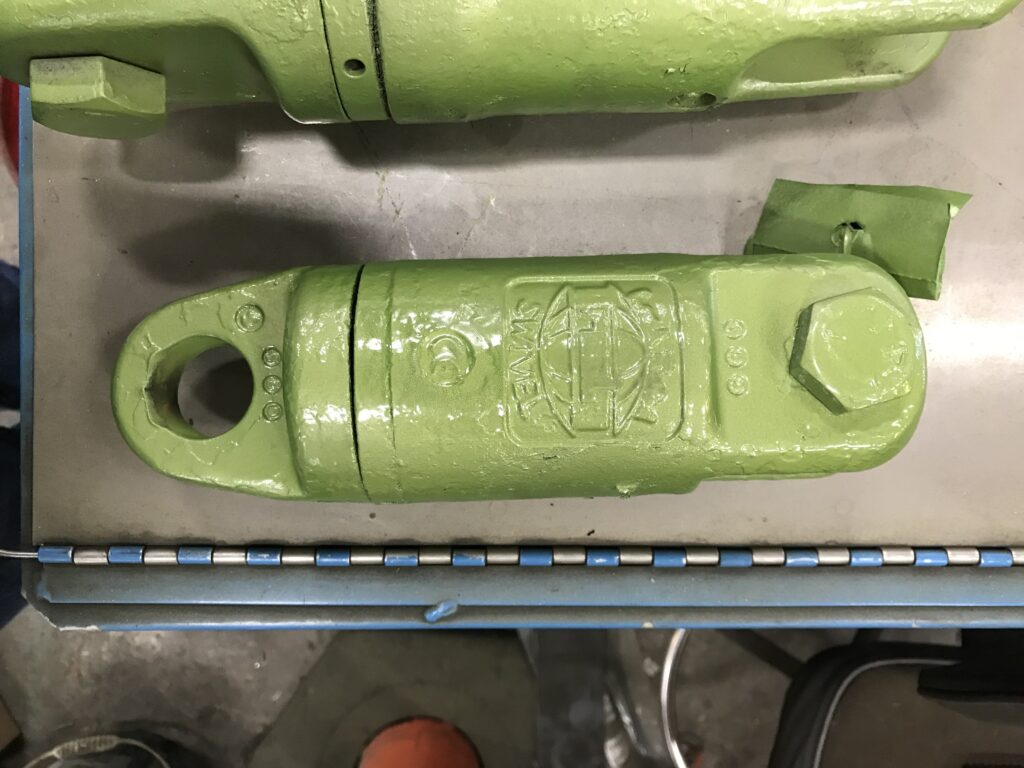
A Crosby eye and jaw rigging swivel from LGH.
A heavy-duty swivel is a rigging component with two end connections joined by a rotating center section. The end fittings may include eyes, jaws, clevis connections, or hooks, depending on the style.
In lifting and rigging applications, swivels help reduce twisting forces and improve alignment between the load and the rigging. They can be used with hooks, slings, wire rope, chain, hoists, and other lifting components when the full setup is properly rated and configured.
The right swivel depends on the load, connection points, rigging geometry, and whether the swivel needs to rotate under load.
What Are Heavy Duty Swivels Used For?
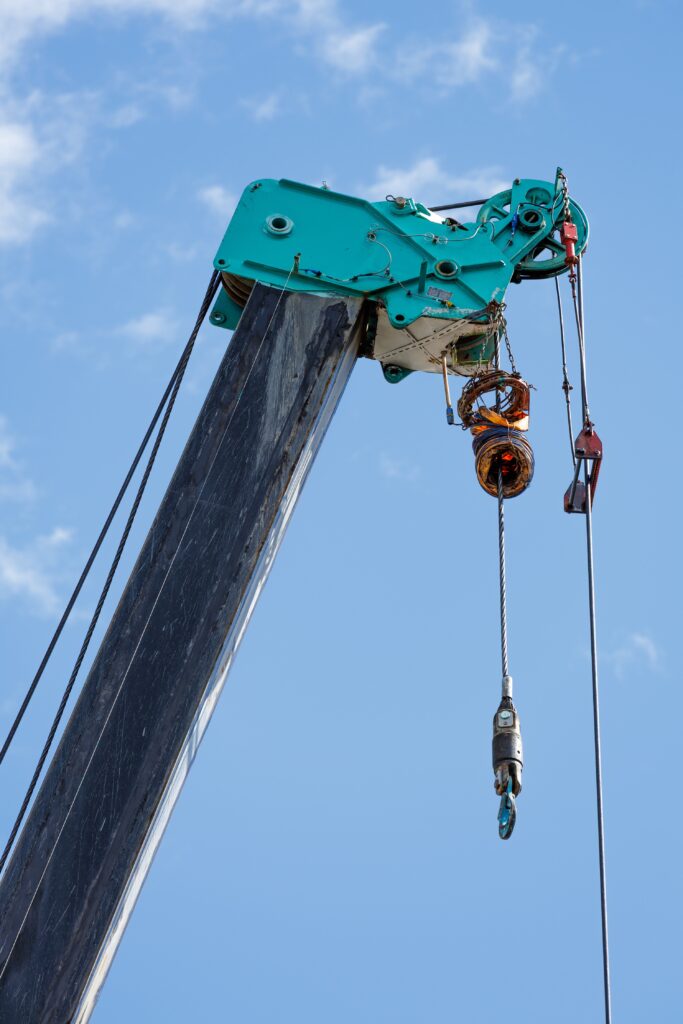
An example of a crane line with a lifting swivel hook on the end.
Heavy-duty swivels are used to help manage load rotation and rigging alignment. In some applications, the load may naturally want to rotate as it is lifted. In other cases, the rigging may need to be aligned before tension is applied.
A lifting swivel may be useful when:
- A load may rotate during lifting.
- Rigging needs to align with the pick point.
- A hook needs to face the correct direction.
- A sling leg needs to reduce twist.
- Wire rope rotation needs to be managed.
- Chain or rigging hardware is not aligned cleanly.
- The load must rotate around an obstruction.
- Rigging strain needs to be reduced during positioning.
Swivels should always be selected based on the application. Not every swivel is designed to rotate under load.
Positioning Swivels vs. Ball Bearing Swivels
There are two major categories to understand: positioning swivels and ball-bearing swivels.
A positioning swivel helps align rigging before the lift. It allows the user to rotate the fitting into position before the load is applied. Once the swivel is under load, it is not designed to continue rotating during the lift.
A ball bearing swivel is designed to rotate under load. These swivels use bearings that allow controlled rotation while the load is suspended. This makes them useful when load rotation is expected or when the rigging needs to absorb twisting movement during lifting.
In simple terms:
- Positioning swivels help align rigging before the lift.
- Ball bearing swivels can rotate while under load.
- The application determines which type is appropriate.
LGH carries heavy-duty swivel options designed for lifting and rigging applications, including ball bearing swivel configurations from trusted manufacturers such as Crosby.
Common Heavy Duty Swivel Configurations
-
-
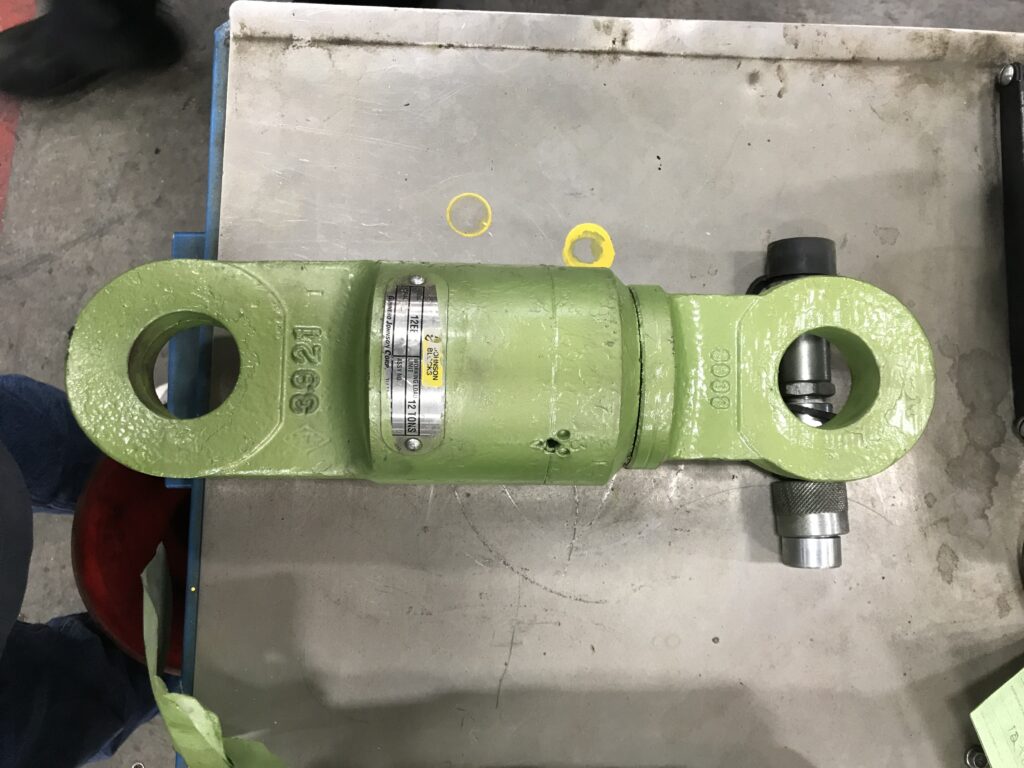
An eye and eye heavy-duty lifting swivel from LGH.
-
-
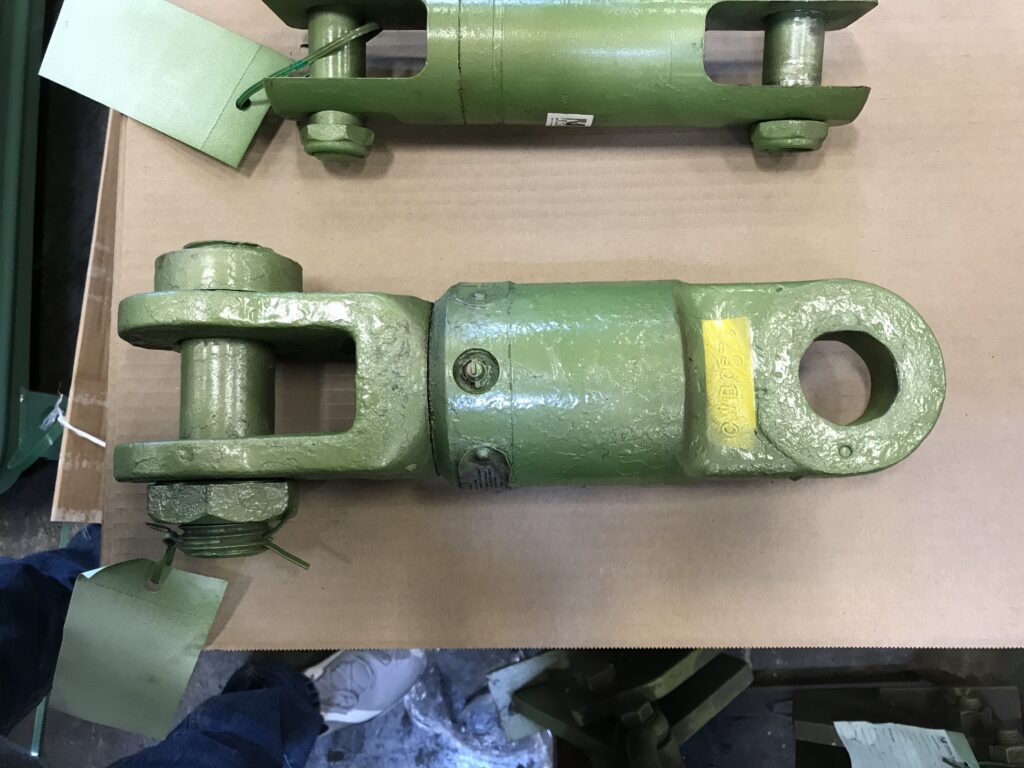
A jaw and eye heavy-duty lifting swivel from LGH.
-
-
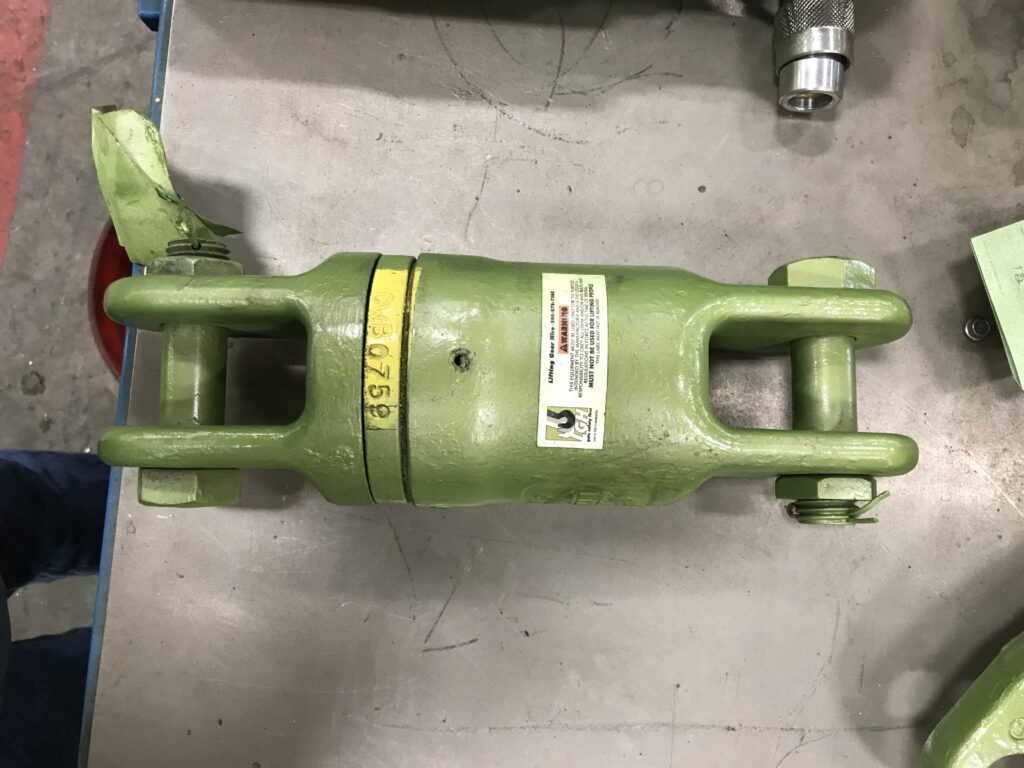
A jaw and jaw heavy-duty lifting swivel from LGH.
Heavy-duty swivels are available in several end connection styles. Each configuration supports a different type of rigging connection.
Common configurations include:
- Eye and eye swivel: Eye connection on both ends
- Jaw and jaw swivel: Jaw or clevis connection on both ends
- Jaw and eye swivel: Jaw connection on one end and eye connection on the other
- Eye and hook swivel: Eye connection on one end and hook on the other
- Jaw and hook swivel: Jaw connection on one end and hook on the other
- Swivel hook: Hook with swivel capability
- Swivel clevis: Clevis-style swivel connection
The correct configuration depends on the connection points in the rigging assembly, the hardware being used, and the direction of force through the system.
When Should You Use a Swivel Hook?
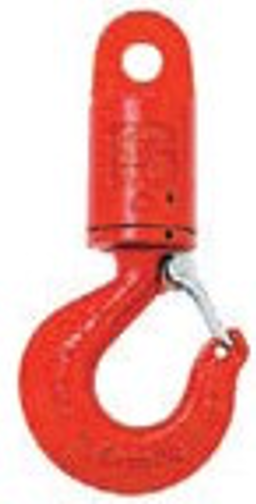
A Crosby eye and hook swivel rental from LGH.
A swivel hook may be useful when the hook needs to align with the load or rigging without twisting the chain, sling, or hoist line. A hook with swivel capability can make it easier to connect to a pick point and may help reduce stress caused by poor hook orientation.
However, crews should confirm whether the specific swivel hook is designed only for positioning or whether it is approved to rotate under load. That distinction matters.
Use a swivel hook only when:
- The hook capacity matches the lift.
- The swivel design matches the application.
- The hook latch is functioning properly.
- The load path is aligned.
- The swivel is compatible with the rigging.
- The manufacturer allows the intended use.
A heavy-duty swivel hook should never be used as a shortcut for poor rigging alignment or uncontrolled load rotation.
Wire Rope and Swivel Considerations
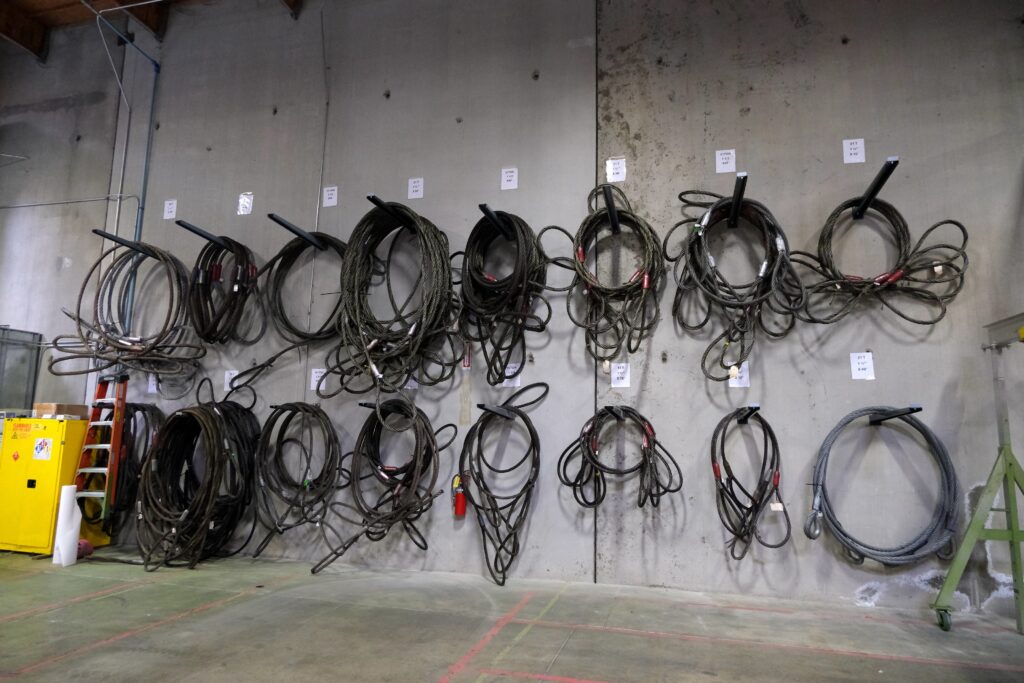
Various wire rope slings from the LGH rental center.
Wire rope selection matters when using a swivel. Some wire ropes are more prone to rotation than others, and some applications require rotation-resistant wire rope.
Crosby notes that its swivels should only be used with recommended wire rope, and users should contact the wire rope manufacturer to confirm the proper wire rope for use with Crosby swivels. This is important because the wrong combination of wire rope and swivel can affect rope behavior during lifting.
Before using a swivel with wire rope, crews should consider:
- Whether the wire rope is standard lay or rotation resistant
- Whether the swivel is approved for the application
- Whether the load may rotate under tension
- Whether the wire rope manufacturer recommends swivel use
- Whether the full rigging setup is properly rated
Swivels can help manage rotation, but they need to be matched to the correct wire rope and lifting conditions.
Heavy Duty Swivels for Chain and Rigging Alignment
Swivels can also be helpful when using chain or other rigging hardware. Chain can twist or misalign during setup, especially when the hook, lifting lug, or rigging point is not oriented correctly.
A swivel may help align the hardware before tension is applied or allow controlled movement when the load requires it. This can reduce angular stress on the hook, lug, chain, or connecting hardware.
As with wire rope applications, the swivel must be selected based on the load, capacity, connection type, and whether rotation under load is expected.
Crosby Swivels from LGH
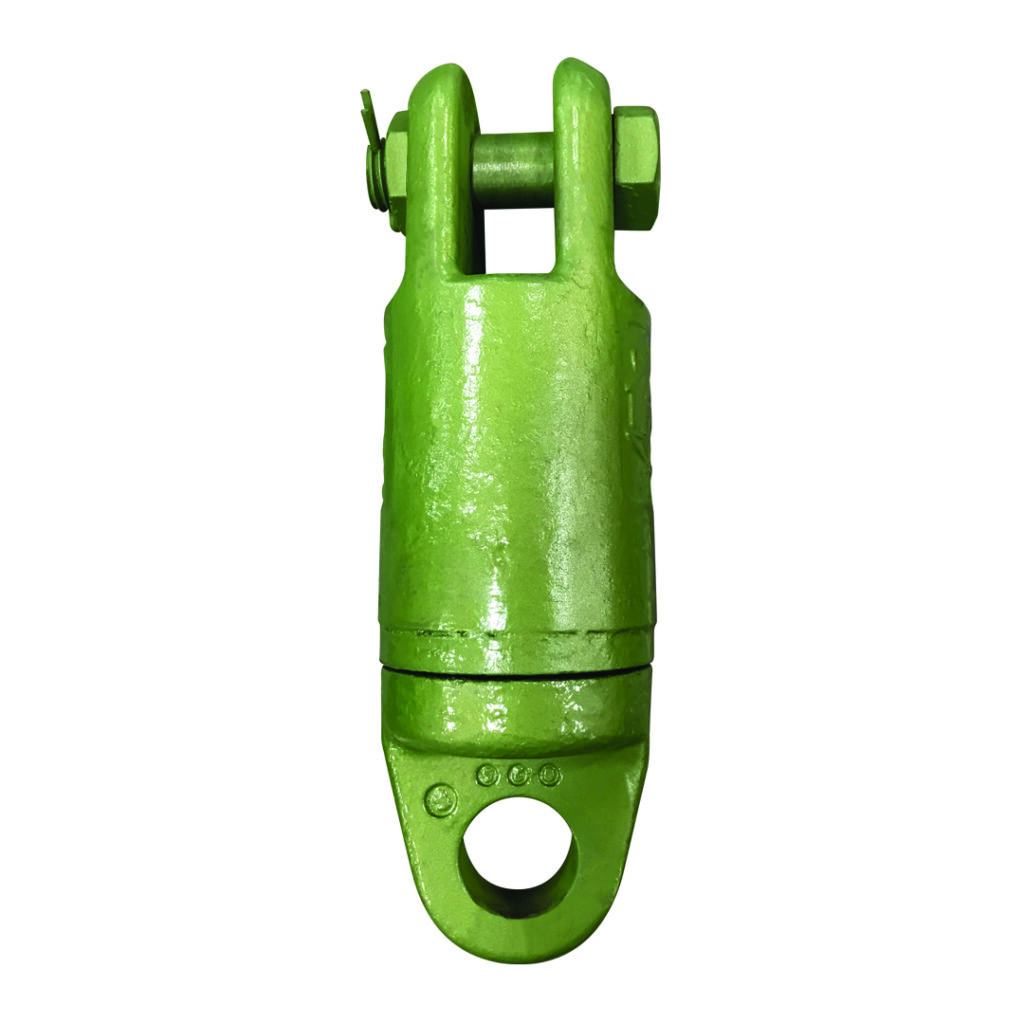
A Crosby jaw and eye swivel rental from LGH.
LGH carries Crosby swivel options for lifting and rigging applications. Crosby swivels are designed to swivel under load, and Crosby notes that its swivels are individually proof tested with certification.
Manufacturer information also notes several important features:
- Designed to swivel under load
- Hooks furnished with latches assembled
- Jaws supplied with bolts, nuts, and cotter pins
- Pressure lube fitting provided
- Other types and capacities available by requirement
- Not to be used on demolition or wrecking balls
- Use only with recommended wire rope
These swivels can be useful in demanding rigging applications when rotation under load is required and the equipment is properly matched to the lift.
Miller Non-Swiveling Insulating Link
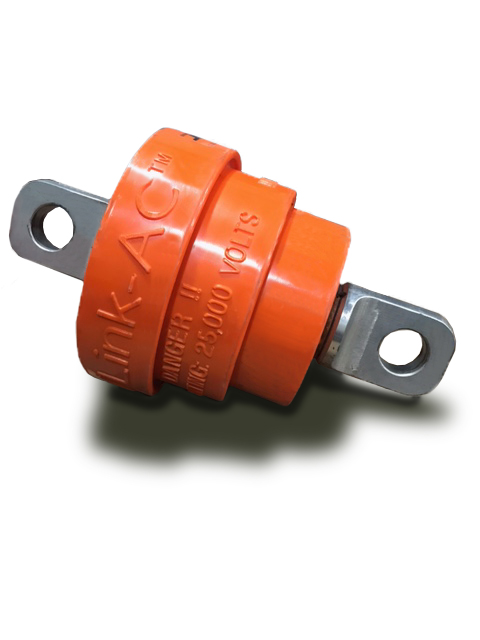
The Miller insulating link rental from LGH.
LGH also offers the Miller 5-ton non-swiveling insulating link, model 2VD2 eye-to-eye configuration. This product is a related rigging hardware product, but it is important to note that it is not a swivel.
The Miller ISO/Link-AC insulating link is designed to help protect workers from accidental contact with power lines during crane operations. Manufacturer information notes that these insulating links are rated for 25,000 AC volts and tested to 50,000 AC volts.
Key features include:
- 5-ton capacity
- Eye-to-eye configuration
- Non-swiveling design
- Insulating link for AC power line safety applications
- Durable high-performance materials
- Permanently sealed construction to help prevent moisture or contaminant absorption
- Designed for construction, refineries, utility work, and manufacturing applications
This product should be selected based on the electrical safety requirements of the job, the lift plan, and the manufacturer’s instructions.
Heavy Duty Swivel vs. Insulating Link
A heavy-duty swivel and an insulating link serve different purposes.
A heavy-duty swivel helps manage rotation, twist, and alignment in a rigging assembly.
A non-swiveling insulating link helps provide electrical insulation in certain crane and lifting applications where accidental power line contact is a concern.
In simple terms:
- Use a swivel when the rigging needs rotation or alignment support.
- Use an insulating link when the application requires an insulating component between the load and lifting equipment.
- Do not treat an insulating link as a swivel.
Both products can be valuable, but they solve different jobsite problems.
How to Choose the Right Heavy Duty Swivel
Choosing the right heavy-duty swivel starts with the lift plan. The swivel must match the load, connection points, rigging geometry, and rotation requirements.
Before selecting a swivel, review:
- Load weight
- Required capacity
- Connection type
- Whether the swivel must rotate under load
- Hook, jaw, clevis, or eye requirements
- Wire rope or chain type
- Rigging angles
- Environmental conditions
- Whether rotation is expected or only alignment is needed
- Manufacturer instructions
- Certification and inspection requirements
If the load only needs alignment before lifting, a positioning swivel may be appropriate. If the load may rotate during the lift, a ball bearing swivel designed to rotate under load may be required. For more on load control, read our blog post about “Guidelines For Using Tag Lines”.
Rent Heavy Duty Swivels from LGH
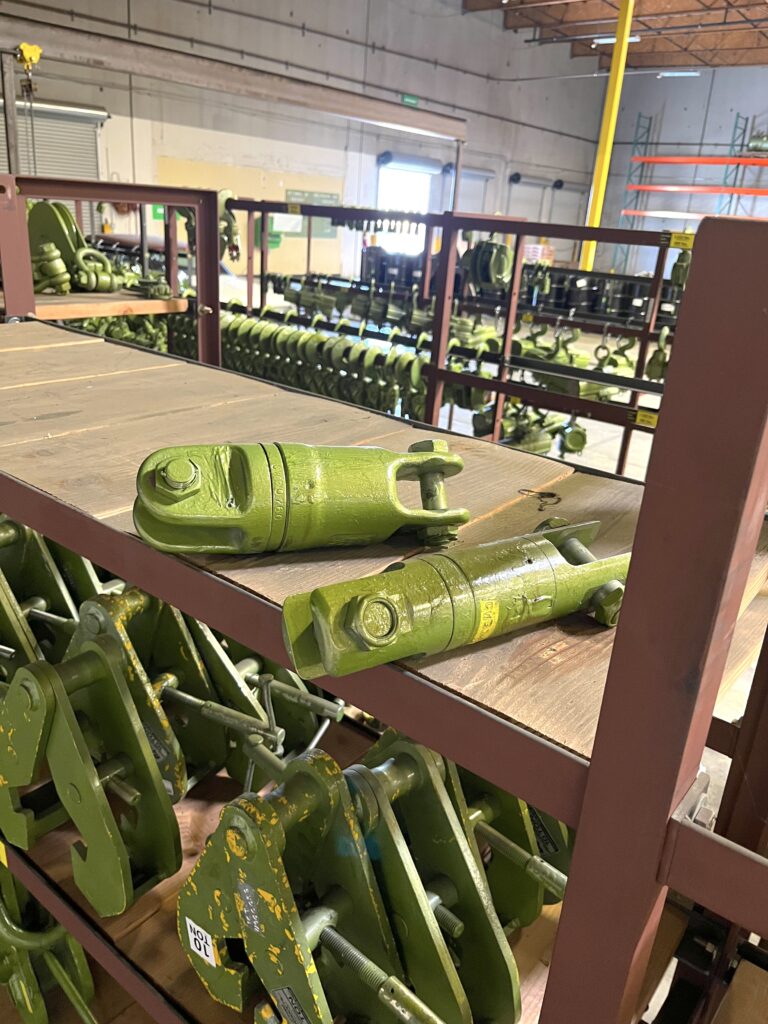
LGH rents heavy-duty swivels for lifting, rigging, hoisting, and load control applications. Our rental specialists can help review your load weight, connection points, wire rope or chain setup, swivel configuration, and rotation requirements to help determine the right option.
Whether your project requires lifting swivels, rigging swivels, hoist swivels, a heavy-duty swivel hook, an eye and eye swivel, a jaw and eye swivel, or a non-swiveling insulating link, LGH can help match the right equipment to the job.
Conclusion
A heavy-duty swivel can help reduce twist, improve rigging alignment, and manage rotation during lifting applications. The right swivel depends on the load, rigging configuration, connection type, wire rope or chain setup, and whether the swivel needs to rotate under load.
LGH rents heavy-duty swivels in several configurations, including eye, jaw, hook, and clevis-style options. LGH also offers the Miller 5-ton non-swiveling insulating link for applications where electrical insulation is required.
For help choosing a heavy-duty swivel, lifting swivel, rigging swivel, swivel hook, or insulating link for your next project, contact LGH today or call 800-878-7305 to speak with a rental specialist.
Frequently Asked Questions About Heavy Duty Swivels
What is a heavy-duty swivel?
A heavy-duty swivel is a rigging component that helps manage rotation or alignment in a lifting assembly. It typically has two end connections joined by a rotating center section.
What are lifting swivels used for?
Lifting swivels are used to reduce twist, align rigging, and manage load rotation during certain lifting applications. Some swivels are designed only for positioning, while others are designed to rotate under load.
What is the difference between a positioning swivel and a ball bearing swivel?
A positioning swivel is used to align rigging before the lift and does not rotate under load. A ball bearing swivel is designed to rotate while under load.
What is a swivel hook?
A swivel hook is a hook with a swivel connection that allows the hook to rotate for alignment or, depending on the design, under load. Always confirm the manufacturer’s intended use before lifting.
Can a swivel be used with wire rope?
Yes, but the swivel must be compatible with the wire rope and application. Crosby notes that its swivels should only be used with the recommended wire rope, and users should contact the wire rope manufacturer for proper wire rope guidance.
What is an eye and eye swivel?
An eye and eye swivel has an eye connection on both ends. It is commonly used when the rigging setup requires eye-style connections on each side of the swivel.
Is an insulating link the same as a swivel?
No. An insulating link is not a swivel. LGH offers the Miller 5-ton non-swiveling insulating link for electrical insulation applications, while swivels are used for rotation and alignment.
Does LGH rent heavy-duty swivels?
Yes. LGH rents heavy-duty swivels, lifting swivels, rigging swivels, hoist swivels, swivel hooks, and related rigging equipment.
LGH is North America’s largest single organization devoted exclusively to the provision of lifting and moving equipment for rent. LGH holds the most comprehensive inventory for hoisting, rigging, jacking, pulling, material handling, and safety equipment. With over 90,000 pieces, discover your next project solution at RentLGH.com.