5 Hand Chain Hoist Misuses You Need to Avoid
One of the most commonly used pieces of lifting equipment is the hand chain hoist, also known as a chain fall. They are durable, portable, and designed to help crews lift and position heavy loads with controlled manual effort.
However, even a rugged hand chain hoist can be damaged or become unsafe when used improperly. Overloading, twisting the chain, modifying parts, pulling too aggressively, or two-blocking the hoist can all lead to equipment failure, load damage, or serious safety risks.

Understanding proper hand chain hoist operation starts with knowing what not to do. Below are five common hand chain hoist misuses to avoid before your next lift.
5 Most Common Misuses of Hand Chain Hoists
#1 Overloading the Hoist
Not surprisingly, the most common way to misuse a chain fall is to overload it. Putting too much force on the hook or exceeding the working load limit of the hoist leads to strained hooks, damaged equipment or loads, and employee downtime. Once a hook is stretched, it’s unrepairable and unusable.
#2 Modifying the Hoist
Modifications are another common misuse of hand chain hoists. Often, inexperienced users will make equipment alterations such as popping off the hoist latch to make picking up a load easier. Not only is this dangerous, but making any alterations or modifications to a hoist will void the manufacturer’s warranty.
#3 Twisting
Allowing the hoist or chain to twist can cause serious issues. For example, a twisted or spinning chain may become jammed inside the gears of the hoist or even fall off the hoist sprocket. It may also allow nearby objects to come in contact with the load or the hoist. On multi-chain blocks, a twisted chain may occur in instances where the chain block gets turned over, also referred to as a capsized block.
#4 Pulling the Chain Too Hard
Another misuse is to pull on the chain too hard. Applying too much force on the chain may cause the chain to come off the sprocket or pull out of the hoist completely. Consequently, pulling too hard can also spread or stretch the chain links. In short – loosen your grip.
#5 Two-Blocking
It’s also somewhat common to hoist the chain block into the main part of the hoist, otherwise referred to as two-blocking. If the bottom block touches the main part of the hoist and you continue the operation, it may dent the housing or damage the hoist internally. When it comes to hand chain hoists, slow and steady wins the race.
Bonus Tips for Proper Hand Chain Hoist Use
Now that we’ve covered the most commonly made mistakes during hand chain hoist operations, here are some tips you can use to avoid them:
- Pull the hoist nice and steady without swinging it.
- Always be conscientious of the hoist’s capacity or load limit.
- Do not modify or alter the equipment in any way.
- Apply the necessary amount of force when pulling. It’s not a race.
- Keep in mind where you’re suspending the hoist from.
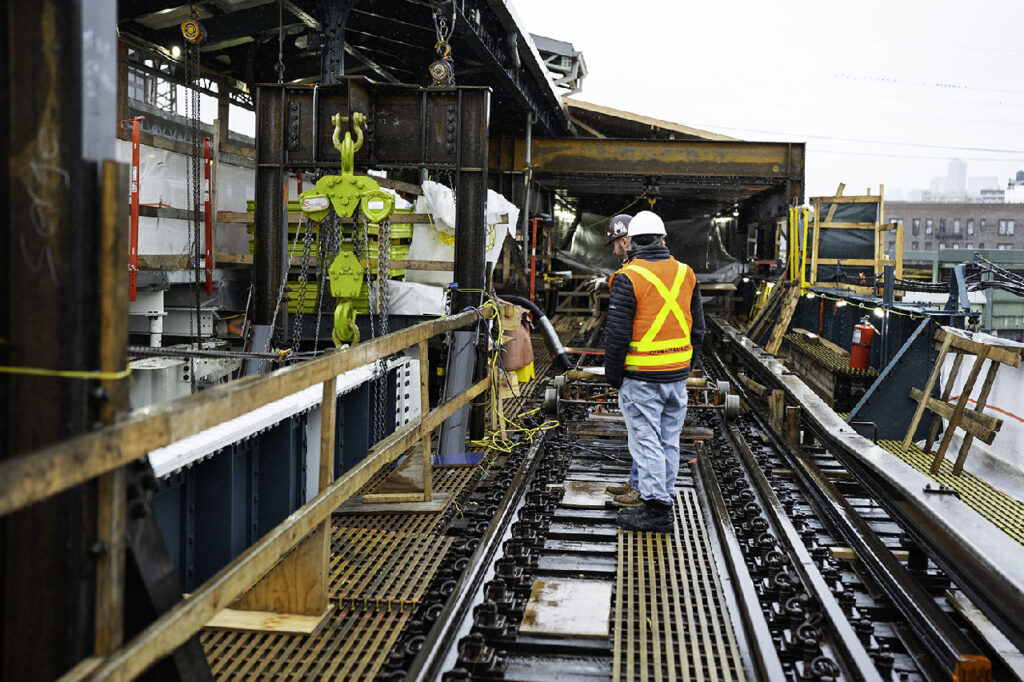
Hand chain hoists being used for a railway project in New York City.
Conclusion
Hand chain hoists are reliable lifting tools, but only when they are used correctly and within their rated limits. Avoiding common misuses like overloading, twisting, modifying equipment, pulling too hard, and two-blocking can help protect the hoist, the load, and the crew performing the work.
Before any lift, always inspect the hoist, confirm the working load limit, keep the chain aligned, and operate the equipment with steady, controlled movements. For help selecting the right hand chain hoist for your next project, contact an LGH rental specialist or call 800-878-7305.
LGH is North America’s largest single organization devoted exclusively to the provision of lifting and moving equipment for rent. LGH holds the most comprehensive inventory for hoisting, rigging, jacking, pulling, material handling, and safety equipment. With over 90,000 pieces, discover your next project solution at RentLGH.com.