How to Use a Spreader Bar: Modular Spreader Setup Videos from LGH
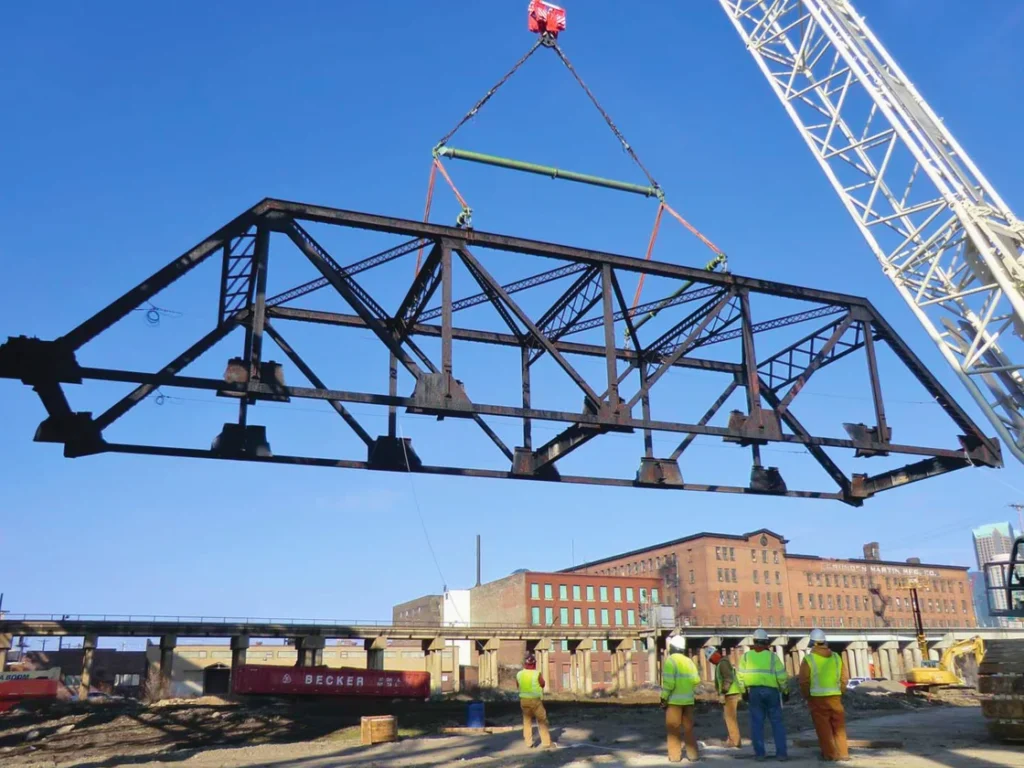
A modular spreader bar lifting a bridge.
Learning how to use a spreader bar starts with understanding the equipment, the load, and the rigging setup. In lifting and rigging, the terms “spreader bar” and “spreader beam” are often used interchangeably. At LGH, many of these systems are modular spreader beams. These systems can be assembled in different lengths to match the lift.
A spreader bar helps maintain proper spacing during a lift, improve load control, and support better sling angles. Modular spreader beams add even more flexibility because crews can assemble the beam to the required span using interchangeable struts, end units, drop links, shackles, and hardware.
In this video blog, we’re highlighting three LGH YouTube videos. The first provides a detailed overview of how to use a modular spreader beam setup, including rigging and safety considerations. The second explains what a modular spreader bar is and why crews use it. The third shows how quickly a modular spreader beam can be assembled.
How Do You Use a Spreader Bar?
To use a spreader bar, crews must select the correct beam capacity and length, assemble the components according to the manufacturer’s instructions, torque the bolts properly, attach the correct rigging, verify sling angles, and complete a test lift before proceeding.
The spreader bar should only be used within its rated capacity and approved configuration. Crews should never wrap slings around the middle of a modular spreader beam or create unapproved pick points.
Video: How to Use Modular Spreader Beams
This LGH video takes a deeper look at modular spreader beam selection, assembly, and safe use. It covers several important setup details, including strut configuration, drop link orientation, bolt torque, top rigging, sling angles, and test lifting.
The video also explains why modular spreader beams work under compression. Because of this design, rigging should only be applied at the approved end unit shackles unless the manufacturer provides an approved alternative configuration.
Video: Modular Spreader Bar 101
Before learning how to use a spreader bar, it helps to understand why crews choose a modular spreader bar in the first place. This recent LGH video gives a quick overview of modular spreader bars. Also commonly called modular spreader beams, this video explains how they differ from fixed-length lifting beams.
The video highlights one of the biggest advantages of a modular system: adjustability. Instead of relying on one fixed beam length, crews can add or remove sections to match the span required for the lift. LGH rents modular spreader bars from 3 feet to 100 feet in 1- to 2-foot increments. Our model capacities range from 24 tons to 1,200 tons.
This makes modular spreader bars especially useful for long, wide, awkward, or unstable loads. They can help improve sling angles, reduce load crushing, and create a more controlled lifting setup. The video also explains how modular components can make transport and setup easier compared to hauling a large one-piece lifting beam.
Video: Set Up a Spreader Beam in 60 Seconds
This quick video shows how a modular spreader beam can go from storage or shipping pallet to assembled and ready for rigging. Modular spreader beams are designed for straightforward field assembly using basic tools, including a wrench and torque wrench.
In the video, you’ll see how the struts, end units, bolts, and drop links come together to create the beam assembly. The video also highlights the importance of tightening bolts to the proper torque value and securing the shackles and drop links before the beam is connected to the crane.
Spreader Bar vs. Spreader Beam: Is There a Difference?
Many people use “spreader bar” and “spreader beam” to describe the same type of lifting device. Both terms generally refer to equipment that spreads rigging points apart to help stabilize a load and improve sling angles.
“Spreader beam” is often the more precise term for engineered modular systems. However, “spreader bar” remains common on jobsites and in searches. The most important thing is choosing the correct equipment and using it according to the manufacturer’s instructions.
When Should You Use a Spreader Bar?
A spreader bar may be the right choice when the load is long, wide, heavy, awkward, unstable, or sensitive to sling angles. These systems help spread lifting points apart and create a more controlled rigging arrangement.
Common applications include structural steel lifting, precast concrete lifting, pipe lifting, vessel lifting, machinery lifting, modular construction, bridge component lifts, and other loads with multiple pick points.
Rent Modular Spreader Beams from LGH
LGH rents modular spreader beams and spreader bars, lifting beams, shackles, slings, hoists, and other rigging equipment for complex lifting applications. Our rental specialists can help review load weight, pick point spacing, headroom, center of gravity, sling angles, beam length, and jobsite conditions to determine the right rigging setup.
Whether you need a quick modular spreader beam setup, a complete rigging package, or help selecting the right beam for your lift, LGH can provide tested, certified, and job-ready rental equipment.
Conclusion
Learning how to use a spreader bar starts with proper equipment selection, assembly, rigging, and inspection. The videos above give crews a helpful overview of what modular spreader bars are, how quickly they can be assembled, and what setup considerations matter before a lift.
Before any lift, crews should consult the manufacturer’s guidelines, verify the load chart, confirm torque values, inspect the equipment, and complete a test lift.
For help choosing a spreader bar, modular spreader beam, or complete rigging setup for your next project, contact LGH today or call 800-878-7305 to speak with a rental specialist.
LGH is North America’s largest single organization devoted exclusively to the provision of lifting and moving equipment for rent. LGH holds the most comprehensive inventory for hoisting, rigging, jacking, pulling, material handling, and safety equipment. With over 90,000 pieces, discover your next project solution at RentLGH.com.