Plate Clamps for Lifting: Vertical Clamp Rentals from LGH
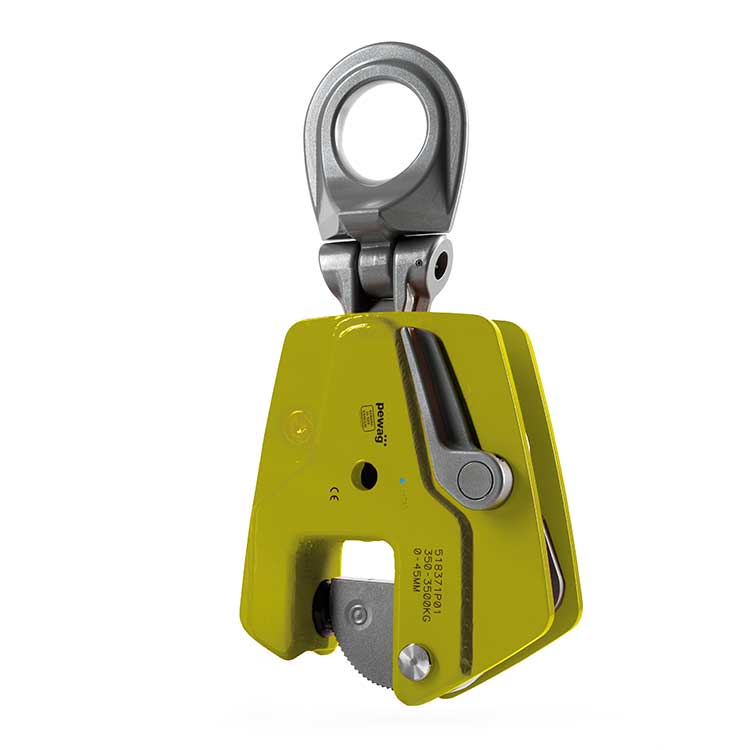
The VUP Vertical Plate Clamp from Pewag, available for rent from LGH.
When crews need to lift, rotate, transport, or turn over steel plate, they need the right lifting clamp for the job. Plate clamps for lifting provide a secure way to handle sheet metal and steel plates when no built-in lifting points exist.
LGH rents vertical plate clamps designed for heavy-duty lifting applications in construction, manufacturing, steel fabrication, maintenance, and industrial environments. These clamps grip the plate with hardened teeth that bite into the material as the load is lifted, helping create a secure hold during vertical lifting and handling.
In this blog post, we’ll explain how vertical plate clamps work, how to choose the right clamp, how vertical and horizontal clamps differ, and what inspection and maintenance steps help support safer lifting.
What Are Plate Clamps for Lifting?
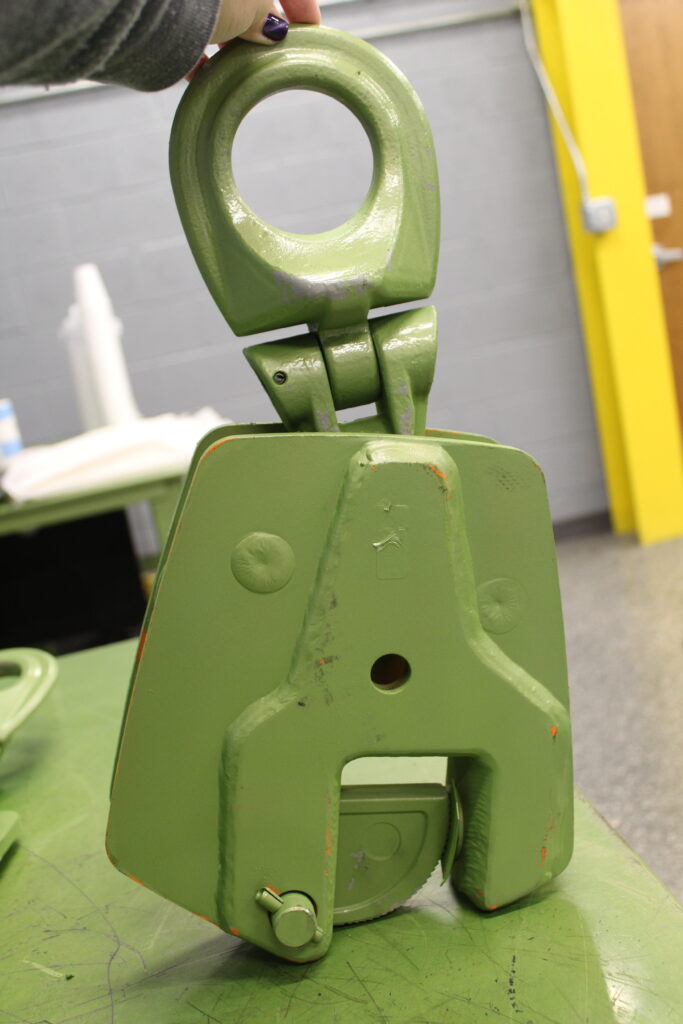
Plate clamps for lifting are below-the-hook lifting devices used to grip, lift, move, rotate, or turn over sheet metal and steel plates. Instead of connecting to a pre-existing lifting point, the clamp attaches directly to the plate.
LGH’s plate clamp rentals are traditional vertical plate clamps. These clamps lift and transport plate steel in a vertical orientation and can also help rotate or turn over plates when used properly.
Vertical plate clamps are commonly used for:
- Steel plate lifting
- Sheet metal handling
- Steel fabrication
- Construction projects
- Manufacturing applications
- Industrial maintenance
- Loading and unloading plate material
- Rotating or turning over plate steel
Because plate clamps rely on direct contact with the material, proper selection, inspection, and use are critical.
How Do Vertical Plate Clamps Work?
Vertical plate clamps grip the load through a jaw and tooth mechanism. As the lifting eye rises, the clamp’s internal linkage applies pressure to the jaw. The teeth rotate into the plate surface and bite into the material.
As load weight increases, the grip increases. In simple terms, the heavier the plate, the more force the clamp applies through the teeth, as long as the clamp is properly selected and used within its rated capacity.
This is why clamp selection matters. A clamp that is too large for the load or plate thickness may not engage the material correctly. A clamp that is overloaded, side loaded, contaminated, worn, or used on material that is too hard may not grip as intended.
Vertical vs. Horizontal Plate Clamps: What Is the Difference?
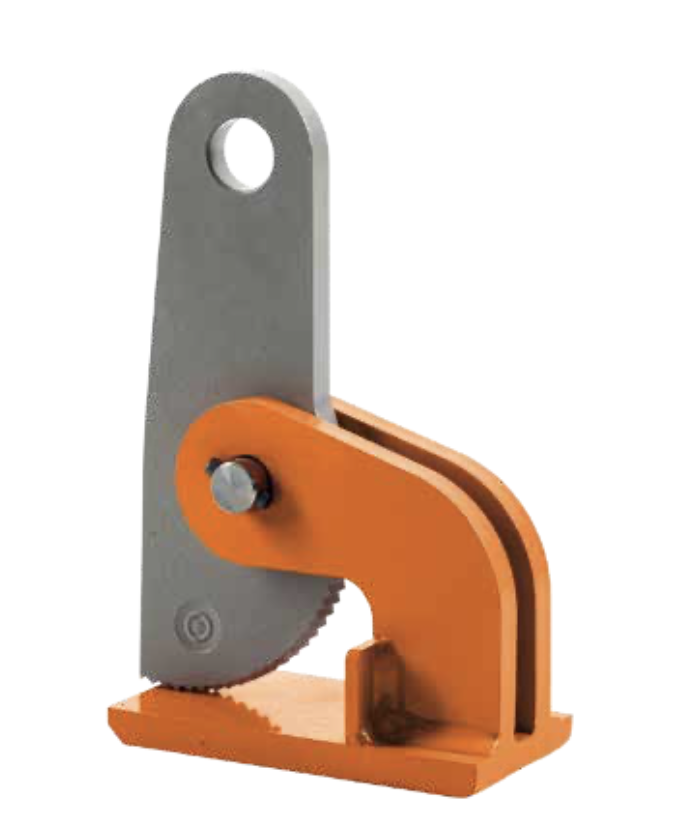
Example of a horizontal lifting clamp from Pewag.
Vertical and horizontal plate clamps serve different lifting applications.
A vertical plate clamp lifts plate material in a vertical orientation. Crews often use vertical clamps to lift, rotate, transport, or turn over a single steel plate. These clamps grip the plate along the edge and rely on the jaw and teeth to hold the material during lifting.
A horizontal plate clamp is typically used in pairs or multiple-clamp arrangements to lift plate material in a horizontal position. Horizontal clamps often support plate from the sides and help keep the load flat during movement.
LGH rents traditional vertical plate clamps. If your lift requires horizontal handling, non-marring contact, or a specialty clamp configuration, the application should be reviewed carefully before selecting equipment.
How Do I Choose the Right Plate Clamp for Heavy Metal Sheets?
Choosing the right plate clamp starts with the load weight, plate thickness, material hardness, lifting orientation, and center of gravity.
Before selecting a plate lifting clamp, consider:
- Plate weight
- Plate thickness
- Plate hardness
- Clamp working load limit
- Jaw opening capacity
- Lifting orientation
- Center of gravity
- Number of clamps required
- Whether a spreader bar is needed
- Surface condition of the material
- Temperature of the plate
- Manufacturer instructions and applicable safety requirements
The clamp must match both the weight and thickness of the material. Crews should also confirm that the plate material is not harder than the clamp teeth, because overly hard material can prevent the teeth from biting into the plate correctly.
Plate Clamp Selection Tips

Proper clamp selection helps improve grip, reduce wear, and support a safer lift. When choosing plate clamps for lifting, follow these general guidelines:
- Select a clamp with a working load limit close to the weight of the plate.
- Select a clamp with jaw capacity close to the plate thickness.
- Avoid lifting loads significantly below the clamp’s rated capacity.
- Never exceed the clamp’s rated capacity.
- Never lift more than one sheet at a time.
- Do not side load the clamp.
- Position the clamp over the load’s center of gravity.
- Use multiple clamps and a spreader bar when required for larger plates.
- Confirm the plate temperature and material hardness before lifting.
- Follow the manufacturer’s instructions for the specific clamp.
A plate clamp is most effective when the load, thickness, and clamp rating match the application.
Why You Should Not Lift Multiple Sheets at Once
Vertical plate clamps are designed to grip a single plate. Lifting multiple sheets at once can prevent the clamp teeth from fully engaging the material. The sheets may shift, separate, or slip, which can damage the clamp or cause a loss of load.
Even if several sheets appear to be stacked tightly together, the clamp may only bite into the outer plate. That creates an unsafe condition.
For this reason, crews should never lift more than one sheet at a time with a vertical plate clamp unless the manufacturer specifically allows that use.
Avoid Side-Loading Plate Clamps
Vertical plate clamps are designed for specific loading directions. Side loading can place unintended stress on the clamp body, jaw, lifting eye, and internal components.
If a clamp is pulled at an angle or used outside its intended load path, the grip may change and the clamp may experience forces it was not designed to handle.
When using multiple plate clamps for larger plate, a spreader bar may be needed to keep the rigging vertical and reduce angular forces on the clamps. Hinged hook ring clamps may allow some movement, but crews should always follow the manufacturer’s derating requirements and use instructions.
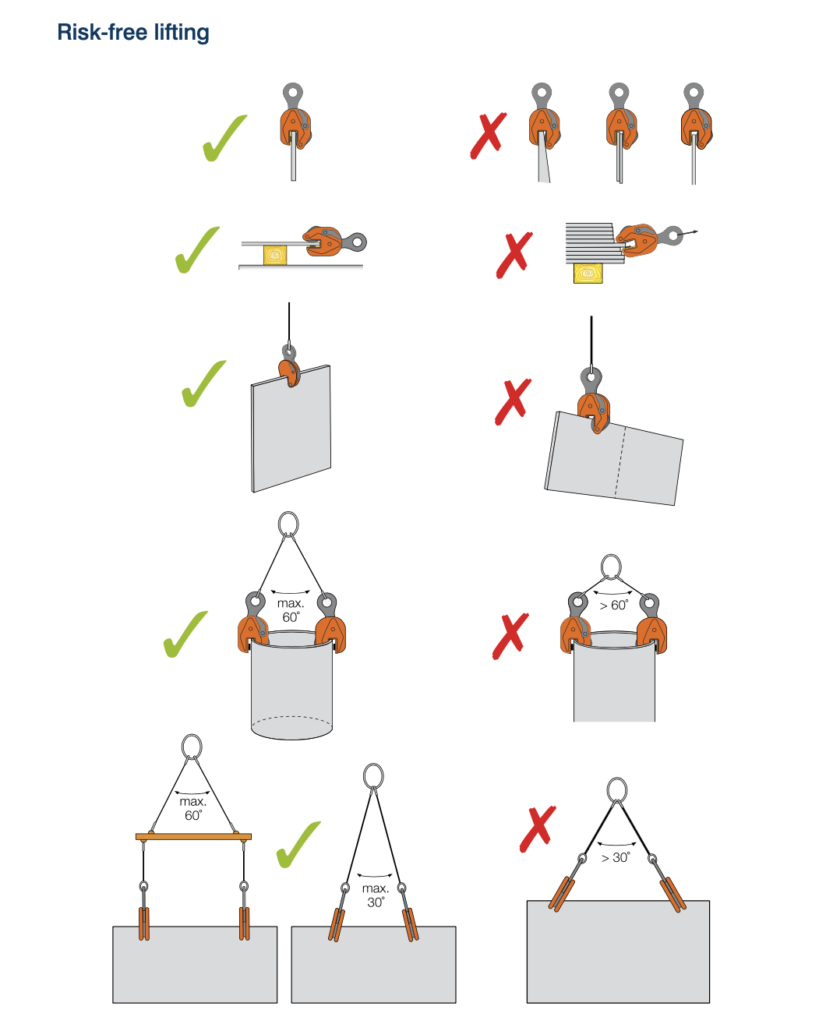
Vertical plate clamp safety tips from Pewag.
Plate Clamp Inspection and Maintenance
Inspection is one of the most important parts of using sheet metal clamps safely. A clamp may look simple, but the teeth, jaw, lifting eye, spring, pins, rivets, and body all play a role in the grip and performance of the device.
Before use, inspect the clamp for:
- Chipped or worn teeth
- Bent or damaged lifting eye
- Hook ring deformation
- Spring damage
- Jaw or pad deformation
- Worn pins
- Pulled rivets
- Scuffs, dents, or cracks in the clamp body
- Dirt, grease, grit, or mud on gripping surfaces
- Missing or illegible markings
- Any condition that affects smooth operation
Plate clamps should operate smoothly before use. Contaminants such as grease, dirt, grit, or mud can reduce grip, so clamps should be cleaned as needed. Moving parts should be lubricated according to the manufacturer’s instructions.
If the teeth are worn, chipped beyond acceptable limits, contaminated, or unable to bite properly, the clamp should be removed from service and evaluated.
What Maintenance Is Required for Sheet Metal Lifting Devices?
Sheet metal lifting devices such as vertical plate clamps require regular inspection, cleaning, and lubrication. Crews should remove dirt, mud, grease, and debris that could affect grip or movement. They should also inspect the teeth, jaw, lifting eye, springs, pins, and body for wear or damage.
Routine maintenance may include:
- Degreasing and cleaning gripping surfaces
- Removing grit, dirt, mud, and contaminants
- Lubricating moving parts with approved grease
- Checking for tooth wear or chipping
- Confirming the clamp opens and closes smoothly
- Inspecting the lifting eye and hook ring
- Verifying markings and capacity information
- Removing damaged clamps from service
Maintenance does not replace inspection. Every clamp should still be checked before use.
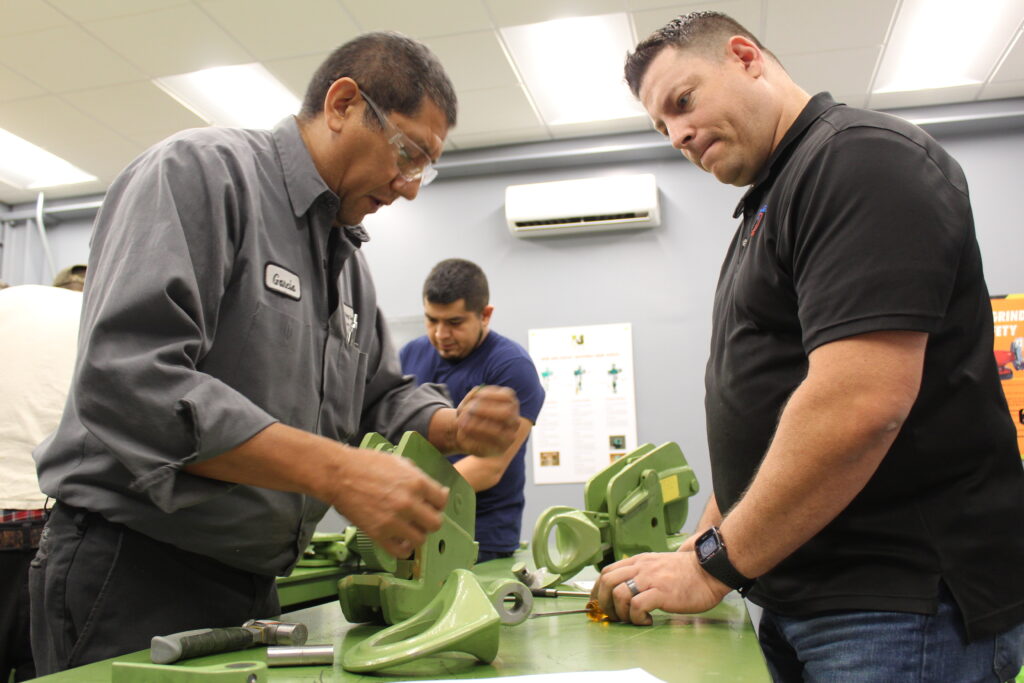
LGH plate clamp product training with our manufacturer partner, Pewag.
Common Plate Clamp Mistakes to Avoid
Plate clamps for lifting are effective tools, but misuse can create serious safety risks. Common mistakes include using the wrong clamp size, lifting multiple sheets, side loading the clamp, using worn teeth, lifting material that is too hard, or failing to inspect the clamp before use.
Avoid these common mistakes:
- Choosing a clamp with the wrong working load limit
- Choosing a clamp with the wrong jaw opening
- Lifting more than one plate at a time
- Using the clamp on material that is too hard
- Lifting heated plate beyond allowable limits
- Side loading the clamp
- Ignoring the center of gravity
- Using a clamp with damaged teeth or worn components
- Failing to clean grease or debris from gripping surfaces
- Using a clamp without checking manufacturer instructions
Taking time to select and inspect the clamp can help prevent damaged equipment, unstable lifts, and unsafe conditions.
Rent Plate Clamps from LGH
LGH offers vertical plate clamp rentals for lifting, rotating, transporting, and turning over steel plate. Our plate clamps from Pewag are available in multiple models with capacities ranging from 3,300 lbs. to 11,000 lbs.
These clamps for sheet metal are designed for secure vertical lifting and heavy-duty use in construction, manufacturing, steel handling, and industrial applications. LGH rental equipment is inspected, tested, certified, and job-ready, helping crews access the right lifting equipment without taking on long-term ownership and maintenance responsibilities.
Our rental specialists can help review your plate weight, thickness, lifting orientation, clamp capacity, and jobsite requirements to help match the right clamp to the application.
Conclusion
Plate clamps for lifting give crews a practical way to lift, rotate, transport, and turn over steel plate when no built-in lift points exist. Vertical plate clamps work by using teeth that bite into the plate surface, creating a stronger grip as the load is lifted.
To choose the right lifting clamp, crews must evaluate the plate weight, thickness, hardness, center of gravity, lifting orientation, and clamp capacity. They should also inspect the clamp before use, keep gripping surfaces clean, avoid side loading, and never lift more than one sheet at a time.
For help choosing plate clamp rentals or other rigging equipment for your next lift, contact LGH today or call 800-878-7305 to speak with a rental specialist.
About LGH
LGH is North America’s largest single organization devoted exclusively to the provision of lifting and moving equipment for rent. LGH holds the most comprehensive inventory for hoisting, rigging, jacking, pulling, material handling, and safety equipment. With over 90,000 pieces, discover your next project solution at RentLGH.com.