Heavy-Duty Turnbuckles: Crosby Turnbuckle Rentals from LGH
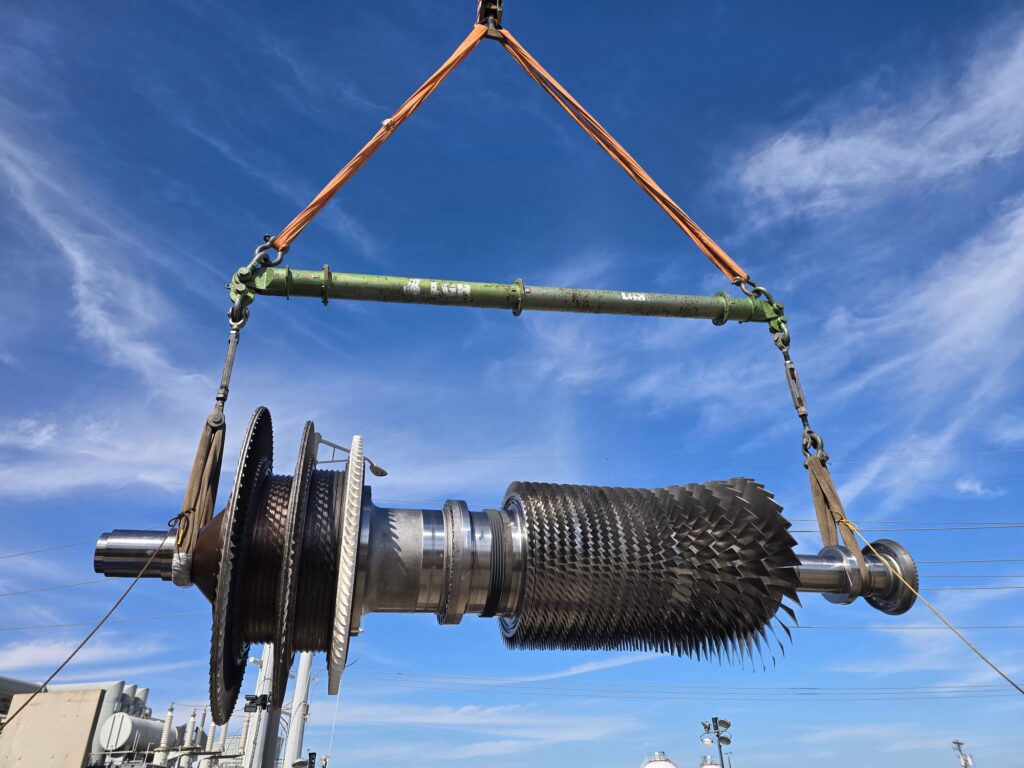
An industrial turbine crane lift, featuring modular spreader bars, round slings, and turnbuckles from LGH below the hook.
A heavy-duty turnbuckle gives crews a simple, mechanical way to adjust tension, remove slack, fine-tune length, and help level a load in certain rigging and tensioning applications. By rotating the center body, users can increase or decrease tension without fully disconnecting the assembly.
LGH rents Crosby heavy-duty turnbuckles with capacities ranging from 10,000 lbs. to 75,000 lbs. Our rental fleet includes eye-and-eye turnbuckles and jaw-and-jaw turnbuckles. Jaw-and-eye turnbuckles are also available from LGH as a sale item.
This product spotlight explains what heavy-duty turnbuckles are, how they work, the main configurations available from LGH, and when a turnbuckle may be useful for your next lifting, rigging, or tensioning application.
What Is a Heavy-Duty Turnbuckle?
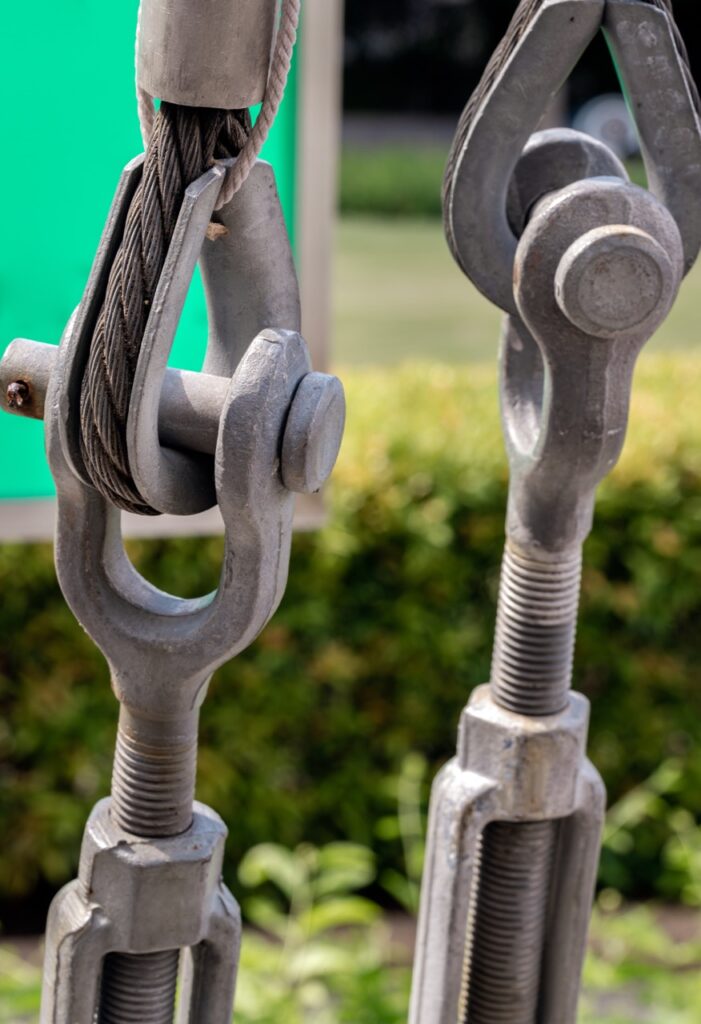
A heavy-duty turnbuckle is a rigging device made from a center body and two threaded end fittings. The body is threaded on both ends, allowing the user to rotate the body and move the fittings closer together or farther apart.
This adjustment changes the tension or length of the assembly. In lifting and rigging applications, turnbuckles may be used to help level a load, adjust for an offset center of gravity, equalize tension across multiple pick points, or remove slack from a rigging setup.
Turnbuckles are commonly used to:
- Remove slack
- Adjust tension
- Fine-tune assembly length
- Help level a load
- Adjust for an offset center of gravity
- Equalize tension across multiple pick points
- Tension cables, guy wires, and support assemblies
The right turnbuckle depends on the load, connection points, direction of pull, required adjustment range, and end fitting style.
How Does a Turnbuckle Work?
A turnbuckle works by using opposite threads on each end of the body. As the body rotates, the threaded end fittings move inward or outward.
Rotating the body one way draws the fittings closer together and increases tension. Rotating it the opposite way moves the fittings farther apart and reduces tension or adds length.
The body should be adjusted only when the assembly is not under load. Once tension is applied, the turnbuckle is held in position by the force in the system. Users should always make adjustments slowly, evenly, and within the manufacturer’s specifications.
Heavy-Duty Turnbuckles Available from LGH
LGH carries Crosby heavy-duty turnbuckles with capacities ranging from 10,000 lbs. to 75,000 lbs.
Available rental configurations include:
- Eye-and-eye turnbuckles
- Jaw-and-jaw turnbuckles
LGH also offers jaw-and-eye turnbuckles as a sale item.
These configurations give crews options for different rigging connections, tensioning assemblies, load leveling applications, and field adjustment needs.
Eye-and-Eye Turnbuckles
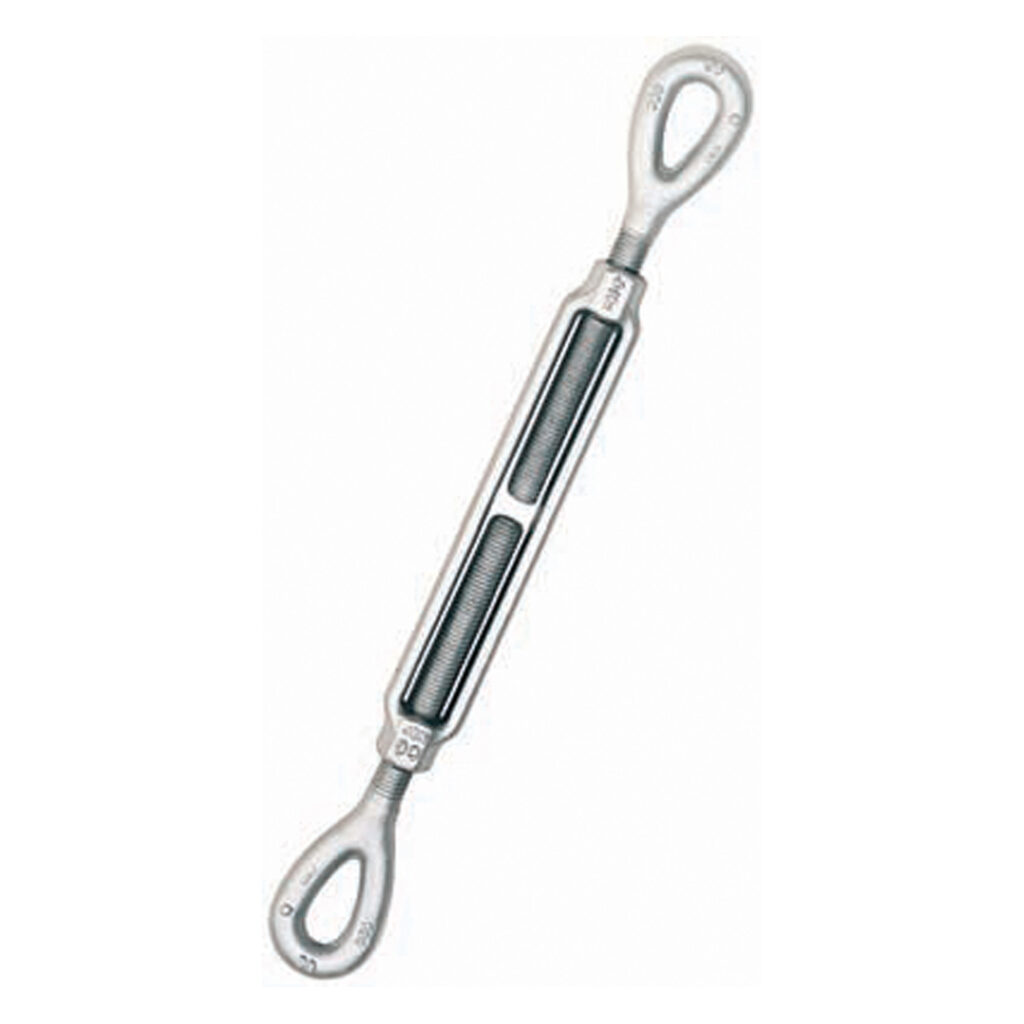
An eye-and-eye turnbuckle.
Eye-and-eye turnbuckles have a forged eye fitting on each end. The eye shape allows the turnbuckle to connect to shackles or other compatible rigging hardware.
LGH’s Crosby eye-and-eye turnbuckles feature quenched and tempered end fittings, normalized bodies, and hot dip galvanized steel. The forged elongated eye design helps make attachment easier and helps minimize stress in the eye.
For turnbuckle sizes 1/4 in. through 2-1/2 in., a shackle one size smaller can be reeved through the eye.
Eye-and-eye turnbuckles meet the performance requirements of Federal Specification FF-T-791b, Type 1, Form 1 – Class 4, and ASTM F-1145, except for provisions required of the contractor.
Jaw-and-Jaw Turnbuckles
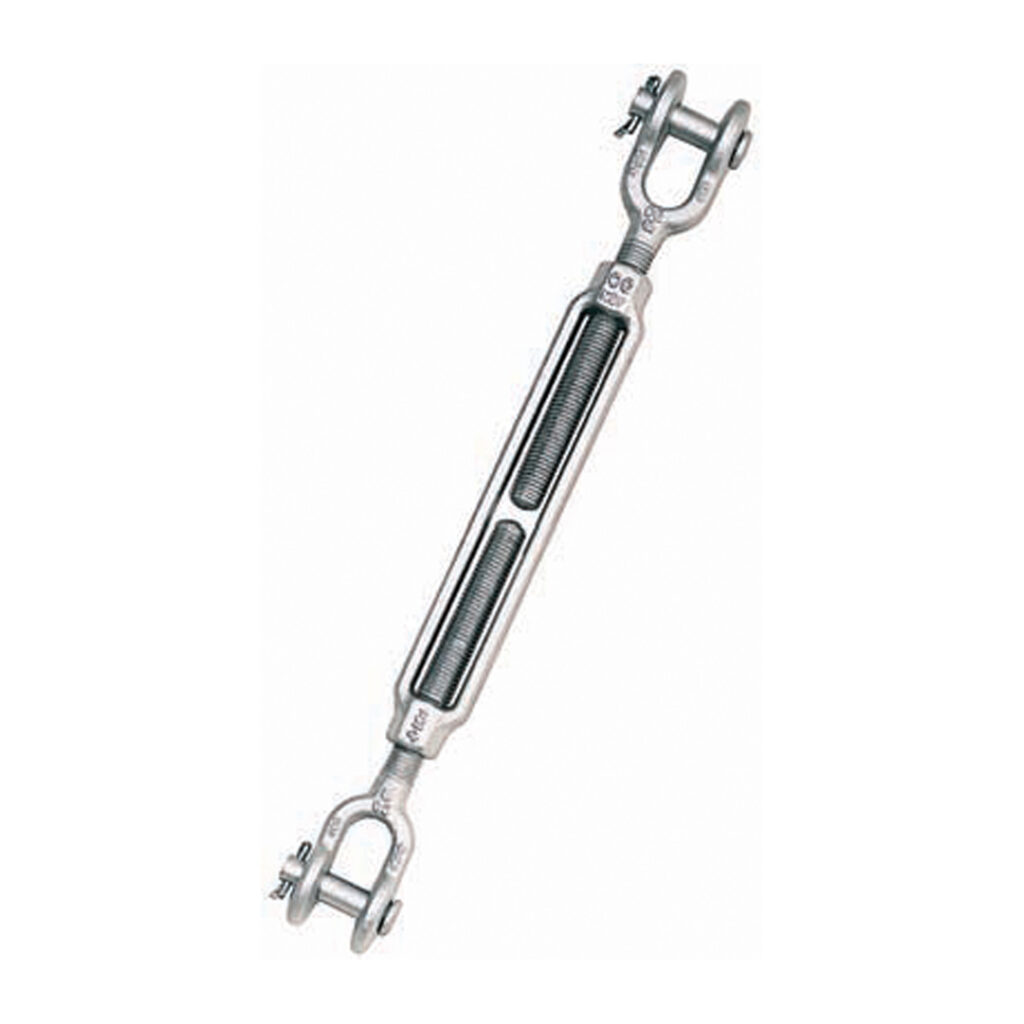
A jaw and jaw turnbuckle.
Jaw-and-jaw turnbuckles have a U-shaped jaw fitting on each end. This configuration can connect directly to certain lugs, eye bolts, or other compatible attachment points.
LGH’s Crosby jaw-and-jaw turnbuckles feature quenched and tempered end fittings, normalized bodies, and hot dip galvanized steel. The jaw ends are forged and supplied with bolts and nuts on 1/4 in. through 5/8 in. sizes and pins and cotters in 3/4 in. through 2-3/4 in. sizes.
Jaw-and-jaw turnbuckles are useful when the connection point cannot be opened or when a direct jaw-style connection is preferred.
Jaw-and-Eye Turnbuckles
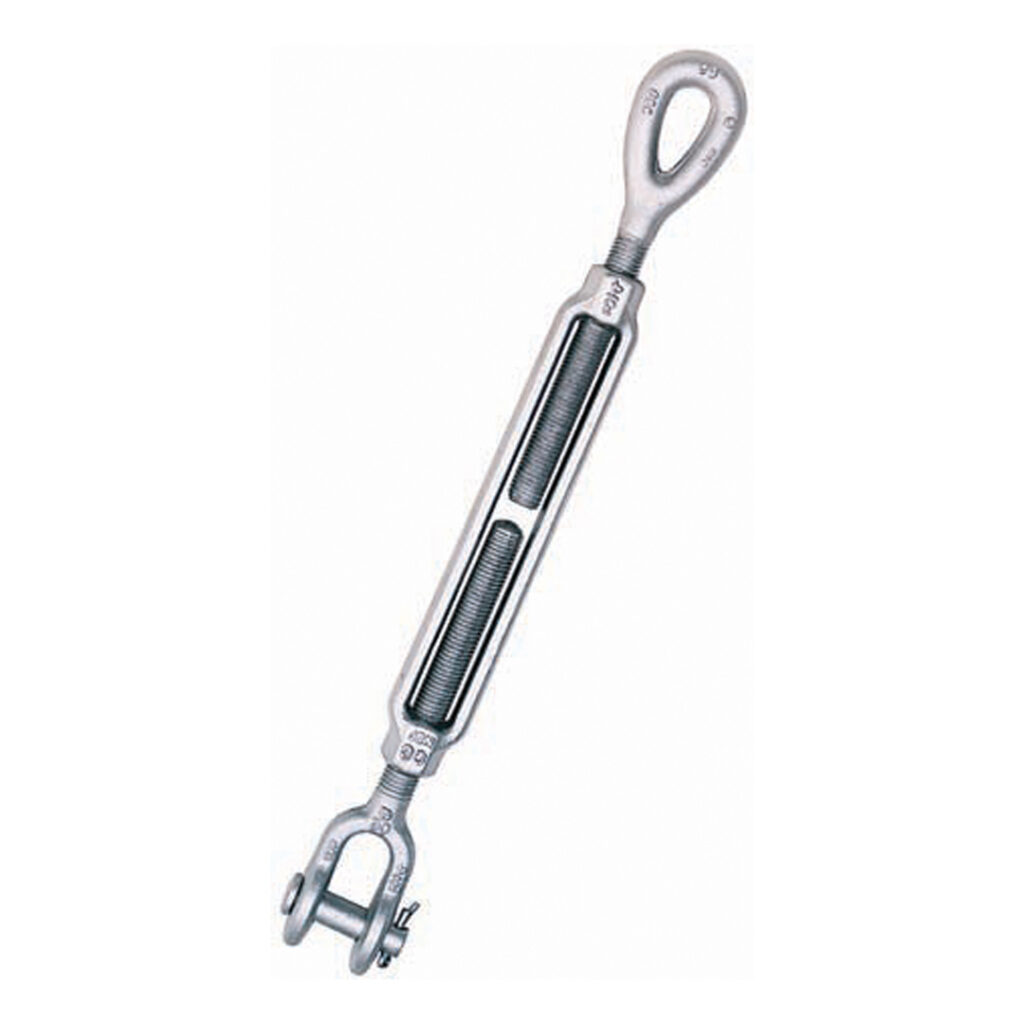
A jaw-and-eye turnbuckle.
Jaw-and-eye turnbuckles combine a jaw fitting on one end with an eye fitting on the other. This configuration gives crews flexibility when one side of the connection works better with a shackle and the other side needs to connect directly to a lug or fixed point.
LGH offers jaw-and-eye turnbuckles as a sale item only.
Common Turnbuckle Applications
Turnbuckles are used when a rigging or tensioning assembly needs precise adjustment. They are especially useful when crews need to fine-tune an assembly instead of replacing a sling, cable, or connection with a different length.
Common applications include:
- Leveling uneven loads
- Adjusting for an offset center of gravity
- Equalizing tension across multiple pick points
- Removing slack from a rigging assembly
- Fine-tuning sling length
- Tensioning guy wires
- Tensioning perimeter cables
- Supporting suspension systems
- Adjusting industrial tensioning assemblies
- Aligning machinery or equipment during installation
In each application, the heavy-duty turnbuckle must be properly rated, aligned with the direction of pull, and matched to the full rigging or tensioning setup.
Using Turnbuckles for Offset Center of Gravity
One common use for a heavy-duty turnbuckle in lifting and rigging is correcting an offset center of gravity. If a load is heavier on one side, it may not lift level with equal-length slings.
A properly selected turnbuckle can be added to one leg of the rigging setup to help fine-tune the length and tension. By making small adjustments, crews can help bring the load into a more level position before the lift continues.
This can be helpful when lifting machinery, fabricated components, equipment skids, or other loads that do not have evenly distributed weight. You learn more about calculating the center of gravity in our blog post here.
Using Turnbuckles in Multi-Point Lifts
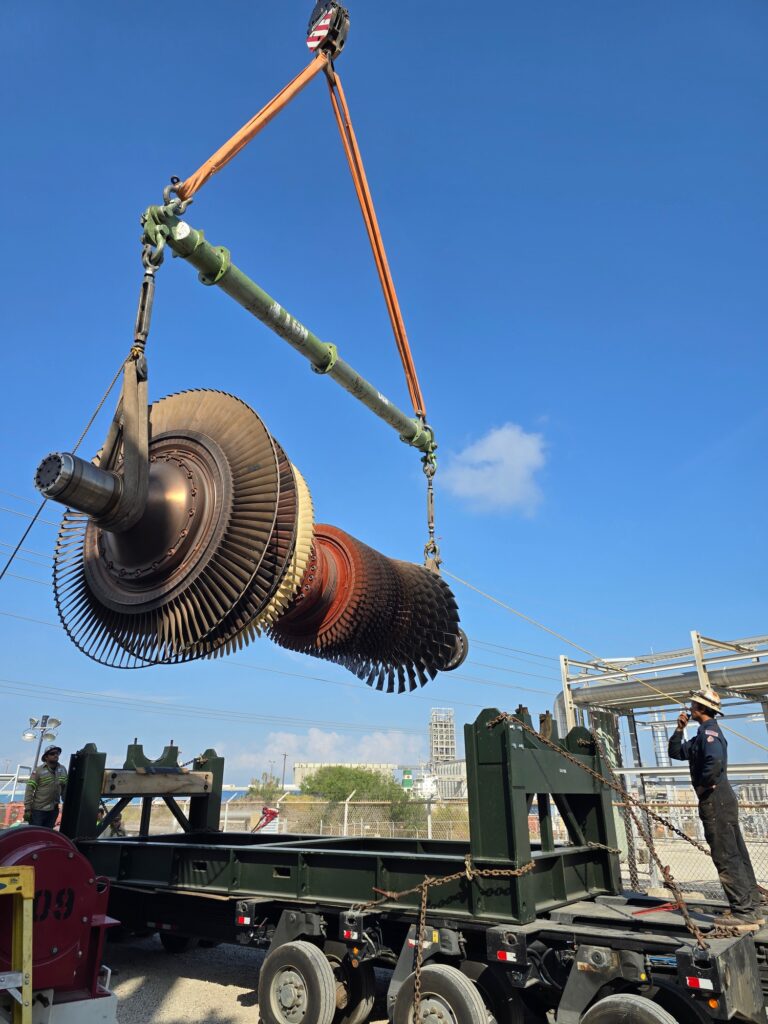
An industrial turbine crane lift, featuring modular spreader bars, round slings, and turnbuckles from LGH below the hook.
Turnbuckles can also help in multi-point lifts where load distribution is difficult to balance. In a lift with several pick points, one sling leg or connection point may begin carrying more force than the others.
A turnbuckle can help adjust tension in the system and support more even load sharing when the rigging configuration allows for it.
This is especially useful when working with:
- Multiple sling legs
- Lifting beams
- Spreader beams
- Custom lifting devices
- Long or irregular loads
- Loads with several pick points
Every turnbuckle in the system must be properly rated, aligned, inspected, and matched to the full rigging plan.
Turnbuckle Safety and Best Practices
Turnbuckles are adjustable, but they still need to be used carefully. Misuse can damage the turnbuckle, reduce performance, or create unsafe rigging conditions.
Before using a turnbuckle:
- Verify the working load limit.
- Confirm the correct end fitting style.
- Inspect the body, threads, pins, nuts, and end fittings.
- Make sure the threads are not damaged.
- Confirm the turnbuckle is aligned with the direction of pull.
- Avoid side loading.
- Avoid shock loading.
- Do not overload the turnbuckle.
- Do not remove the end fittings from the body.
- Make adjustments slowly and evenly.
- Secure all pins, nuts, cotters, shackles, and fittings before loading.
When adjusting a turnbuckle, use an appropriately sized wrench on the body. Do not place a spud wrench, pry bar, or other tool through the body, as this can damage the turnbuckle.
How to Choose the Right Heavy-Duty Turnbuckle
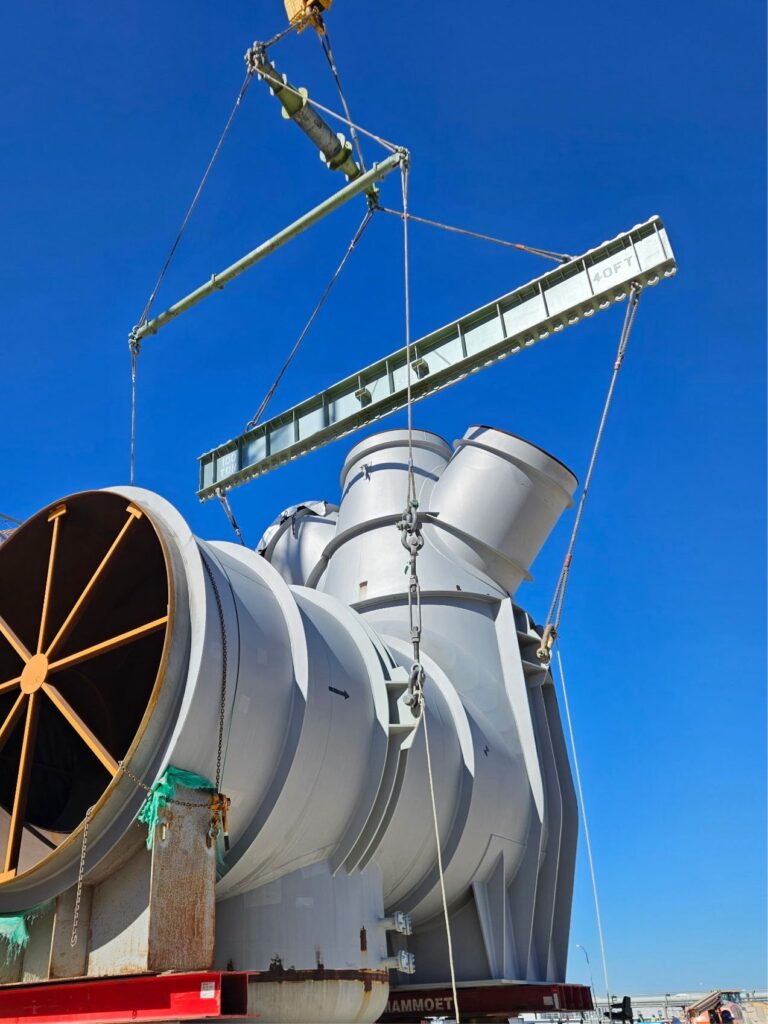
This below-the-hook rigging configuration for a steam duct lift includes wire rope slings, turnbuckles, modular spreader beams, and a 40 ft. 100-ton multi-lug lifting beam.
Choosing the right heavy-duty turnbuckle starts with the application. Crews should review the load, connection points, required adjustment range, and direction of pull before selecting a turnbuckle.
Before renting or purchasing a turnbuckle, consider the following:
- Required capacity
- Type of connection points
- Eye and eye, jaw and jaw, or jaw and eye configuration
- Take-up length
- Working load limit
- Whether the application involves lifting or tensioning
- Whether the load has an offset center of gravity
- Whether tension needs to be equalized across multiple pick points
- Required documentation or certification
- Environmental conditions
For lifting applications, every component in the rigging assembly must be properly rated and compatible with the full load path.
Rent Crosby Heavy-Duty Turnbuckles from LGH
LGH rents Crosby heavy-duty turnbuckles for lifting, rigging, load leveling, and tensioning applications. Our rental fleet includes eye-and-eye turnbuckles and jaw-and-jaw turnbuckles in capacities ranging from 10,000 lbs. to 75,000 lbs.
LGH also offers jaw-and-eye turnbuckles as a sale item.
Our rental specialists can help review your load weight, connection points, rigging configuration, required adjustment range, and jobsite conditions to help determine the right turnbuckle for your application.
Whether your project requires a heavy-duty turnbuckle, turnbuckle rental, Crosby turnbuckle, eye-and-eye turnbuckle, jaw-and-jaw turnbuckle, jaw-and-eye turnbuckle, or other rigging hardware, LGH can help match the right equipment to the job.
Conclusion
Heavy-duty turnbuckles give crews a practical way to adjust tension, remove slack, fine-tune length, and help level loads in lifting and rigging applications. They are especially useful when working with offset centers of gravity, multi-point lifts, cable tensioning, and assemblies that require controlled adjustment.
LGH rents Crosby eye-and-eye turnbuckles and jaw-and-jaw turnbuckles with capacities ranging from 10,000 lbs. to 75,000 lbs. Jaw-and-eye turnbuckles are also available as a sale item.
For help choosing the right heavy-duty turnbuckle or rigging hardware for your next project, contact LGH today or call 800-878-7305 to speak with a rental specialist.
Frequently Asked Questions About Heavy Duty Turnbuckles
What is a heavy-duty turnbuckle used for?
A heavy-duty turnbuckle is used to adjust tension, remove slack, fine-tune length, and help level rigging or tensioning assemblies. In lifting applications, turnbuckles can help correct an offset center of gravity or equalize tension across multiple pick points.
How does a turnbuckle work?
A turnbuckle works by using opposite threads on each end of the body. As the body rotates, the end fittings move closer together or farther apart, allowing the user to increase or decrease tension.
What turnbuckle configurations does LGH rent?
LGH rents eye-and-eye turnbuckles and jaw-and-jaw turnbuckles. LGH also offers jaw-and-eye turnbuckles as a sale item.
What capacities does LGH offer for turnbuckle rentals?
LGH carries Crosby turnbuckles with capacities ranging from 10,000 lbs. to 75,000 lbs.
What is an eye-and-eye turnbuckle?
An eye-and-eye turnbuckle has a forged eye fitting on both ends. It is commonly connected with shackles or other compatible rigging hardware.
What is a jaw-and-jaw turnbuckle?
A jaw-and-jaw turnbuckle has a U-shaped jaw fitting on both ends. It can connect directly to certain lugs, eye bolts, or compatible attachment points.
Can turnbuckles be used for lifting?
Turnbuckles can be used in certain lifting and rigging applications when they are properly rated, correctly installed, and used within the manufacturer’s specifications. Always verify the working load limit and confirm that the turnbuckle is suitable for the lift.
What should you avoid when using a turnbuckle?
Avoid side loading, shock loading, overloading, damaged threads, improper end fitting connections, and using a pry bar or spud wrench through the turnbuckle body.
LGH is North America’s largest single organization devoted exclusively to the provision of lifting and moving equipment for rent. LGH holds the most comprehensive inventory for hoisting, rigging, jacking, pulling, material handling, and safety equipment. With over 90,000 pieces, discover your next project solution at RentLGH.com.