Hoist Safety: Do’s and Don’ts for Safer Hoist Operation
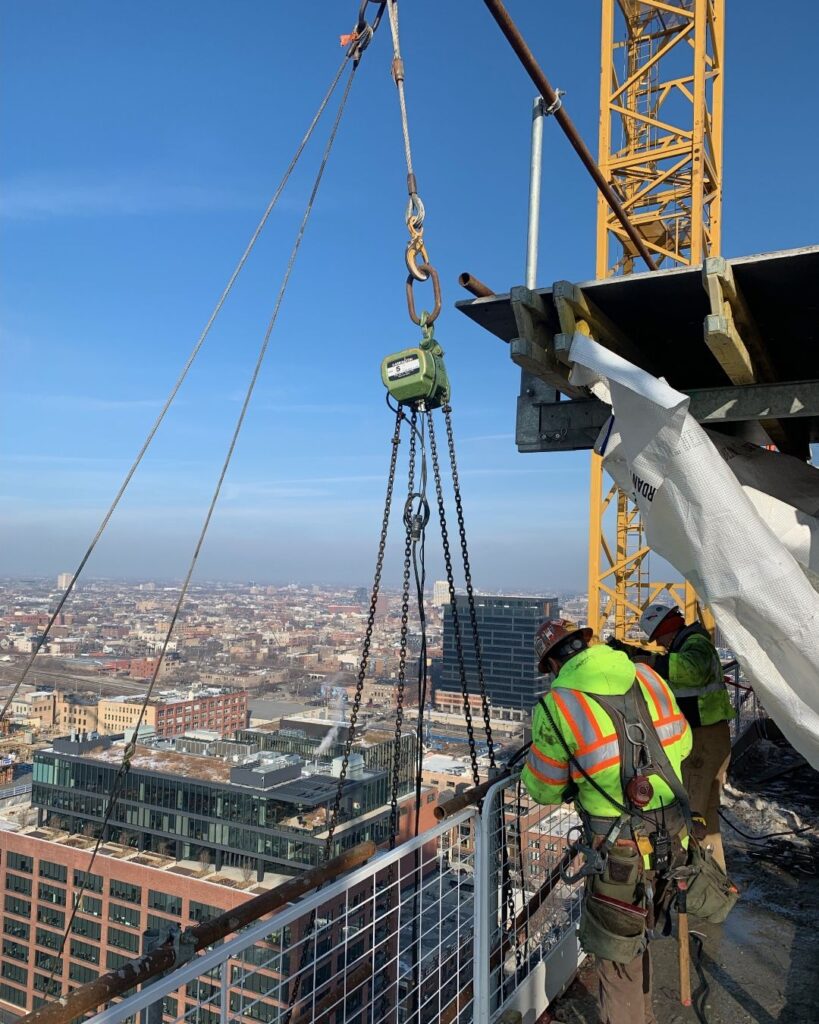
Hoist safety starts before the load leaves the ground. Whether crews are using a hand chain hoist, lever hoist, electric chain hoist, air chain hoist, or another type of hoisting equipment, basic operating practices help reduce equipment issues and support a safer lift.
A hoist is only one part of the lifting system. The load, support structure, hook, chain, trolley, beam clamp, rigging hardware, sling angles, and operator actions all affect the outcome of the lift.
This guide outlines common hoist safety do’s and don’ts to help crews better understand safe hoist operation, avoid preventable misuse, and know when equipment should be removed from service.
What Is Hoist Safety?
Hoist safety refers to the practices, inspections, and operating procedures used to lift, lower, and position loads with a hoist. It includes choosing properly rated equipment, inspecting the hoist before use, keeping the load path clear, avoiding shock loading, and using the hoist only as intended.
In simple terms, safe hoist operation means:
-
Know the load weight.
-
Use the correct hoist capacity.
-
Inspect the hoist before use.
-
Keep the hoist aligned with the load.
-
Avoid side loading and shock loading.
-
Keep personnel clear of suspended loads.
-
Remove damaged or questionable equipment from service.
These practices apply across many hoist types, including manual, electric, and pneumatic hoists.
The Don’ts of Hoist Operation
Avoiding common hoist misuses is one of the most important parts of hoist safety. Many hoist issues occur when equipment is overloaded, misaligned, damaged, or used in ways it was not designed for.
Do not:
-
Lift more than the rated load capacity of the hoist.
-
Use a damaged, altered, or malfunctioning hoist.
-
Use a hoist with a twisted, kinked, stretched, or damaged chain.
-
Use a hoist if the bottom hook is capsized.
-
Use a hoist to lift, support, or transport people.
-
Shock load the hoist.
-
Operate a hoist when it cannot form a straight line from hook to hook in the direction of loading.
-
Use the load chain as a sling.
-
Wrap the load chain around the load.
-
Use the hoist in a way that side-loads either hook.
-
Allow the chain or hook to be used as a welding ground.
-
Operate a hoist with missing or illegible safety labels, placards, or decals.
-
Attempt to lengthen, splice, or repair damaged load chain.
-
Use a hoist without knowing its inspection, testing, or certification status.
If any of these conditions are present, stop and review the equipment before continuing.
The Do’s of Hoist Operation
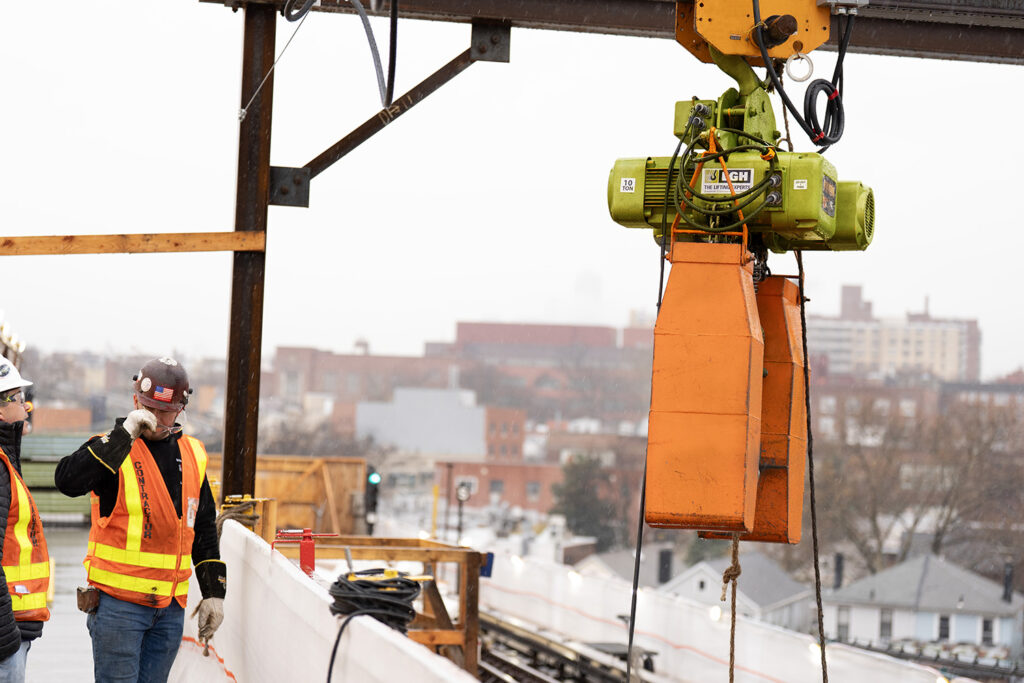
Electric chain hoist from LGH, helping to maintain the NYC MTA train system.
Safe hoist operation requires planning, inspection, communication, and control. Before lifting, crews should confirm that the hoist and full lifting setup are appropriate for the job.
Do:
-
Read and follow the manufacturer’s instructions.
-
Be familiar with the hoist controls, warnings, and operating limits.
-
Confirm the hoist is securely attached to a suitable support before applying load.
-
Verify the support structure, beam, trolley, clamp, or gantry is properly rated.
-
Check that the hoist capacity is greater than or equal to the required load.
-
Inspect the chain, hooks, latches, body, controls, and labels before use.
-
Take up slack carefully.
-
Make sure the load is balanced before lifting.
-
Confirm the load brake is holding before continuing.
-
Keep the hoist aligned with the direction of loading.
-
Make sure all personnel stay clear of the load.
-
Warn nearby personnel before lifting or moving a load.
-
Protect the load chain from weld splatter and other damage.
-
Report malfunctions immediately.
-
Remove the hoist from service until any issue is resolved.
-
Keep accurate inspection and certification records, or confirm that your rental provider can supply them.
A careful pre-use check can help identify problems before the lift begins.
Why Load Capacity Matters
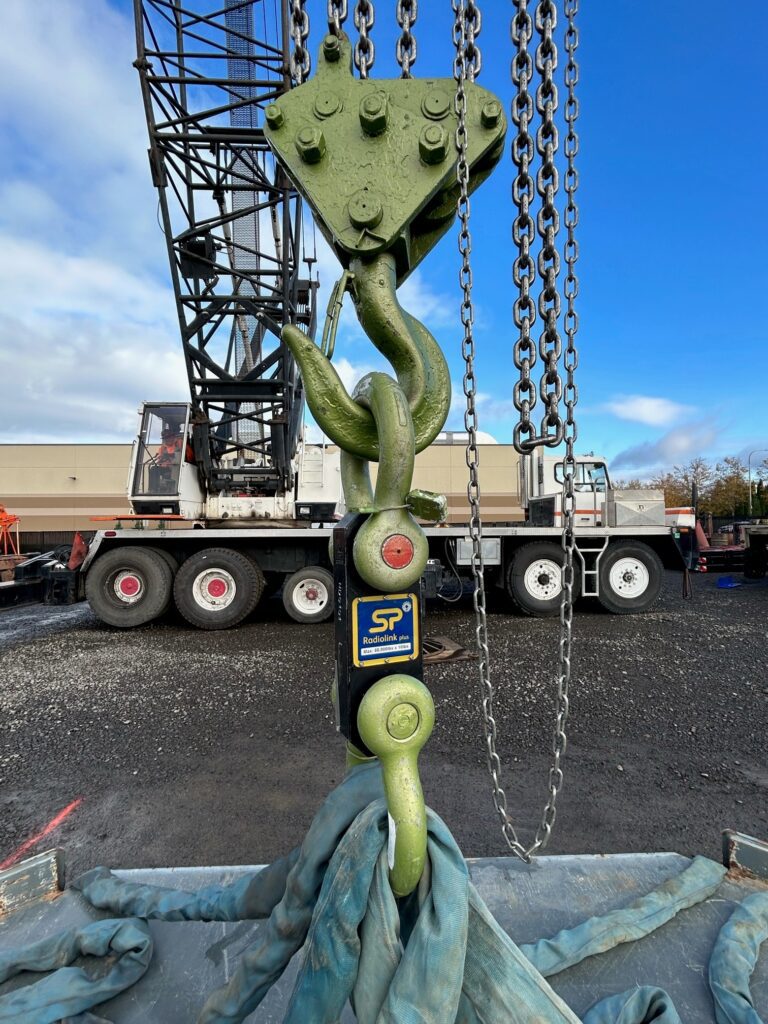
A digital load link rental, also known as a crane load cell, testing the weight of a load on a jobsite.
One of the most important hoist safety rules is simple: never exceed the rated capacity of the hoist.
The rated capacity applies to the hoist under approved operating conditions. The full lift plan must also account for the load weight, below-the-hook equipment, rigging hardware, hitch type, sling angle, and any dynamic forces that may occur during lifting.
Before operating a hoist, crews should confirm:
-
Actual or estimated load weight
-
Hoist rated capacity
-
Hook and latch condition
-
Support structure rating
-
Trolley or beam clamp rating
-
Rigging hardware capacity
-
Load path and center of gravity
-
Whether the load is free to move
If the load weight is uncertain, do not guess. Use manufacturer information, drawings, calculations, or load monitoring tools as needed to verify the load.
Avoid Shock Loading
Shock loading happens when force is applied suddenly to the hoist or rigging system. This can occur when slack is taken up too quickly, a load is jerked off the ground, or the load shifts suddenly during lifting.
Shock loading can create forces higher than the actual load weight. That can overload the hoist, hooks, chain, rigging hardware, beam, or support structure.
To avoid shock loading:
-
Take up slack slowly.
-
Lift smoothly and under control.
-
Avoid sudden starts and stops.
-
Confirm the load is not stuck, restrained, or snagged.
-
Keep the load balanced.
-
Do not bounce or jerk the load.
Controlled movement is a key part of hoist operation safety. Check out our blog post about shock loading to learn more.
Keep the Hoist Aligned
A hoist should generally form a straight line from the upper hook or suspension point to the lower hook in the direction of loading. If the hoist is pulled at an angle, side loading can occur.
Side loading can damage hooks, chain, housings, trolleys, and support hardware. It can also create unstable load movement.
Before lifting, confirm that:
-
The hoist is centered over the load.
-
The load path is vertical or properly planned.
-
Hooks are seated correctly.
-
No hook is loaded on the tip or side.
-
The chain is not twisted.
-
The load can lift freely.
If the hoist is not aligned, stop and reposition the setup before lifting.
Inspect the Chain and Hooks
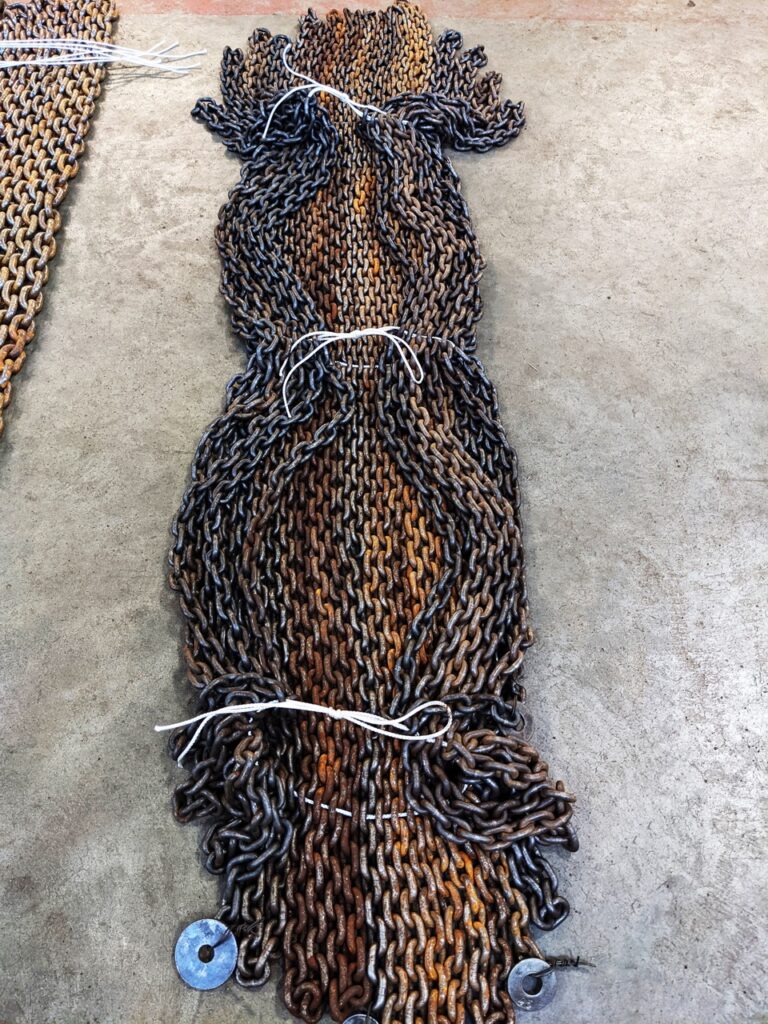
The load chain and hooks are critical components of the hoist. Damage to either can create serious problems during lifting.
Before use, check for:
-
Twisted chain
-
Kinked chain
-
Stretched links
-
Cracks, gouges, or deformation
-
Excessive wear
-
Rust or corrosion
-
Damaged hook throat opening
-
Bent or twisted hooks
-
Missing or damaged latches
-
Capsized bottom hook
-
Missing or illegible identification markings
Do not attempt to repair damaged load chain in the field. Damaged hoist components should be reviewed by qualified personnel and removed from service when required.
Keep Personnel Clear of the Load
No one should stand under a suspended load. Personnel should also stay clear of the load path, pinch points, and areas where the load could shift, swing, or fall.
Before lifting or moving a load:
-
Warn nearby personnel.
-
Clear the load path.
-
Maintain communication with the crew.
-
Keep hands and body parts away from pinch points.
-
Avoid walking under the load.
-
Stop if visibility or communication is poor.
Even a short lift can create serious risk if personnel are too close to the load.
Certification and Rental Records Matter
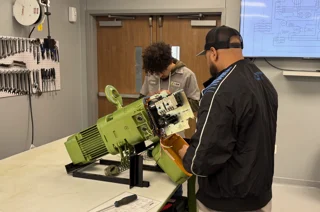
LGH staff training on electric chain hoists.
Hoists should have a clear inspection, testing, and certification history. Missing documentation or unknown equipment history can create unnecessary risk.
When renting hoists, crews should confirm that the equipment has been inspected, tested, and prepared for rental. LGH provides rental hoists and other lifting equipment that are inspected, tested, and certified before being sent to the jobsite. Learn more about LGH’s commitment to jobsite safety here.
Accurate records help support equipment traceability and give crews confidence that the hoist has been reviewed before use.
When Should a Hoist Be Removed from Service?
A hoist should be removed from service if there is any indication that it may not be safe to use.
Remove the hoist from service if:
-
The hoist is damaged or malfunctioning.
-
The load chain is twisted, kinked, stretched, or damaged.
-
Hooks are bent, cracked, twisted, or missing latches.
-
The brake does not hold properly.
-
Controls do not function correctly.
-
Safety labels or tags are missing or unreadable.
-
The hoist has been overloaded or shock loaded.
-
The certification status is unknown.
-
Anything about the hoist appears questionable.
When in doubt, stop using the hoist and have it reviewed before continuing.
Rent Hoists from LGH
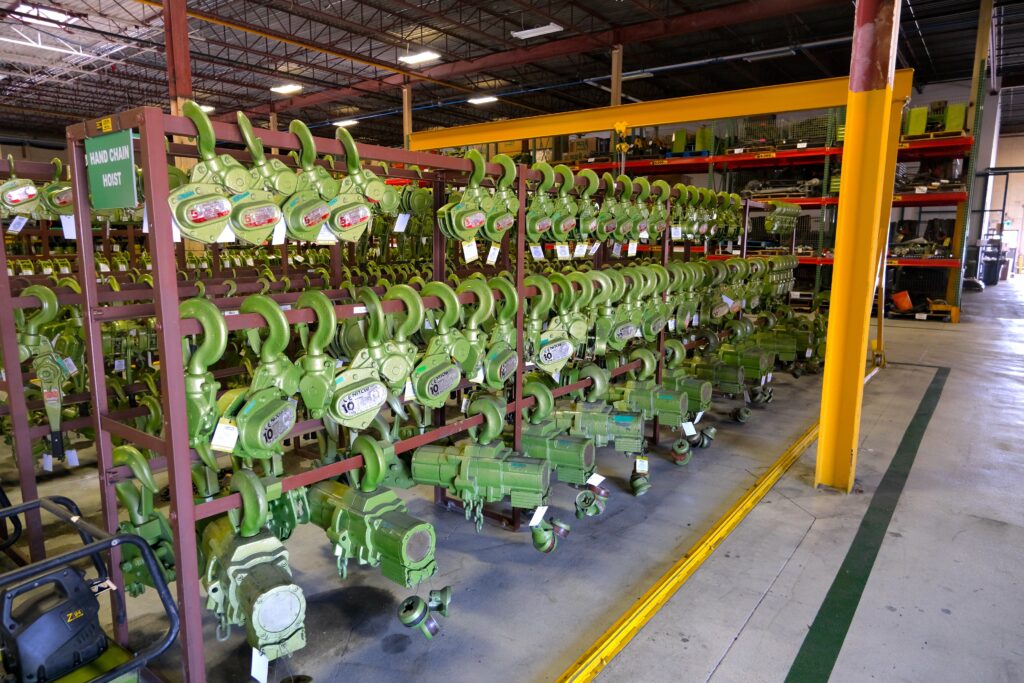
LGH rents a wide range of hoisting equipment, including hand chain hoists, lever hoists, electric chain hoists, air chain hoists, electric cable hoists, beam trolleys, beam clamps, gantries, and related rigging equipment.
Our rental specialists can help review your load weight, lift height, headroom, power source, air supply, support structure, and jobsite conditions to help determine the right hoist for your application.
Conclusion
Hoist safety depends on proper planning, inspection, equipment selection, and operation. Crews should never overload a hoist, use damaged equipment, side-load hooks, shock load the system, wrap load chain around the load, or stand under suspended loads.
Before lifting, confirm the hoist capacity, support structure, rigging setup, chain condition, hook condition, load weight, and certification status. If the equipment is damaged, malfunctioning, or questionable, remove it from service until it can be reviewed.
For help choosing hoisting equipment for your next project, contact LGH today or call 800-878-7305 to speak with a rental specialist.
Frequently Asked Questions About Hoist Safety
What are the main safety measures when operating a hoist?
The main hoist safety measures include inspecting the hoist before use, confirming the load weight, staying within rated capacity, keeping the hoist aligned with the load, avoiding shock loading, keeping personnel clear of the load, and removing damaged equipment from service.
What should you check before using a hoist?
Before using a hoist, check the rated capacity, chain, hooks, latches, controls, labels, brake function, support structure, rigging hardware, load weight, and certification status.
What should you never do with a hoist?
Never overload a hoist, lift people, stand under a suspended load, shock load the hoist, side-load the hooks, wrap the load chain around the load, use damaged chain, or operate a hoist with missing safety labels.
What is overhead hoist safety?
Overhead hoist safety refers to the practices used when lifting loads from an overhead support, such as a beam, trolley, gantry, or crane. It includes proper inspection, load control, alignment, communication, and keeping personnel clear of suspended loads.
Why is shock loading dangerous?
Shock loading can create forces greater than the actual load weight. This can overload the hoist, chain, hooks, rigging hardware, or support structure and may damage equipment.
Can hoist load chain be used as a sling?
No. Hoist load chain should not be wrapped around a load or used as a sling. Use the proper sling or rigging equipment for the lifting application.
When should a hoist be removed from service?
A hoist should be removed from service if it is damaged, malfunctioning, missing labels, has unknown certification status, has a damaged chain or hook, or has been overloaded or shock loaded.
LGH is North America’s largest single organization devoted exclusively to the provision of lifting and moving equipment for rent. LGH holds the most comprehensive inventory for hoisting, rigging, jacking, pulling, material handling, and safety equipment. With over 90,000 pieces, discover your next project solution at RentLGH.com.