Hydraulic Lifting Systems: Pumps, Cylinders, and Accessories to Consider
A hydraulic lifting system is more than a cylinder and a pump. To raise a heavy load with control, crews may need hydraulic cylinders, the right pump style, manifolds, pressure gauges, valves, hoses, cribbing, and other accessories that help manage load movement and pressure throughout the lift.
On many jobsites, hydraulic equipment is common enough that the accessories can be easy to overlook. But the details matter. Choosing the right components before the job starts can help crews stay on budget, reduce downtime, and avoid scrambling for missing equipment once the lift is underway.
This guide explains key hydraulic lifting system components to consider when planning a jacking or lifting application.
Start with the Lift Requirements
The first step is understanding how much control the lift requires. Not every hydraulic lifting application needs the same level of synchronization, but every setup needs to match the load, tolerance, lift points, and jobsite conditions.
Before selecting equipment, consider:
- Load weight
- Number of lift points
- Required stroke
- Available clearance
- Required lift height
- Acceptable height variation between cylinders
- Whether the load must remain level
- Duration of load holding
- Pump type
- Flow control requirements
- Pressure monitoring requirements
- Site access and available power source
If the load must stay extremely level across multiple lift points, the pump and control system become especially important.
Synchronous Lifting Systems for Tight Tolerances
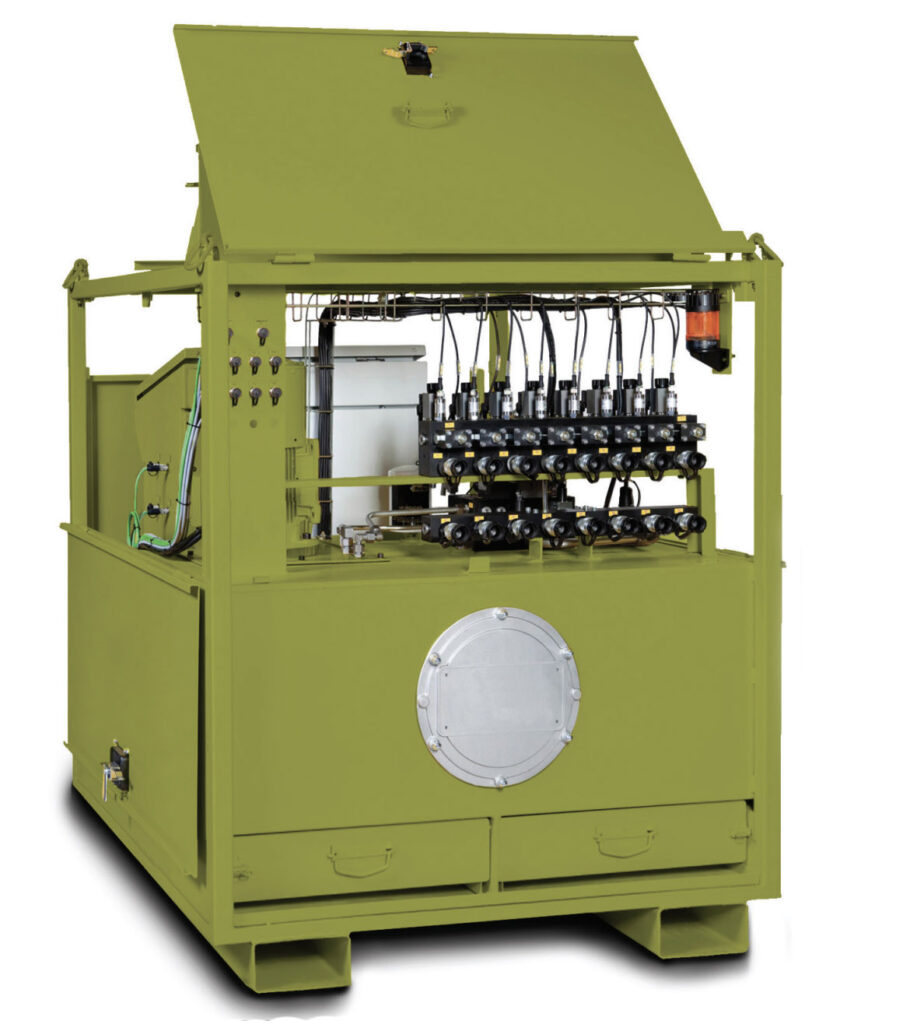
Enerpac Sync Lift EVO Series 4 – 36 Point Lift System
For applications that require very close synchronization between leading and lagging cylinders, a synchronous lifting system may be the best option.
A synchronous pump system uses computer-controlled operation to monitor and adjust lifting movement across multiple points. This helps keep the load more level when small differences in cylinder movement could create alignment issues, structural stress, or unsafe conditions.
Synchronous lifting systems are often used for applications such as:
- Bridge maintenance
- Structural lifting
- Multi-point jacking
- Heavy equipment positioning
- Projects with tight elevation tolerances
- Loads that must remain level across several lift points
For example, LGH rents the Enerpac EVO-series computer-controlled hydraulic lift system. This computerized hydraulic lifting system is designed to control movement between leading and lagging cylinders with a high degree of accuracy. This type of system can be helpful when the lift requires more control than a manual or basic pump setup can provide.
Split-Flow Pumps for Controlled Multi-Point Lifting
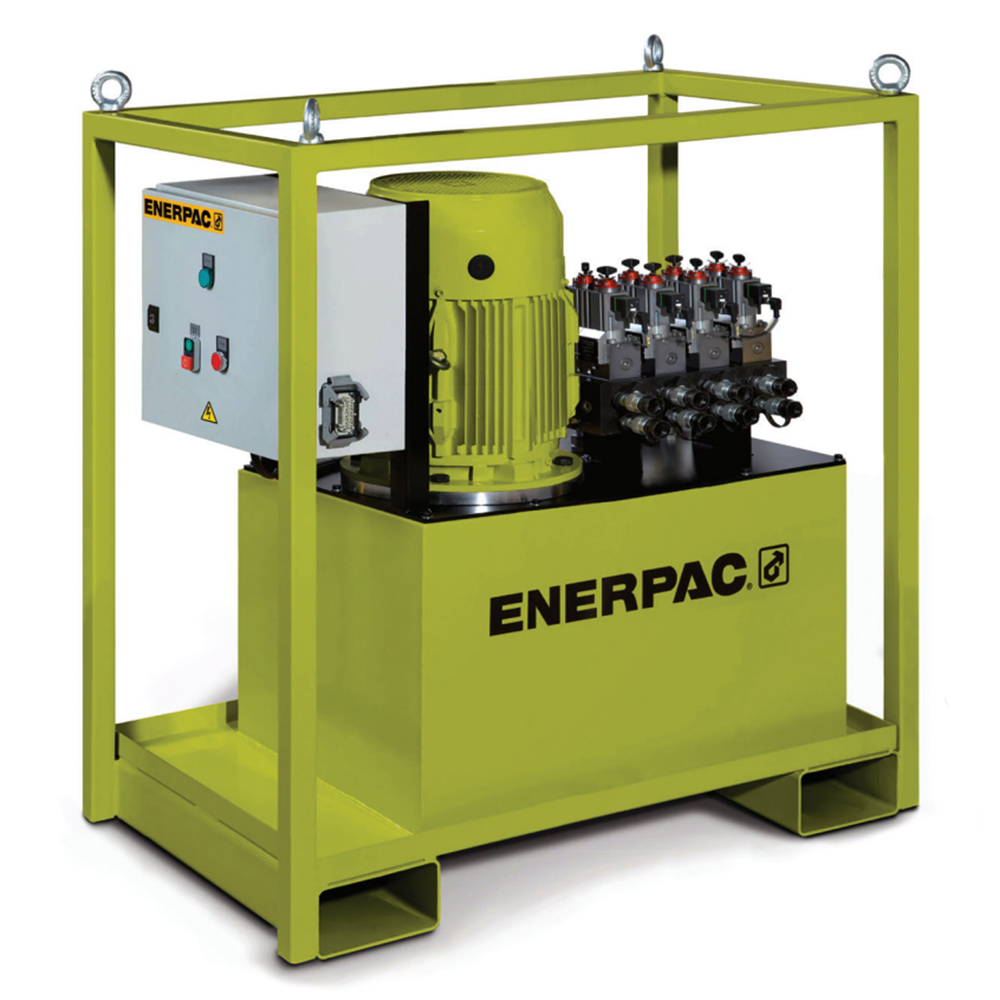
The Enerpac SFP series split-flow hydraulic pump.
For applications that require controlled lifting but do not need computer-managed synchronization, a split-flow pump may be a practical option.
A split-flow pump distributes oil flow across multiple outlets to help cylinders move more consistently. This can provide a high level of accuracy without the full control system of a synchronous lifting setup.
Split-flow pumps may be useful for:
- Bridge bearing maintenance
- Stage lifting in shipbuilding
- Skidding applications
- Leveling large structures
- Wind turbine component positioning
- Multi-point lifts with moderate tolerance requirements
A split-flow pump can help simplify multi-point lifting when crews need better control than separate pumps and manual adjustment can provide.
Manual Pump, Manifold, and Gauge Setups
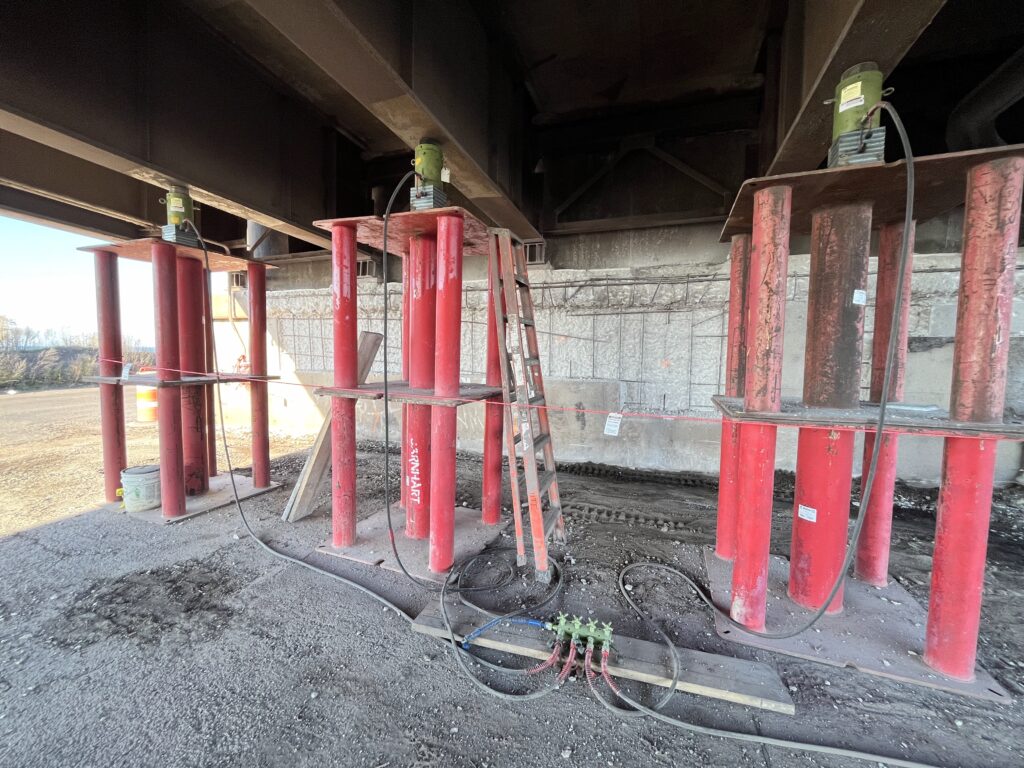
For non-critical lifts where relative accuracy is acceptable, crews may use manual pumps, manifolds, and pressure gauges. This type of setup gives the operator more direct control over oil flow and pressure at each cylinder.
A manual setup may include:
- One or more hydraulic pumps
- Hydraulic cylinders
- Manifolds
- Shut-off valves
- Pressure gauges
- Hoses and fittings
- Check valves or needle valves as needed
With this approach, operators monitor pressure readings and adjust flow manually. In multi-point applications, gauges can help identify whether one cylinder is carrying a disproportionate share of the load.
Manual setups can be effective for simpler applications, but they require careful planning, communication, and operator attention.
Choosing the Right Hydraulic Cylinders
-
-
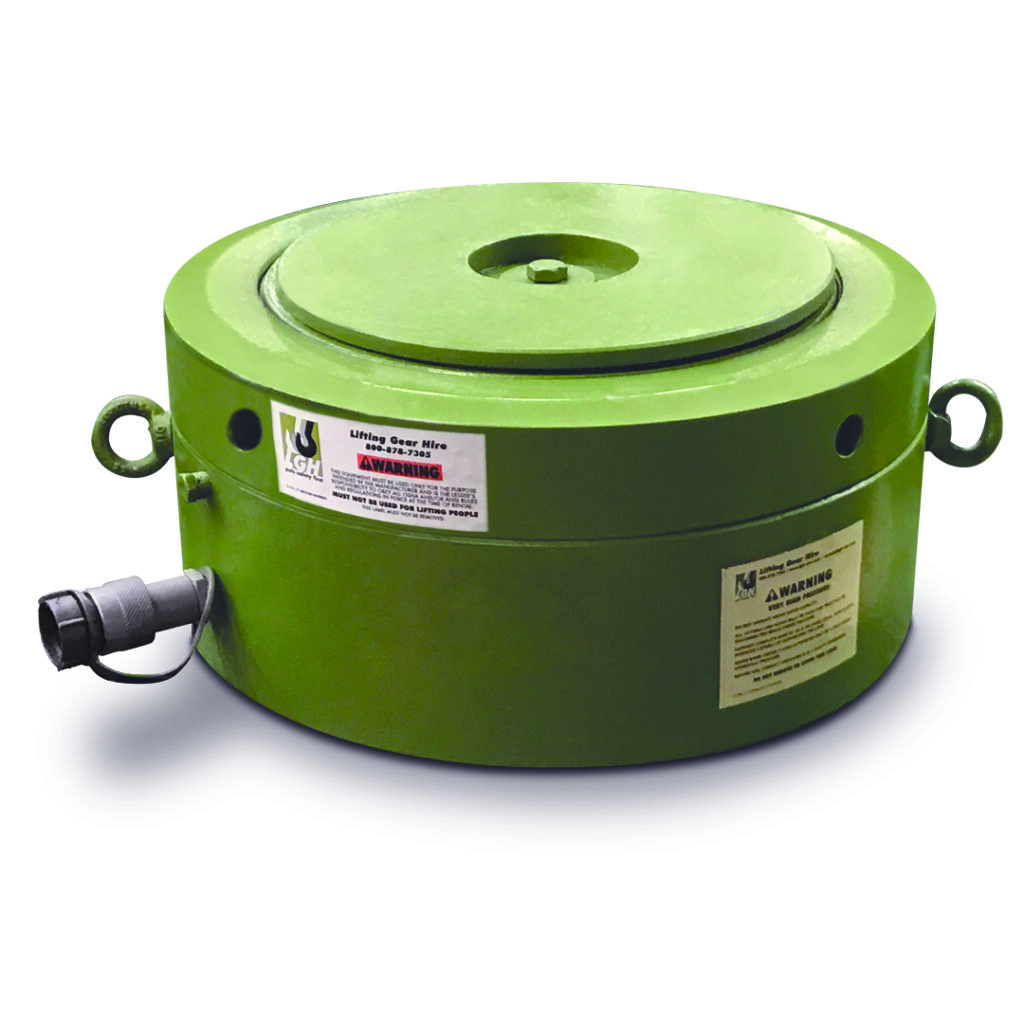
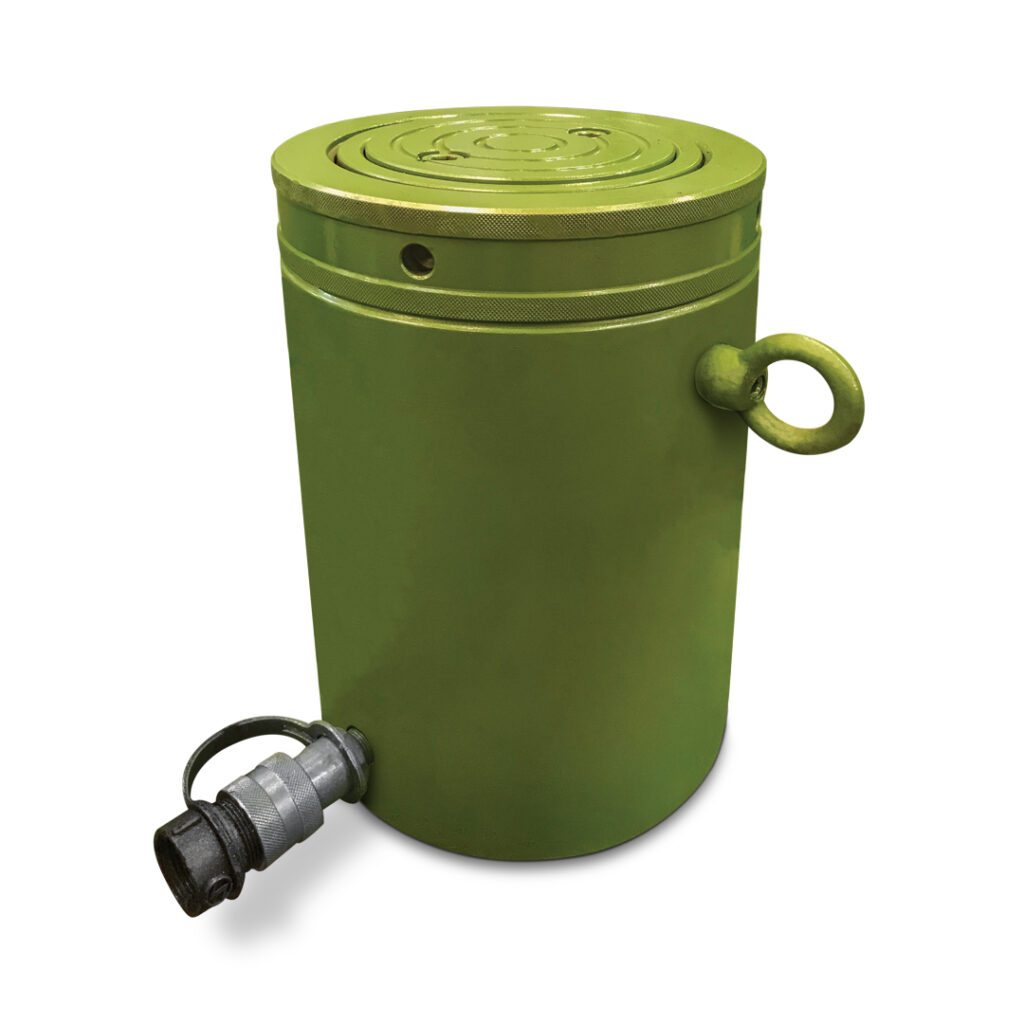
TheEnerpac 500-ton model CLP-5002 single-acting pancake-style lock nut hydraulic cylinder rental from LGH.
-
-
The Enerpac CLL-1506 150-ton capacity lock nut hydraulic cylinder rental from LGH.
-

-
The Enerpac RC256 Single Acting Spring Return hydraulic cylinder rental.
Once the pump type is selected, the hydraulic cylinders and related accessories can be matched to the application.
The right cylinder depends on the load, clearance, stroke, lifting height, and whether the load needs to be held for an extended period.
Common cylinder considerations include:
- Required capacity
- Stroke length
- Collapsed height
- Single-acting or double-acting operation
- Load return or spring return
- Low-profile or pancake design
- Need for mechanical load holding
- Surface conditions
- Side-load risk
- Available cribbing or support
If the lift involves limited clearance, low-profile cylinders may be needed. If the load needs to remain elevated for a longer period, lock nut hydraulic cylinders may be the better choice.
Lock Nut Hydraulic Cylinders for Load Holding
When a load must remain raised for an extended period, lock nut hydraulic cylinders can provide mechanical load holding after the cylinder extends. These cylinders include a threaded plunger and lock nut that can be tightened into position to help support the load mechanically.
This makes them useful for:
- Bridge work
- Foundation support
- Structural lifting
- Heavy equipment maintenance
- Long-duration jacking
- Applications where mechanical load holding is required
Check valves can help prevent reverse oil flow, but they should not be treated as a replacement for proper load support. For extended load holding, a lock nut hydraulic cylinder may be the more appropriate option depending on the lift plan.
Needle Valves and Check Valves
Valves are small components, but they can make a major difference in how a hydraulic lifting system behaves.
A needle valve helps control the flow of hydraulic oil. This can be useful when crews need to moderate the speed of extension or retraction.
A check valve allows hydraulic fluid to flow in one direction while helping prevent reverse flow. Check valves can be useful in certain hydraulic setups, but the full system still needs to be planned and monitored carefully.
Valve selection becomes especially important when working with low-profile cylinders, pancake cylinders, or pumps that actively pull oil back into the reservoir. In some cases, rapid retraction can damage the cylinder or affect the load if flow is not controlled properly.
Manifolds and Pressure Gauges
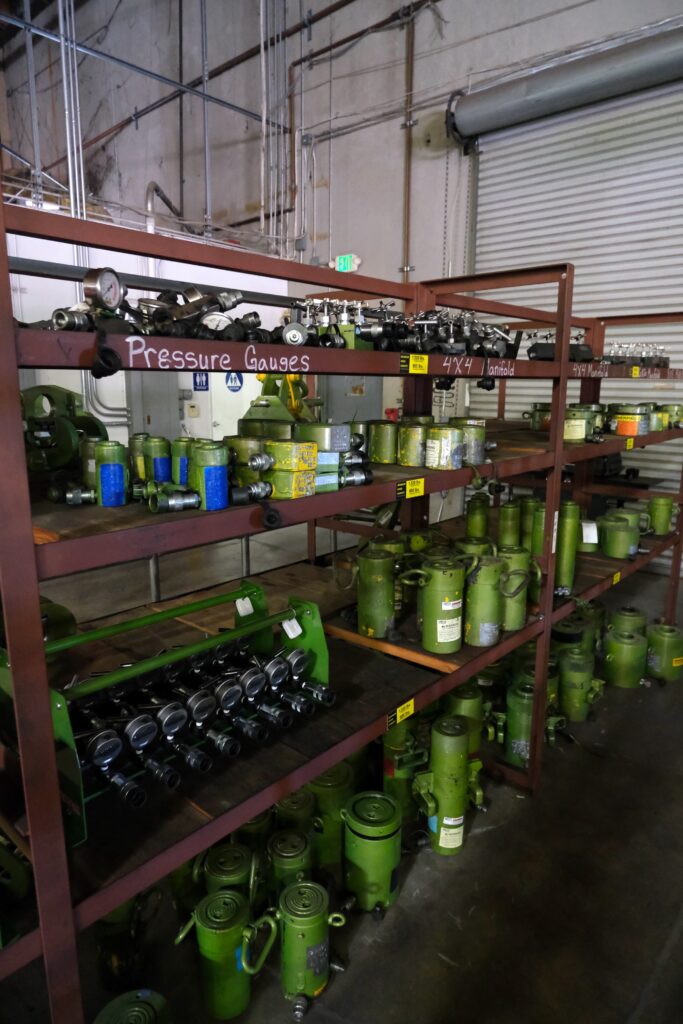
LGH stocks hydraulic lifting accessories like manifolds, gauges, and more.
Manifolds and pressure gauges help crews monitor and control hydraulic lifting systems.
A manifold can distribute hydraulic flow to multiple cylinders. Manifolds may be used independently or connected together depending on the complexity of the lifting setup. Individual ports with shut-off valves allow crews to control which cylinders receive oil flow.
Pressure gauges help operators monitor pressure at each cylinder or circuit. This can help identify uneven load sharing, especially in multi-point lifting applications.
Together, manifolds and pressure gauges can help crews:
- Control oil flow to multiple cylinders
- Monitor pressure at each lift point
- Identify uneven loading
- Isolate sections of the system
- Adjust lift points manually
- Support more controlled lifting and lowering
For many hydraulic lifting applications, gauges are not optional extras. They are important tools for understanding what is happening in the system.
Other Hydraulic Accessories to Consider
Depending on the job, additional hydraulic or mechanical equipment may be needed to complete the lift.
Other equipment to consider may include:
- Hydraulic hoses
- Couplers and fittings
- Spreader jacks
- Mechanical ratchet jacks
- Cribbing
- Base plates
- Load-spreading plates
- Hydraulic manifolds
- Pressure gauges
- Needle valves
- Check valves
In some applications, crews may need additional height below the load before a hydraulic cylinder can be placed. In others, a mechanical jack or spreader jack may be needed to create the clearance required for the main lift.
The best time to identify these needs is before the equipment arrives on site.
What Components Should Be Included in a Hydraulic Lifting System?
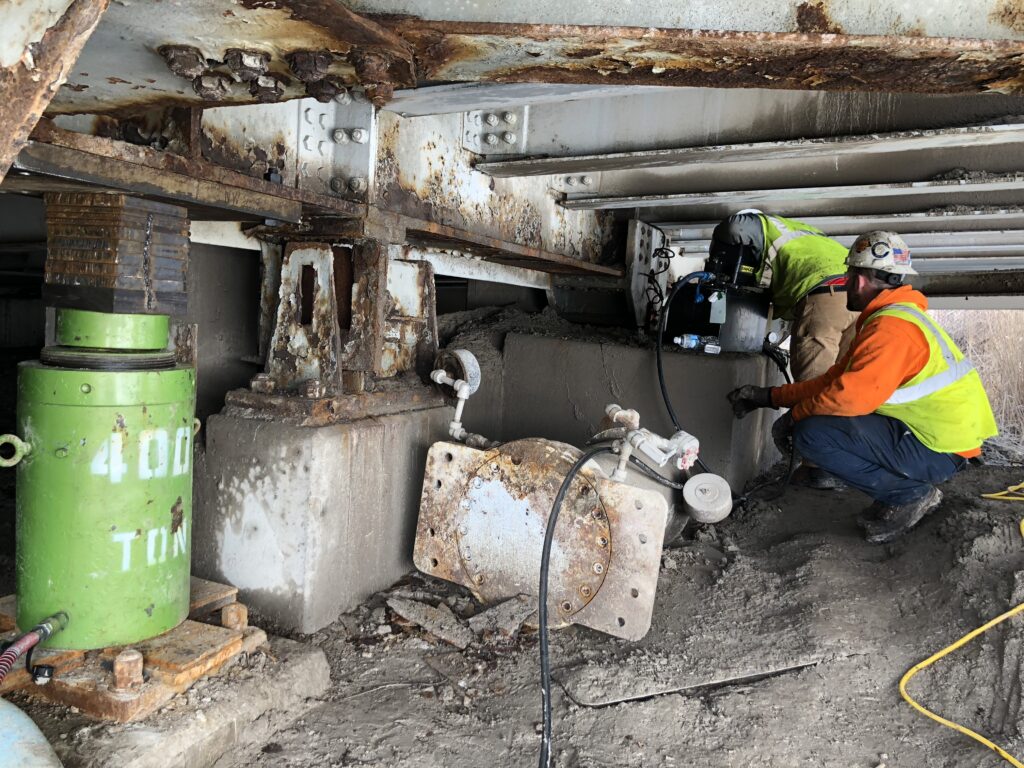
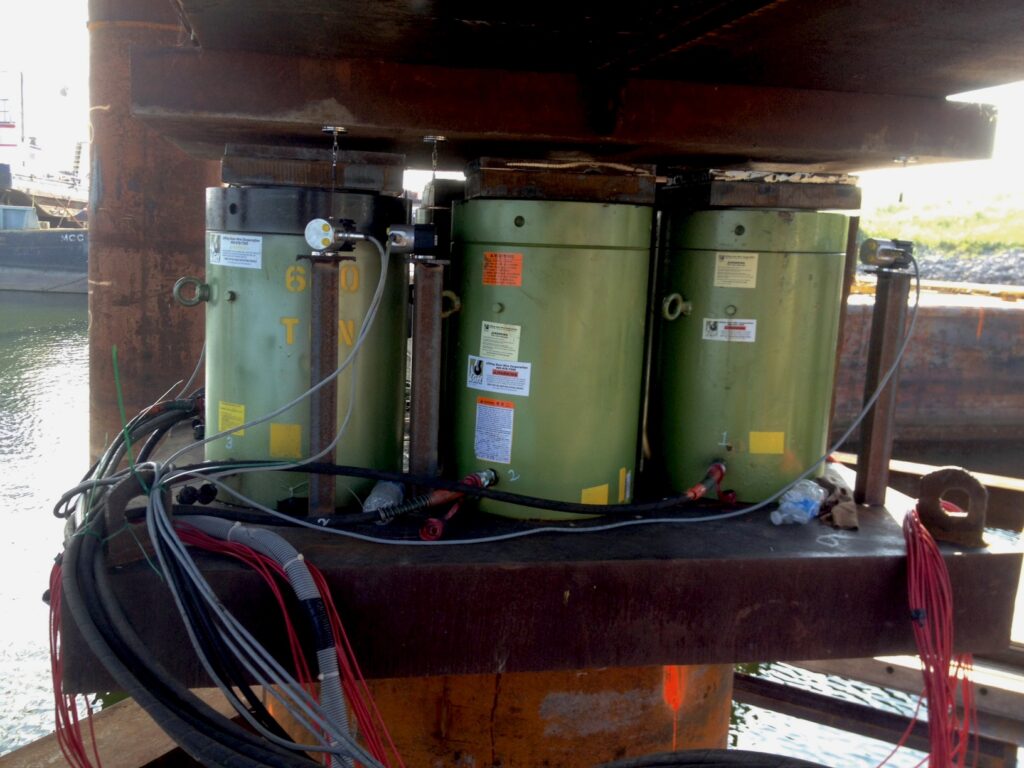
A hydraulic lifting system from LGH jacking up a large bridge section.
A hydraulic lifting system may include hydraulic cylinders, a pump, hoses, couplers, manifolds, pressure gauges, valves, cribbing, and load-spreading equipment. More complex systems may also include synchronous controls, split-flow pumps, lock nut hydraulic cylinders, or additional jacking equipment.
The exact setup depends on the load, number of lift points, required accuracy, available clearance, and how long the load must be held.
For example:
- Use a synchronous lifting system when tight multi-point accuracy is required.
- Use a split-flow pump when controlled multi-point lifting is needed without computer control.
- Use a manual pump, manifold, and gauge setup when relative accuracy is acceptable and operators can manually control the system.
- Use lock nut hydraulic cylinders when the load needs mechanical load holding for an extended period.
- Use needle valves, check valves, gauges, and manifolds when flow control and pressure monitoring are needed.
Planning Helps Prevent Downtime
Hydraulic lifting applications can be delayed when small but important accessories are left out of the plan. Missing valves, gauges, hoses, manifolds, or cribbing can slow down the job and force crews to adjust in the field.
Before finalizing a hydraulic equipment rental, review the full setup from pump to cylinder. Make sure the system accounts for lifting, lowering, load holding, monitoring, support, and access.
Proper preparation can help crews avoid unnecessary downtime and keep the lift moving more smoothly.
Rent Hydraulic Lifting Equipment from LGH
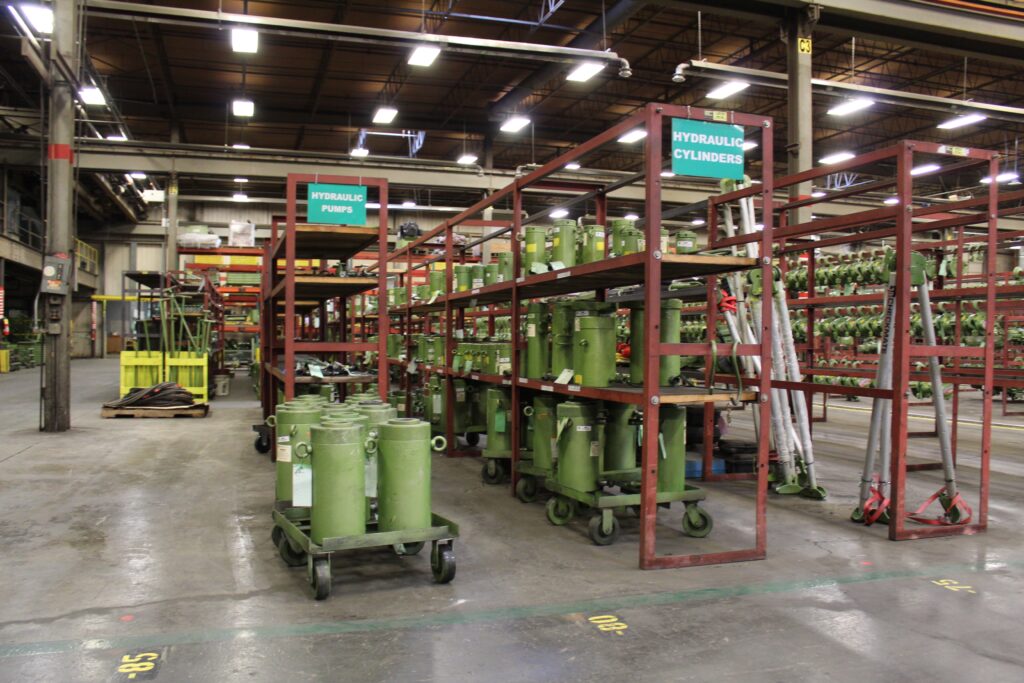
LGH rents hydraulic cylinders, pumps, manifolds, pressure gauges, valves, and hydraulic accessories for lifting, jacking, positioning, and load-holding applications.
Our rental specialists can help review your load weight, number of lift points, tolerance requirements, stroke, clearance, pump needs, and accessory requirements to help determine the right hydraulic lifting system components for your job.
Whether your project requires a synchronous lifting system, split-flow pump, lock nut hydraulic cylinders, manifolds, pressure gauges, needle valves, check valves, or other hydraulic accessories, LGH can help match the right rental equipment to the application.
Conclusion
A hydraulic lifting system depends on more than the cylinder alone. Pumps, manifolds, gauges, valves, hoses, cribbing, and accessories all play important roles in controlling the lift and supporting the load.
The right setup depends on how level the load must remain, how many lift points are involved, how long the load must be held, and how much manual control the application allows. Synchronous lifting systems, split-flow pumps, manual pump setups, lock nut hydraulic cylinders, needle valves, check valves, manifolds, and pressure gauges each solve different jobsite challenges.
For help choosing hydraulic lifting system components for your next project, contact LGH today or call 800-878-7305 to speak with a rental specialist.
Frequently Asked Questions About Hydraulic Lifting Systems
What is a hydraulic lifting system?
A hydraulic lifting system uses hydraulic pressure to raise, lower, position, or hold a load. It may include cylinders, pumps, hoses, manifolds, pressure gauges, valves, and load-support accessories.
What components are needed for a hydraulic lift?
A hydraulic lift may require cylinders, a pump, hoses, fittings, manifolds, gauges, valves, cribbing, and load-spreading equipment. The exact components depend on the load, number of lift points, lift height, and control requirements.
When should you use a synchronous lifting system?
A synchronous lifting system should be considered when multiple lift points must move with very tight accuracy. These systems are commonly used for structural lifting, bridge work, and other applications where the load must stay level.
What is a split-flow pump?
A split-flow pump distributes hydraulic oil flow across multiple outlets to help cylinders move more consistently. It is useful for controlled multi-point lifting when full computer-controlled synchronization is not required.
Why use pressure gauges in hydraulic lifting?
Pressure gauges help operators monitor pressure in the hydraulic system. In multi-point lifts, gauges can help identify whether one cylinder is carrying more load than the others.
What does a needle valve do in a hydraulic system?
A needle valve helps control oil flow. It can be used to moderate extension or retraction speed and provide more controlled movement.
When should lock nut hydraulic cylinders be used?
Lock nut hydraulic cylinders should be considered when a load needs to be lifted and mechanically held for an extended period. The lock nut provides mechanical load holding after the cylinder is extended.
Does LGH rent hydraulic lifting equipment?
Yes. LGH rents hydraulic cylinders, pumps, manifolds, gauges, valves, and other hydraulic accessories for lifting, jacking, positioning, and load-holding applications.
About LGH
LGH is North America’s largest single organization devoted exclusively to the provision of lifting and moving equipment for rent. LGH holds the most comprehensive inventory for hoisting, rigging, jacking, pulling, material handling, and safety equipment. With over 90,000 pieces, discover your next project solution at RentLGH.com.