Gantry cranes are portable lifting solutions used across construction, maintenance, industrial, HVAC, and equipment handling applications. Their A-frame design, adjustable height, adjustable span, and heavy-duty casters make them useful when crews need a temporary lifting point without installing a permanent overhead structure.
However, safe operation depends on proper setup and use. Even a well-built gantry crane can become dangerous if it is side loaded, assembled incorrectly, moved improperly, or modified in the field.
In this blog post, we’ll review five common gantry crane mistakes and share practical gantry crane safety tips to help crews avoid equipment damage, unstable lifts, and unnecessary jobsite risk.
What Mistakes Should You Avoid When Using a Gantry Crane?
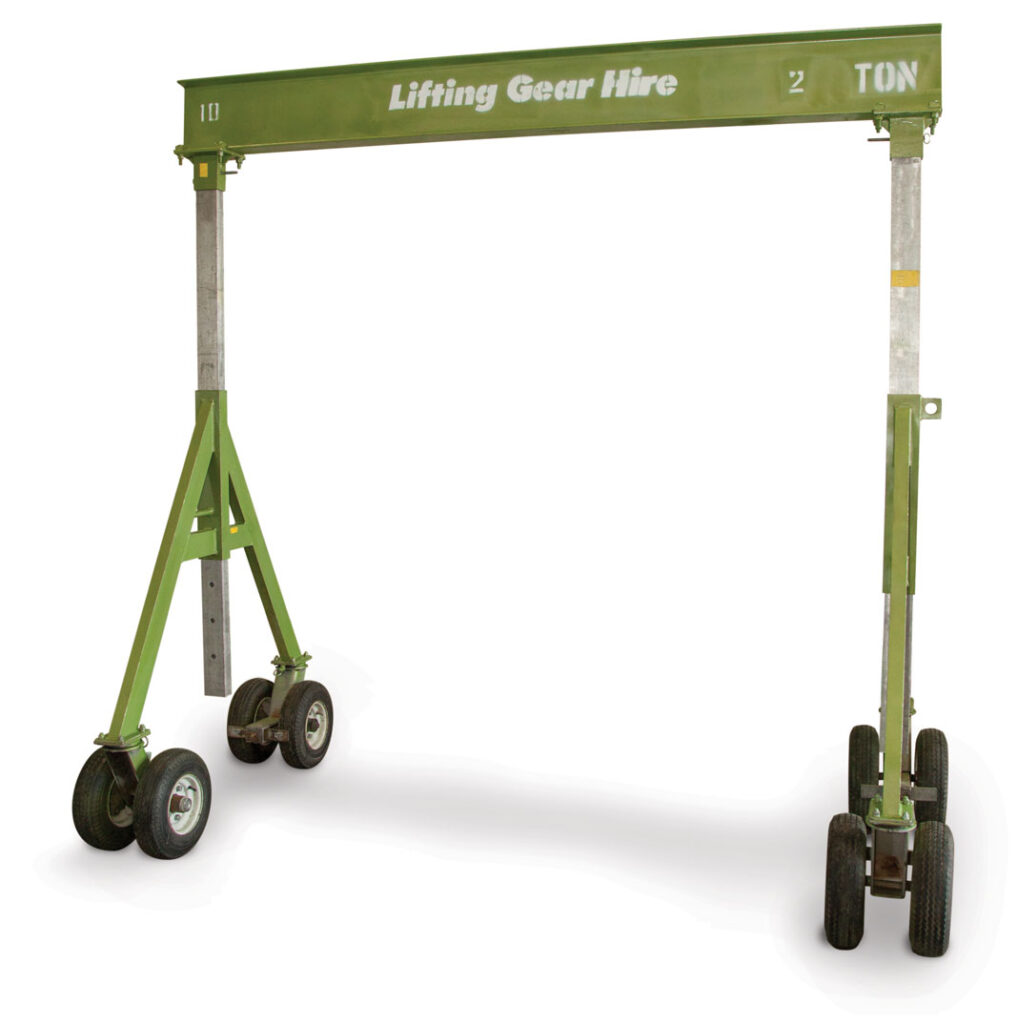
An aluminum gantry crane from LGH.
The most common gantry crane mistakes include side loading the beam, forgetting to set the load pin, adjusting the beam height unevenly, moving a fully assembled gantry with another crane, and operating the gantry without casters installed. These misuses can damage the equipment, create unstable lifting conditions, and increase the risk of injury or load failure.
1. Side Loading the Gantry
One of the most important gantry crane safety tips is to avoid side loading. A gantry crane is designed to lift loads in line with the beam and support structure. When a perpendicular or angled force is applied to the beam, the gantry may experience stresses it was not designed to handle.
Side loading can happen when crews try to pull a load sideways, drag a load into position, or use the gantry as a substitute for a permanent overhead beam. This can place unintended force on the beam, legs, casters, and connections.
To avoid side loading, position the gantry directly over the load before lifting. Keep the load centered under the beam and make sure the lift path stays controlled throughout the operation.
2. Forgetting to Set the Load Pin
Another common gantry crane mistake is failing to set the load pin when using vertical inserts. The load pin helps support the insert and keeps the gantry properly configured for the lift.
In some situations, crews may be tempted to skip the pin to gain extra headroom. This is unsafe. Without the load pin properly installed, the vertical inserts may not have the support they need, which can create an unstable or uncertified setup.
Before using the gantry, confirm that all required pins, bolts, fasteners, and locking components are installed according to the manufacturer’s instructions.
3. Adjusting the Beam Height Unevenly
Many gantry cranes allow crews to adjust the beam height to match the application. However, both sides of the gantry need to be adjusted evenly.
If one side rises too far ahead of the other, the beam can become uneven and may bind against the posts. As a general rule, never raise one end of the beam more than 12 inches ahead of the other side during adjustment.
To avoid this issue, adjust both sides at a controlled pace and keep the beam as level as possible. Good communication between crew members is essential, especially when two people are adjusting the gantry at the same time.
4. Moving a Fully Assembled Gantry with Another Crane
Once a gantry crane is fully assembled, do not lift it with another crane, forklift, or piece of machinery to move it to a new location. This misuse is sometimes called “craning the crane,” and it can damage the gantry or create an unstable handling situation.
If the gantry cannot safely roll to the next work area, disassemble it first and then move the components separately. This may take more time, but it helps protect the equipment and the crew.
Portable gantries are designed for controlled movement on their casters or for disassembly and relocation. They should not be treated like a single load to be picked and moved by other lifting equipment unless the manufacturer specifically permits that method.
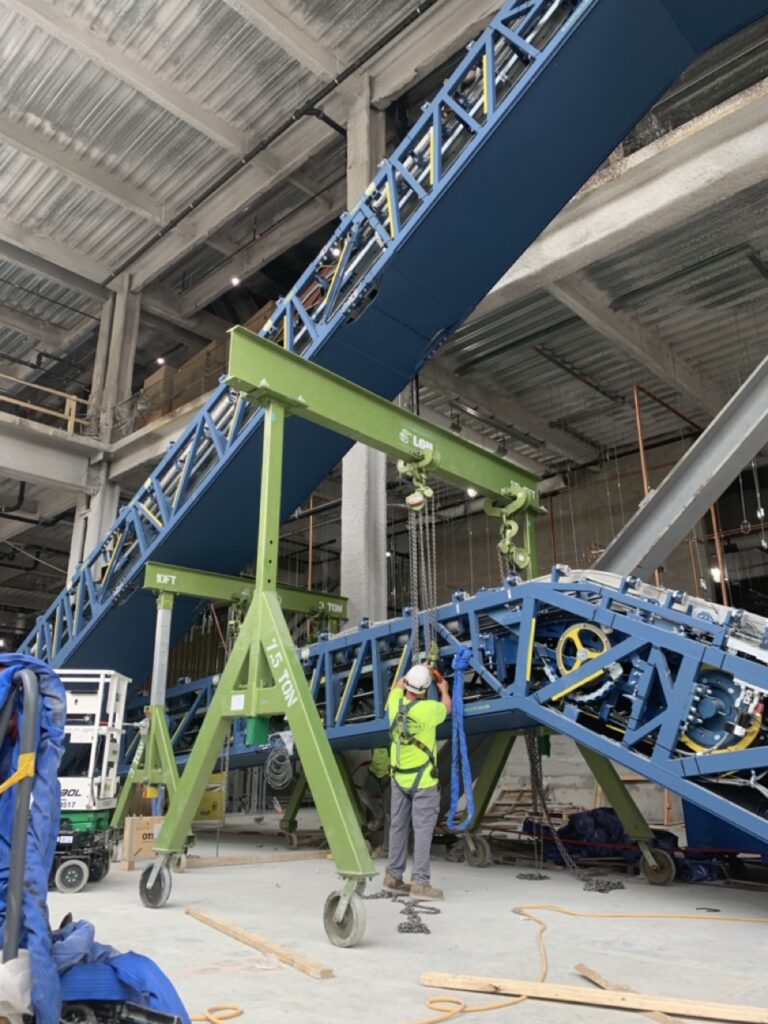
Two 5-ton steel gantry crane rentals from LGH on-site.
5. Removing or Operating Without Casters
Never operate a gantry crane without the casters installed. Some crews may consider removing the casters to gain extra headroom or increase surface contact with the floor, but this can affect the gantry’s design, stability, and certification.
Casters are part of the gantry crane’s intended configuration. Removing them can change how the equipment transfers load into the ground and may create unsafe conditions.
Always use the gantry in its complete, manufacturer-approved configuration. If headroom is limited, choose a different gantry size, lifting method, or rigging setup instead of modifying the equipment.
Additional Gantry Crane Safety Tips
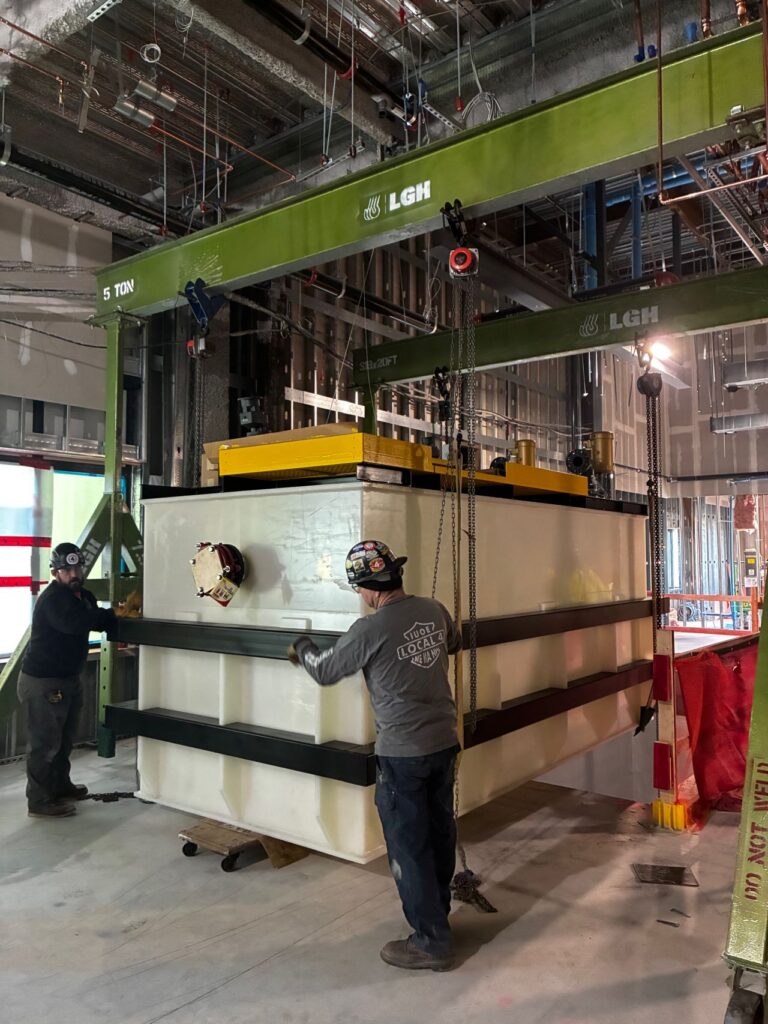
A steel gantry crane from LGH.
Avoiding the five mistakes above is a strong start, but crews should also follow basic gantry crane safety practices before every lift.
Before using a gantry crane, confirm:
The gantry is rated for the load and rigging.
All pins, bolts, fasteners, and locking devices are properly installed.
The beam height and span match the lift plan.
The floor or work surface can support the load.
The load is centered under the beam.
The hoist, trolley, slings, shackles, and other rigging hardware are properly rated.
The gantry is assembled according to the manufacturer’s instructions.
Workers stay clear of the load path during lifting.
If anything looks damaged, incomplete, unstable, or improperly configured, stop and correct the issue before lifting.
Rent Gantry Cranes from LGH
LGH offers steel gantries, aluminum gantries, hydraulic gantries, and other lifting equipment for rent. Our rental specialists can help match the right gantry crane to your load weight, required height, span, jobsite conditions, and application.
Whether your project requires a portable lifting solution for maintenance, construction, HVAC work, machinery handling, or industrial repairs, LGH can help provide tested, certified, and job-ready rental equipment.
Conclusion
Gantry cranes can be safe, efficient, and versatile lifting solutions when crews use them correctly. However, common mistakes like side loading, skipping load pins, adjusting the beam unevenly, moving the assembled gantry with another crane, or removing casters can create serious safety risks.
Following proper gantry crane safety tips helps protect workers, equipment, and the load. Always use the gantry as designed, follow the manufacturer’s instructions, inspect the setup before lifting, and stop work if something does not look right.
For help choosing the right gantry crane rental for your next project, contact LGH today or call 800-878-7305 to speak with a rental specialist.
LGH is North America’s largest single organization devoted exclusively to the provision of lifting and moving equipment for rent. LGH holds the most comprehensive inventory for hoisting, rigging, jacking, pulling, material handling, and safety equipment. With over 90,000 pieces of equipment, discover your next project solution at RentLGH.com.