Low Headroom Lifting Beams: How to Choose the Right Beam
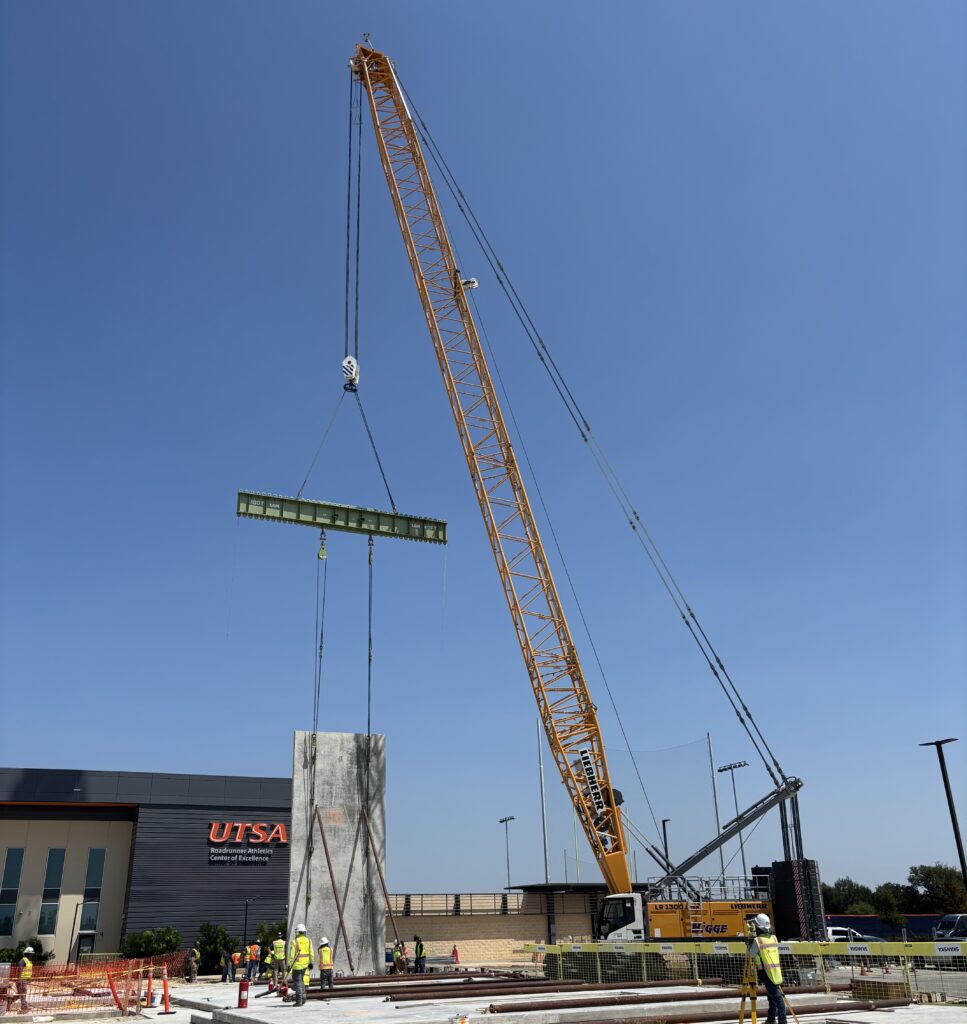
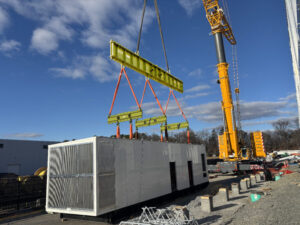
LGH’s multi-lug lifting beam and sheave blocks were employed to install tilt walls at the University of Texas San Antonio.
When a heavy load needs to be lifted but overhead space is limited, the right below-the-hook equipment can make all the difference. Cranes, hoists, and rigging hardware all play an important role in a lift, but the beam used below the hook can determine how well the load is supported, balanced, and controlled.
That is where a low headroom lifting beam can be a practical solution.
Lifting beams, also called hoist beams or hoisting beams, are designed to provide one or more lower lifting points while keeping the rigging profile compact. They are especially useful when a load must be lifted in a space where there is not enough room for long top slings, tall rigging assemblies, or traditional spreader bar configurations.
In this blog post, we’ll explain what lifting beams are, how lifting beams differ from spreader bars, when low headroom lifting beams are useful, and what to consider before renting a lifting beam for your next project.
What Is a Lifting Beam?

A multi lug lifting beam with shackles, lifting a curtain wall windows in Pittsburgh, PA.
A lifting beam is a below-the-hook lifting device designed to connect a crane, hoist, or other lifting equipment to a load. Most lifting beams use a top lifting point, or bail, and one or more lower lifting points where rigging can be attached to the load.
Lifting beams are often used when a load needs to be lifted from multiple points, when the center of gravity must be managed carefully, or when the lift requires a compact rigging profile. Depending on the beam design, the upper and lower attachment points may be fixed, adjustable, or arranged across multiple lugs.
Because the beam itself carries bending forces during the lift, lifting beams are generally rigid and built for specific capacities, lengths, and pick-point arrangements.
Lifting Beam vs. Spreader Bar: What Is the Difference?
-

-
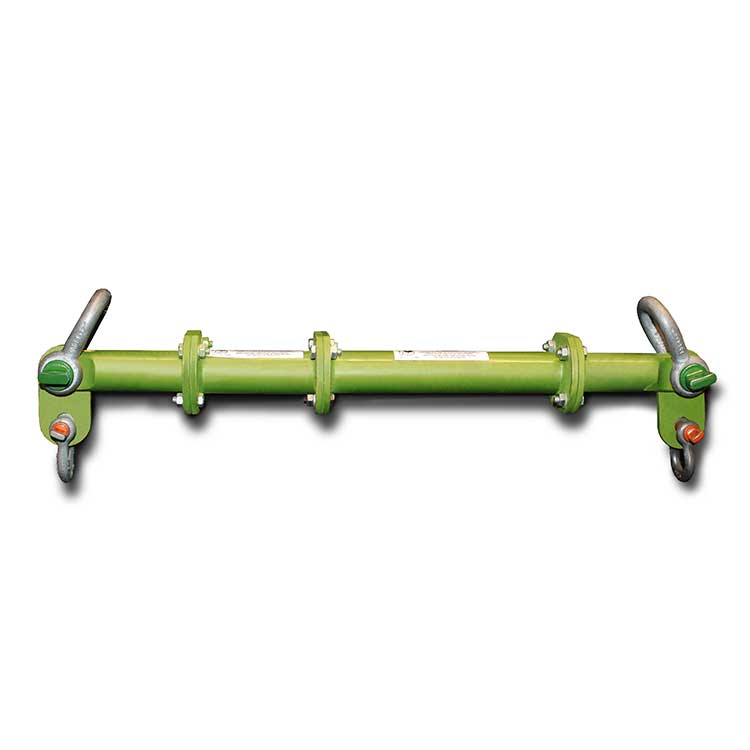
LGH lifting beam.
-
-
A Modulift modular spreader beam unit.
The main difference between a lifting beam and a spreader bar or spreader beam is how each device handles load forces and rigging geometry.
A lifting beam is typically used with a single top lifting point and one or more lower lifting points. The beam carries bending forces, which often makes it heavier and more rigid. Because a lifting beam usually requires less top rigging, it is often a good choice when headroom is limited.
A spreader bar, also called a spreader beam, is typically used with slings running from the crane hook down to each end of the bar. The spreader bar is designed primarily to place the bar in compression while spreading sling angle forces away from the load. This can help reduce horizontal forces on the load, but it usually requires more overhead space because of the top rigging.
In simple terms:
- Use a lifting beam when headroom is limited, the load needs lower pick points, or a compact below-the-hook solution is required.
- Use a spreader bar when the lift has enough headroom and the goal is to spread sling angles and reduce compression or side loading on the load.
Both options can be effective, but they are not interchangeable. The right choice depends on the load, headroom, pick points, center of gravity, sling angles, and lift plan.
What Is a Low Headroom Lifting Beam?
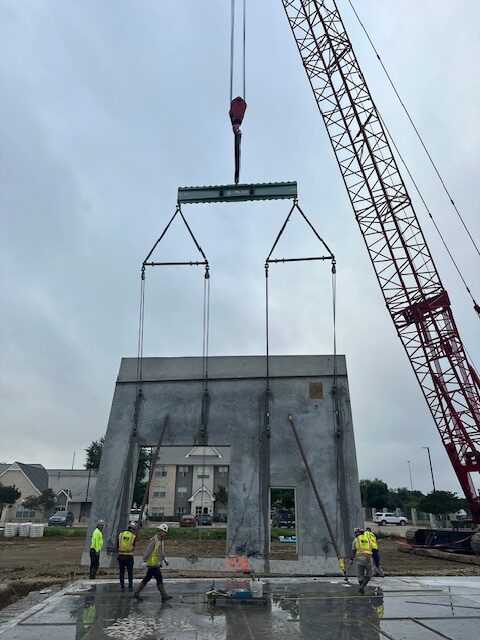
A low headroom lifting beam is a lifting beam designed to minimize the vertical space required between the crane hook or hoist and the load. This makes it useful in areas where overhead clearance is limited.
Low headroom lifting beams are commonly used indoors, under structures, inside facilities, or in other areas where there is not enough vertical clearance for taller rigging arrangements. Because they can often eliminate or reduce the need for top rigging, they help crews make the most of the available lifting height.
Low headroom lifting beams may be useful for:
- Indoor machinery moves
- HVAC equipment installation
- Tilt wall construction
- Industrial maintenance
- Equipment replacement
- Plant shutdowns and upgrades
- Lifting loads below overhead obstructions
- Applications where a spreader bar requires too much rigging height
Benefits of Using a Lifting Beam
Lifting beams offer several advantages when properly matched to the application. They are especially valuable when space, headroom, and load control are major concerns.
Key benefits include:
- Low headroom design: Lifting beams can reduce the vertical space required for the rigging setup.
- Multiple pick points: Lower lifting points can help support long, awkward, or uneven loads.
- Load control: Proper beam selection can help stabilize the load during lifting.
- Center of gravity adjustment: Adjustable bales or lugs can help align the lift with the load’s center of gravity.
- Reduced top rigging: Some lifting beams can simplify the rigging arrangement above the beam.
- Application-specific lifting: Lifting beams can be selected based on capacity, length, pick points, and available headroom.
These benefits make lifting beams useful in applications where a standard hook-and-sling setup or spreader bar may not be practical.
Types of Lifting Beams Available from LGH
LGH offers a variety of lifting beam rental options to support different load weights, lift configurations, and jobsite conditions. The right beam depends on the application, required capacity, beam length, headroom, and load attachment points.
Fixed Lifting Beams
Fixed lifting beams are built for specific lengths, capacities, and pick-point arrangements. They can be a strong option when the load dimensions and lifting points are known and the beam is properly matched to the job.
Because fixed beams offer limited adjustability, it is important to confirm the lift details before selecting the beam.
Adjustable Lifting Beams
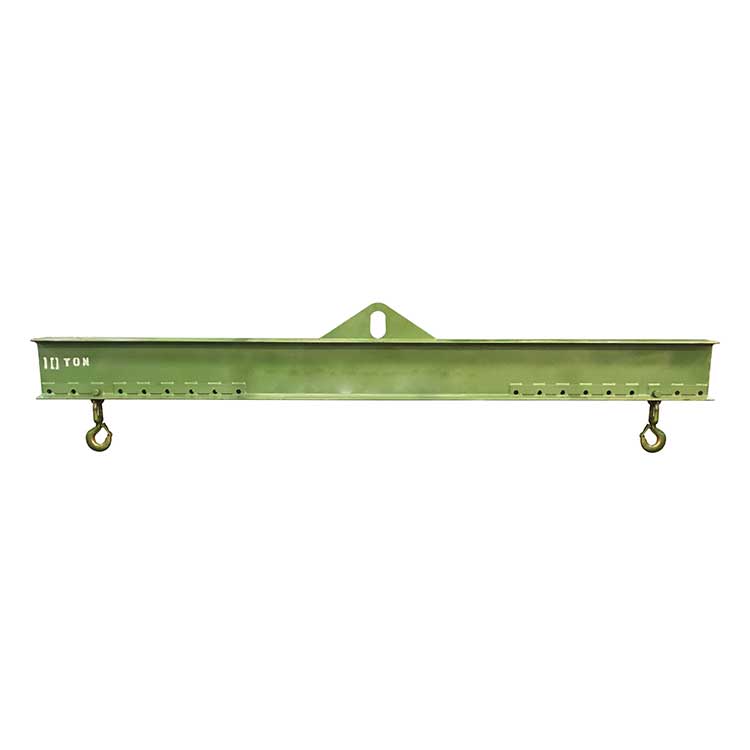
Adjustable lifting beams provide more flexibility by allowing certain attachment points to be repositioned. Depending on the design, this may include adjustable upper bales, lower lugs, or hook points.
This adjustability can help crews better align the lifting point with the load’s center of gravity or adapt the beam to different load dimensions.
Multi-Lug Lifting Beams
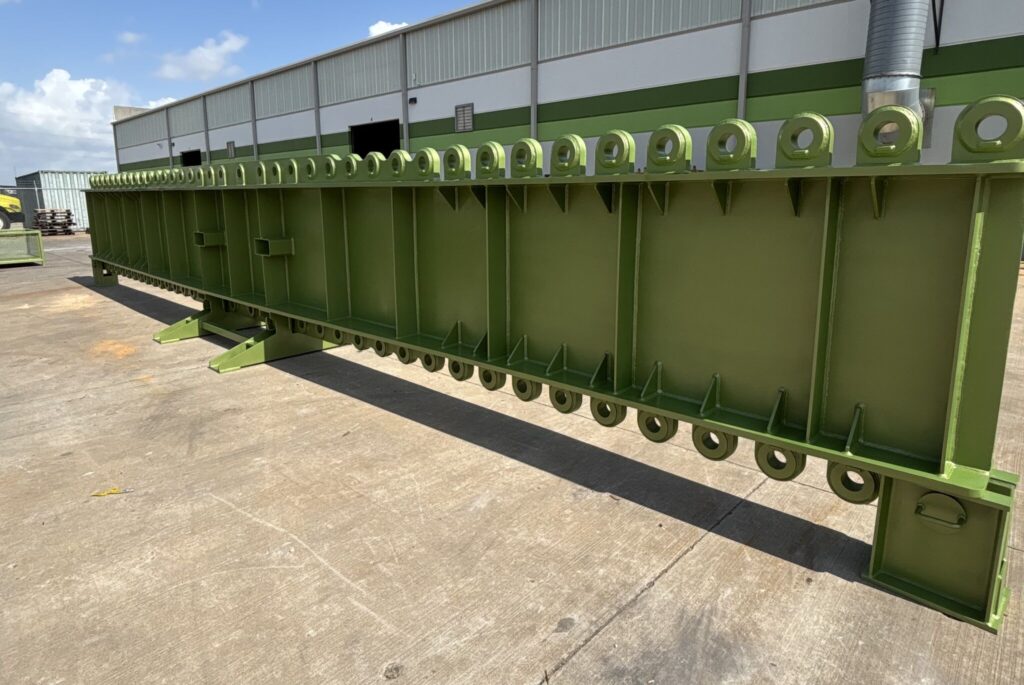
Multi-lug lifting beams, also known as multiple-point beams, include multiple lifting points above and below the beam. This gives crews more configuration options for central lifts, multi-point lifts, and certain semi-spreader arrangements.
LGH offers ARS 50-100T multi-lug low headroom lifting beams designed for heavy loads that require multiple pick points and careful weight distribution. These beams can help crews adjust the rigging arrangement based on the load’s center of gravity, lift points, and available headroom.
Why Multi-Lug Lifting Beams Are Useful
Multi-lug lifting beams provide more flexibility than a basic fixed lifting beam because they include multiple connection points. This can help crews fine-tune the lifting arrangement for loads that require more than one lower pick point or that need careful load distribution.
Benefits of multi-lug lifting beams include:
- Multiple upper and lower lifting points
- Options for central lifting
- Better adjustment for center of gravity
- Support for multi-point rigging
- Useful configurations for low-headroom lifts
- Greater flexibility for complex loads
While multi-lug beams provide more options than many fixed beams, they still need to be selected and configured carefully. Capacity, pick-point spacing, sling angles, load weight, and center of gravity must all be reviewed before the lift.
How to Choose the Right Lifting Beam
Choosing the right lifting beam starts with understanding the load and the lifting environment. Lifting beams are highly effective when they are properly matched to the application, but they are not one-size-fits-all.
Before selecting a lifting beam, consider:
- Load weight
- Load dimensions
- Center of gravity
- Number and location of lifting points
- Required beam length
- Available headroom
- Hoist or crane hook height
- Sling angles below the beam
- Beam weight
- Floor or site access limitations
- Whether the beam needs fixed or adjustable pick points
- Whether a spreader bar would be more appropriate
Longer beams may have lower carrying capacities depending on the design, so beam length and capacity should always be reviewed together. Heavier-capacity beams may also be larger and heavier, which can affect transport, setup, and handling.
If the center of gravity is not aligned with the upper lifting point, the load may tilt or become unstable. Adjustable bales, adjustable lugs, or multi-lug designs can help, but the beam must still be configured correctly for the specific lift.
When Should You Use a Lifting Beam Instead of a Spreader Bar?
A lifting beam may be the better choice when the job has limited headroom, when the load needs a compact below-the-hook lifting solution, or when the lift requires a single top connection with one or more lower pick points.
A spreader bar may be the better choice when there is enough headroom for top rigging and the lift requires sling angle control across a wider span.
Use a lifting beam when:
- Headroom is limited.
- A compact rigging profile is needed.
- The load has defined lower pick points.
- Top rigging needs to be minimized.
- The lift requires a rigid beam with controlled lower connections.
- The beam can be properly matched to the load and center of gravity.
Use a spreader bar when:
- There is enough overhead clearance.
- Sling angles need to be spread away from the load.
- The load requires support across a wider span.
- A modular beam system is needed for different lengths.
- The lift plan is designed around compression rather than bending.
The safest and most efficient choice depends on the full lift plan, not just the name of the equipment.
Why Rent a Lifting Beam?
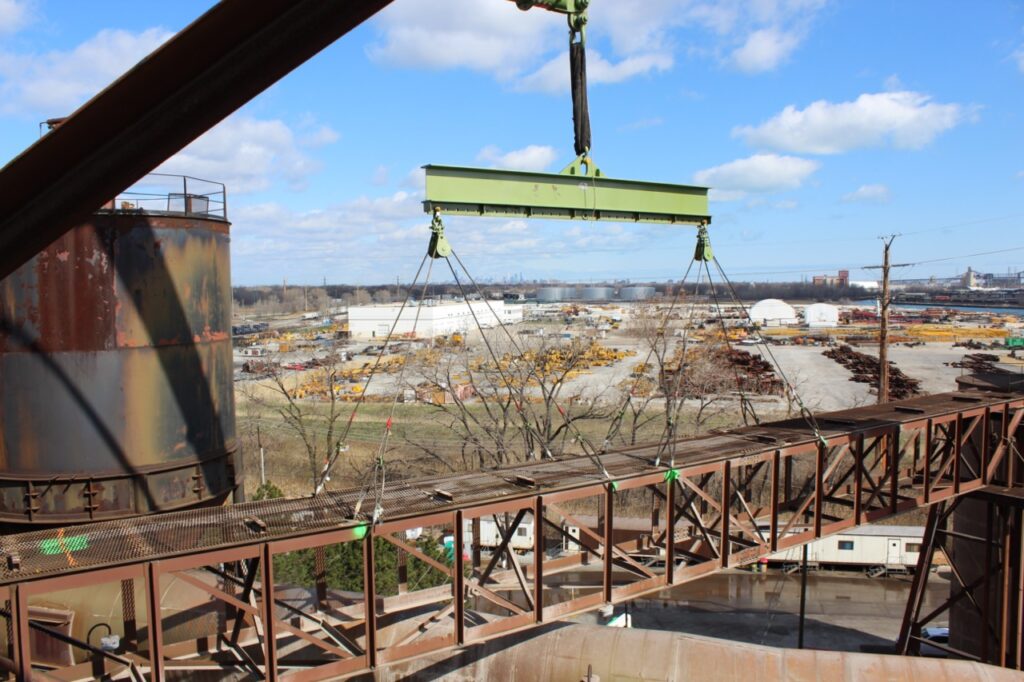
Lifting beams can be large, heavy, and highly application-specific. Buying a beam may not make sense if your projects require different capacities, lengths, pick points, or headroom profiles from job to job.
Lifting beam rental allows crews to access the right beam for the specific application without taking on the storage, transportation, maintenance, inspection, and certification responsibilities that come with ownership.
Renting can be especially helpful when:
- The lift is project-specific.
- The required beam length or capacity changes from job to job.
- Storage space is limited.
- A low headroom lifting beam is only needed temporarily.
- A multi-lug or adjustable lifting beam is required for a specific load.
- Certified, job-ready equipment is needed quickly.
LGH offers lifting beam rental options ranging from lighter-capacity beams to heavy-duty multi-lug low headroom lifting beams. Our rental specialists can help evaluate your load weight, headroom, lift points, center of gravity, and jobsite conditions to help match the right beam to the application.
Conclusion
Low headroom lifting beams provide a practical below-the-hook solution when space is limited, top rigging is not practical, or a load needs to be lifted from specific lower pick points. By offering a compact lifting profile, multiple configuration options, and strong load control, lifting beams can help crews complete challenging lifts safely and efficiently.
However, lifting beams and spreader bars are not the same. Lifting beams typically carry bending forces and are often useful in low-headroom applications, while spreader bars are typically designed to manage compression and sling angles when sufficient headroom is available.
Before selecting a lifting beam, crews should review the load weight, beam length, headroom, center of gravity, pick points, sling angles, and required configuration.
For help choosing the right low headroom lifting beam, hoist beam, hoisting beam, or lifting beam rental for your next project, contact LGH today or call 800-878-7305 to speak with a rental specialist.
LGH is North America’s largest single organization devoted exclusively to the provision of lifting and moving equipment for rent. LGH holds the most comprehensive inventory for hoisting, rigging, jacking, pulling, material handling, and safety equipment. With over 90,000 pieces, discover your next project solution at RentLGH.com