Synchronized Lifting Systems: Choosing the Right Jacking Setup
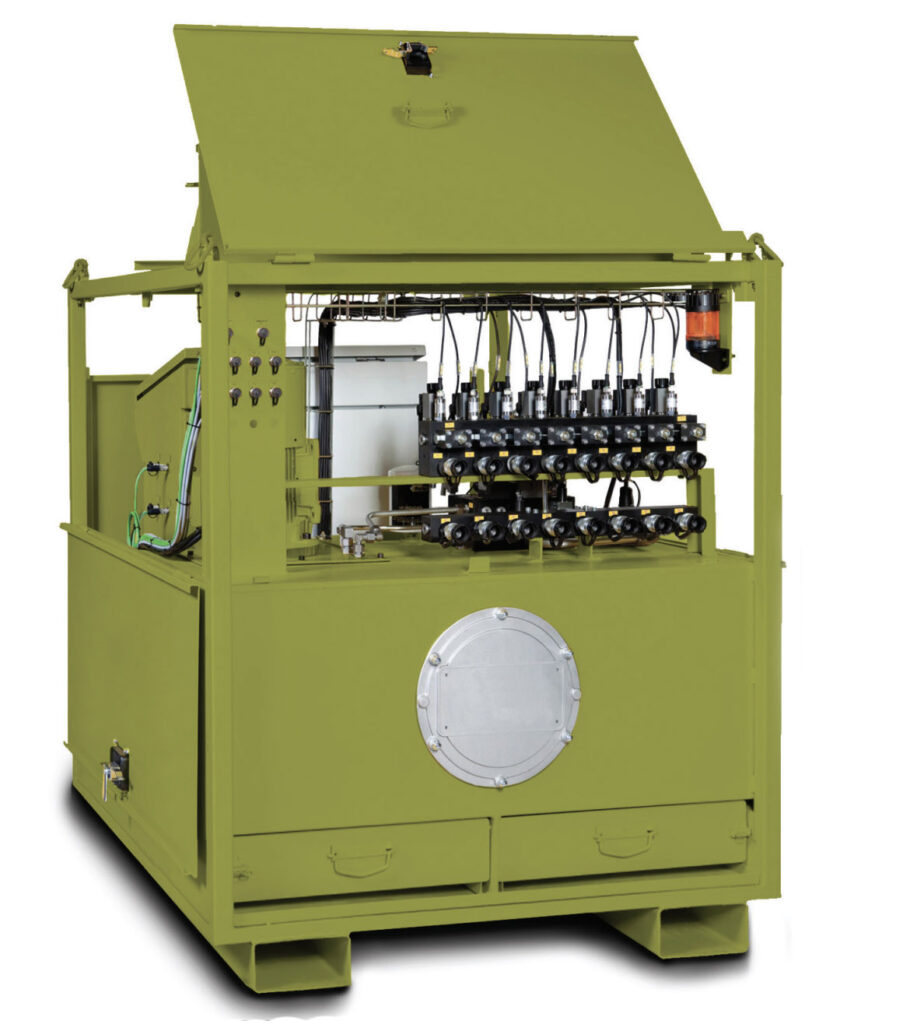
Enerpac Sync Lift EVO Series 4 – 36 Point Lift System
Synchronized lifting is the process of raising a load, structure, or piece of equipment from multiple points at the same time. The goal is to keep the load controlled and level throughout the lift, helping reduce the risk of twisting, binding, structural stress, or damage.
Also known as synchronous jacking or sync lifting, this process can be completed using several different hydraulic jacking setups. The right option depends on the load, the number of lift points, the required accuracy, and the level of control needed for the project.
For some jobs, a simple hydraulic pump and manifold setup may be enough. For others, a split-flow pump or fully computerized synchronized lifting system may be required to achieve the necessary precision.
What Is Synchronous Jacking?
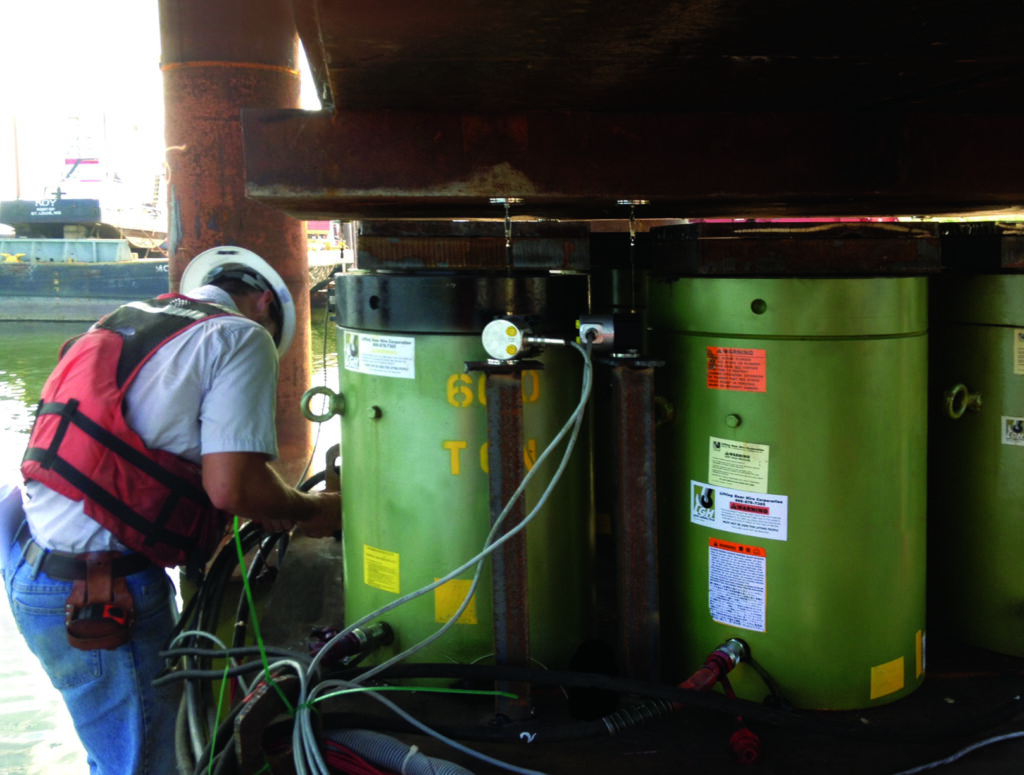
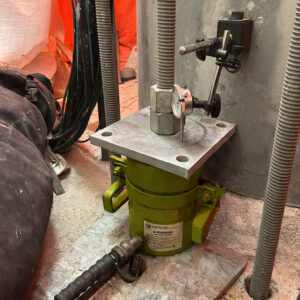
Synchronized lifting jacks from LGH under a bridge.
Synchronous jacking refers to lifting a load from multiple points in a coordinated way. Instead of raising one side or one point at a time, synchronized lifting jacks work together to help keep the load as level and controlled as possible.
This is especially important when lifting structures or equipment that could be damaged by uneven movement. Bridge lifting, structural repair, machinery positioning, and load transfer applications may all require some level of synchronized lifting.
The key question is not just whether the load needs to be lifted at multiple points. It is how much precision the lift requires.
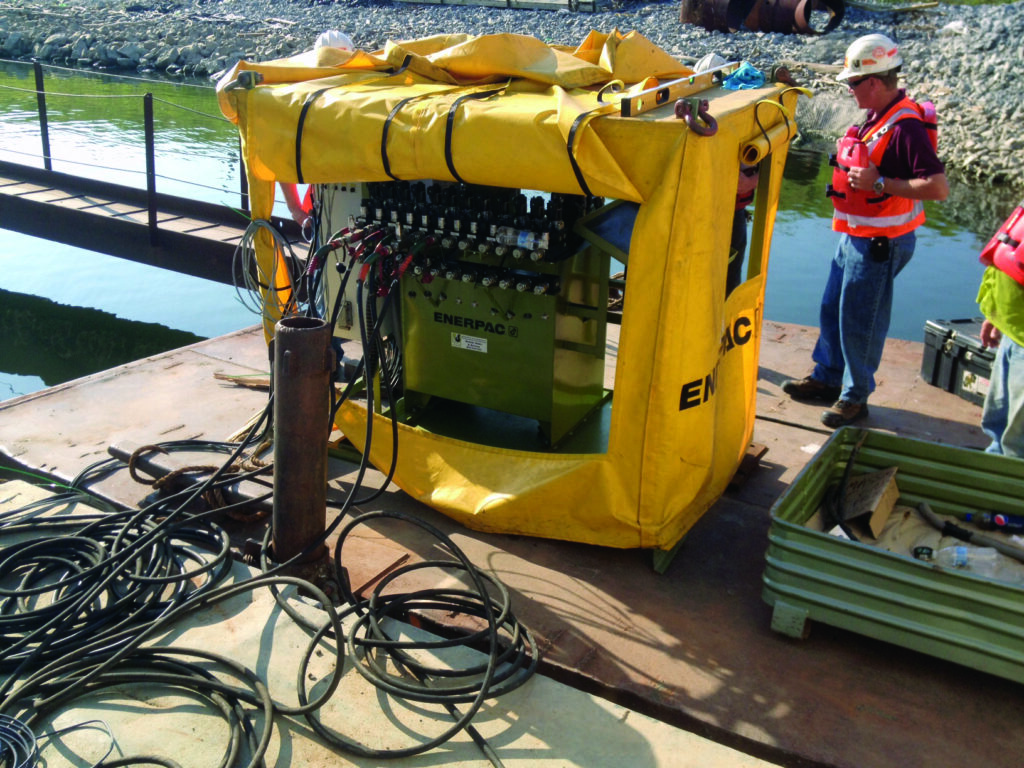
In this setup, one operator monitors the pressure gauges and manually adjusts the flow to each cylinder. This helps keep the load relatively level, but it also depends heavily on operator control and visual monitoring.
A simple setup may be suitable for lower-precision applications where slight variation between lifting points is acceptable. However, the margin of error is higher compared to more advanced synchronized lifting systems.
Common components may include:
Hydraulic hand pumps
Electric hydraulic pumps
Gasoline hydraulic pumps
Manifolds
Pressure gauges
Hydraulic cylinders or rams
Option 2: Split-Flow Hydraulic Pump
Split-flow hydraulic pump.
For projects requiring greater precision, a split-flow pump provides a more controlled alternative to a manually adjusted manifold setup.
LGH carries a 4-port split-flow pump from Enerpac’s SFP Series. This pump helps distribute oil flow more evenly to multiple cylinders, improving lifting accuracy compared to basic manual control. Split-flow pumps can be useful for applications where maintaining a level lift is important, but a fully computerized sync lift system may not be necessary.
This type of system can be especially helpful for bridge lifting, bearing replacement, structural maintenance, and other projects where controlled movement helps protect the integrity of the structure.
Depending on the setup, the pump can be used to advance, hold, or retract the load with double-acting cylinders. It can also operate individual cylinders when needed, giving crews more flexibility during the lift.
A split-flow pump is often a practical middle ground between a simple hydraulic jacking setup and a more advanced synchronized lifting system.
Option 3: Computerized Synchronized Lifting Systems
When precision is critical, a computerized synchronized lifting system provides the highest level of control. These systems use sensors, controllers, and hydraulic power units to monitor and adjust each lifting point throughout the operation.
LGH offers Enerpac synchronized lifting systems, including EVO Series and ESS Sync Lift options, for projects that require precise multi-point lifting.
The Enerpac EVO Sync Lift System is designed for advanced synchronized lifting applications. The system can control multiple lifting points from a central interface and provide real-time feedback during the lift. It monitors cylinder stroke, load distribution, and system performance, then adjusts oil flow to help keep the lift synchronized.
The Enerpac ESS Sync Lift system is another option for controlled multi-point lifting. It can be used with standard single-acting or double-acting cylinders and offers features such as data recording, stroke monitoring, and load and stroke alarms.
These systems are commonly used when the lift requires a high degree of precision, documentation, and centralized control.
How Precise Does Your Lift Need to Be?
Choosing the right synchronous jacking method depends on how much variation the load can tolerate between lifting points.
A simple hydraulic setup may work when the lift does not require tight accuracy. A split-flow pump provides better control when the load needs to remain more level. A computerized synchronized lifting system is best when the project requires precise movement, real-time monitoring, and controlled lifting across multiple points.
Before choosing a system, consider:
Load weight
Number of lifting points
Required lifting height
Acceptable tolerance between lift points
Type of hydraulic cylinders needed
Structure or load sensitivity
Site access and available power
Whether data recording is required
Whether the lift requires centralized control
The more sensitive or complex the lift, the more important precision becomes.
Common Applications for Synchronized Lifting Jacks
Synchronized lifting jacks and hydraulic systems are used in a wide range of heavy lifting and structural applications.
Common applications include:
Bridge lifting
Bearing replacement
Structural leveling
Machinery lifting
Load transfer
Foundation repair
Industrial maintenance
Heavy equipment positioning
Multi-point hydraulic jacking
In each case, the goal is to raise the load in a controlled way while reducing the risk of uneven movement.
Check out an example of the Enerpac Synchronous Lifting System lifting and leveling a building below:
Our rental specialists can help evaluate the number of lift points, required accuracy, cylinder type, pump requirements, power source, and overall lift plan so you can choose the right system for the job.
Conclusion
Synchronized lifting systems help crews raise heavy loads, structures, and equipment from multiple points with greater control. Also known as synchronous jacking or sync lifting, this process can range from simple hydraulic pump setups to advanced computerized systems with real-time monitoring and precise control.
The right option depends on the level of accuracy your project requires. A manual pump and manifold setup may be enough for some lifts, while split-flow pumps and computerized synchronized lifting systems offer greater precision for more demanding applications.
For help choosing synchronized lifting jacks, split-flow pumps, or a sync lift system for your next project, contact LGH today or call 800-878-7305 to speak with a rental specialist.
LGH is North America’s largest single organization devoted exclusively to the provision of lifting and moving equipment for rent. LGH holds the most comprehensive inventory for hoisting, rigging, jacking, pulling, material handling, and safety equipment. With over 90,000 pieces, discover your next project solution at RentLGH.com.