Polyester Round Sling Inspection: What to Check Before Every Lift
Polyester round slings are among the most commonly used rigging tools on the jobsite. Their strength, flexibility, and versatility make them a reliable option for a wide range of lifting applications. However, safe use depends on more than selecting the right sling for the load.
Before a polyester round sling is used, it should be inspected for damage, wear, missing identification, exposed core yarns, chemical damage, heat damage, and other conditions that could affect its strength. If there is any doubt about the sling’s condition, it should be removed from service.
In this blog post, we’ll explain why polyester round sling inspection is important, what to look for before each lift, and when a sling should be taken out of service.
What Should You Check During a Polyester Round Sling Inspection?
During a polyester round sling inspection, check the sling tag, outer cover, stitching, body, core yarns, and overall condition. Look for missing or illegible identification, cuts, holes, tears, snags, abrasion, exposed core yarns, broken yarns, heat damage, chemical burns, weld splatter, discoloration, stiffness, brittleness, or any sign that the sling may no longer be safe to use.
A damaged sling should never be used for lifting. When in doubt, remove the sling from service and have it evaluated according to your company’s safety procedures and applicable standards.
Why Polyester Round Sling Inspections Matter
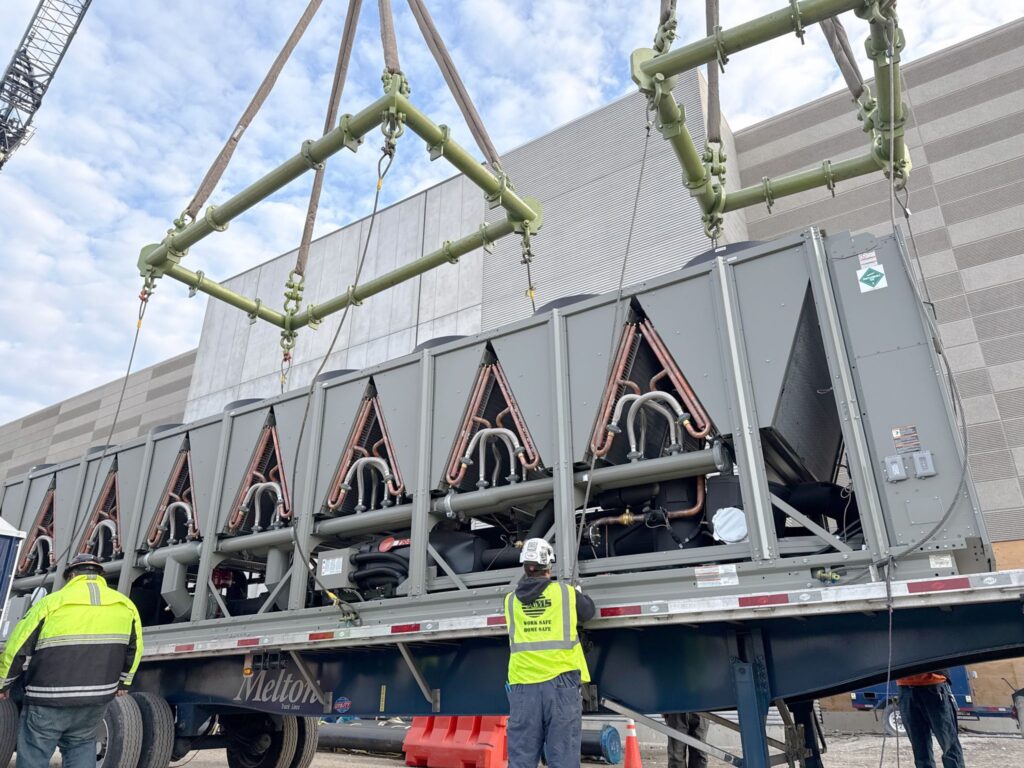
Shackles and polyester round slings are vital pieces of below-the-hook rigging for this generator lift at a data center.
Regular polyester round sling inspections help crews identify damage before a lift begins. Even minor-looking damage can affect sling performance, especially if the outer cover is compromised and the core yarns are exposed or damaged.
Inspections can help prevent:
Sling failure during a lift
Use of the wrong sling for the load
Unsafe lifting conditions
Damage to the load or surrounding equipment
Jobsite delays caused by questionable gear
Avoidable replacement or repair costs
Worker exposure to unnecessary hazards
Because round slings are used below the hook and directly support the load, inspection should be part of every lift planning process.
Polyester Round Sling Inspection Checklist
Before using a polyester round sling, inspect the entire sling from end to end. Do not only check the most visible areas. Damage can occur anywhere along the sling body, especially where the sling contacts the load, hardware, edges, or the ground.
Look for the following conditions:
Missing or illegible sling identification
Acid or caustic burns
Evidence of heat damage
Holes, tears, cuts, snags, or abrasive wear
Damage that exposes the core yarns
Broken or damaged core yarns
Weld splatter that exposes core yarns
Discoloration, stiffness, or brittleness
Chemical or environmental damage
Knots, crushing, or unusual deformation
Any other condition that creates doubt about the sling’s integrity
If any removal-from-service condition is present, the sling should not be used.
Check the Sling Identification Tag
The sling identification tag is one of the first things to inspect. If the tag is missing, damaged, or illegible, the sling should be removed from service.
The tag provides important information such as the sling’s rated capacity, material, manufacturer, and hitch capacities. Without that information, the crew cannot reliably confirm whether the sling is appropriate for the load or lifting configuration.
Do not rely on sling color alone to determine capacity. Color coding can vary by manufacturer, sling type, and rating system. The identification tag should always be used to confirm the sling’s capacity and proper use.
Inspect the Outer Cover
A polyester round sling from LGH
The outer cover protects the internal core yarns that carry the load. During inspection, look for cuts, holes, tears, snags, abrasion, or areas where the cover has been worn down.
If the cover is damaged enough to expose the core yarns, the sling should be removed from service immediately. Once the load-bearing core yarns are exposed, there is no reliable way to know how much strength has been affected through visual inspection alone.
Also check for areas that look flattened, crushed, stretched, or distorted. These may indicate that the sling has been pinched, overloaded, or damaged during use.
Look for Exposed or Damaged Core Yarns
The core yarns inside a polyester round sling are the load-bearing part of the sling. If those yarns are exposed, cut, broken, melted, or damaged, the sling should not be used.
Visible core yarns are a serious warning sign. Even if the rest of the sling appears acceptable, exposed or damaged core yarns can compromise the sling’s strength and increase the risk of failure.
Polyester Round Slings in action, safely lifting a bridge section on-site.
Watch for Heat, Chemical, and Environmental Damage
Polyester round slings can be damaged by heat, chemicals, UV exposure, weld splatter, and harsh jobsite environments. Some of this damage may appear as discoloration, stiffness, brittleness, melting, charring, or unusual surface texture.
Chemical damage can be especially difficult to evaluate because it may weaken the sling material without creating obvious cuts or tears. If a sling has been exposed to unknown chemicals, excessive heat, or a questionable environment, it should be removed from service until it can be properly evaluated.
Inspect Areas That Contact the Load or Hardware
Pay close attention to the areas of the sling that contact the load, hooks, shackles, lifting points, or sharp edges. These areas are more likely to experience abrasion, cutting, crushing, or concentrated wear.
Edge protection may be needed when a polyester round sling is used around corners, rough surfaces, or load edges. Sling protection can help reduce wear, but it does not replace proper inspection before use.
When Should a Polyester Round Sling Be Removed from Service?
A polyester round sling should be removed from service if it has missing or illegible identification, exposed core yarns, cuts, holes, tears, heat damage, chemical burns, broken yarns, weld splatter damage, excessive abrasion, stiffness, brittleness, or any condition that creates doubt about its safety.
The safest rule is simple: if you are unsure whether the sling is safe to use, do not use it.
Removing a questionable sling from service is far less costly than risking a failed lift, damaged equipment, or worker injury.
Don’t Take Unnecessary Risks
In a fast-paced work environment, it can be tempting to overlook minor damage or assume a sling is still usable. That is not a risk worth taking.
Polyester round slings are relatively inexpensive compared to the potential consequences of a failed lift. A quick inspection before use can help protect workers, equipment, and the load.
When in doubt, remove the sling from service.
Watch Our Polyester Round Sling Video for More Insights
For a deeper dive into polyester round slings, check out our YouTube video:
Rent Polyester Round Slings from LGH
LGH offers polyester round slings and other below-the-hook rigging equipment for rent. Our rental specialists can help match the right sling, shackle, hoist, beam, or rigging hardware to your lifting application.
For help selecting the right polyester round sling or rigging equipment for your next lift, contact LGH today or call 800-878-7305 to speak with a rental specialist.
LGH is North America’s largest single organization devoted exclusively to the provision of lifting and moving equipment for rent. LGH holds the most comprehensive inventory for hoisting, rigging, jacking, pulling, material handling, and safety equipment. With over 90,000 pieces, discover your next project solution at RentLGH.com.