Essential Rigging Equipment for Elevator Projects with Limited Access

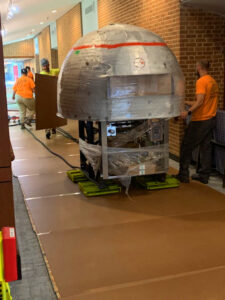
Elevator and escalator projects often involve more than removing and installing components. Before the work can begin, crews have to move heavy elevator equipment through narrow hallways, tight shafts, machine rooms, low-headroom areas, and restricted access routes where cranes, forklifts, and larger lifting systems may not fit.
That is why the right elevator rigging equipment is essential. Chain hoists, lever hoists, gantry cranes, winches, trolleys, and beam clamps help contractors lift, pull, position, and stage heavy components safely inside buildings with limited access.
In this guide, we’ll review the essential rigging equipment for elevator projects. We will explain how each tool helps crews move heavy loads safely and efficiently in tight, interior environments.
What Equipment Is Used for Elevator Rigging?
Common elevator rigging equipment includes manual chain hoists, electric chain hoists, lever hoists (also known as come-alongs), gantry cranes, winches, tuggers, beam clamps, and beam trolleys. These tools help elevator contractors lift, pull, move, and position heavy elevator equipment in tight or limited-access areas such as shafts, machine rooms, hallways, basements, and service corridors.
The right equipment depends on the load weight, available headroom, access route, power source, anchor points, and how the equipment needs to be moved or positioned.
How to Choose Rigging Equipment for Elevator Projects

An electric chain hoist in an elevator shaft.
Choosing the right elevator rigging equipment starts with understanding the load and the path it must travel. Before selecting equipment, contractors should consider the weight and dimensions of the component, available headroom, shaft or machine-room access, floor conditions, anchor points, power availability, and whether the load needs to be lifted vertically, pulled horizontally, or precisely positioned.
For vertical lifting, chain hoists, gantry cranes, beam clamps, and trolleys may be needed. With horizontal movement through hallways, ramps, or long access routes, winches and tuggers can help provide controlled pulling force. For tight positioning or angled adjustments, lever hoists can give crews the fine control needed to align heavy components safely.
Because elevator projects often involve limited space and restricted access, the safest solution is usually a combination of tools rather than one piece of equipment. Matching the equipment to the jobsite conditions helps crews reduce manual handling, protect the load, and maintain better control throughout the move.
1. Manual & Electric Chain Hoists: Controlled Lifting in Tight Spaces
Manual and electric chain hoists are essential tools for elevator contractors who need precise, controlled lifting in spaces where headroom, access, or structural constraints limit larger equipment. Their compact size, reliable operation, and ability to deliver steady vertical movement make them ideal for machine rooms, tight shafts, and interior lifts where accuracy matters.
LGH offers an extensive selection of hand chain hoists, often referred to as chain falls, chain blocks, or block-and-tackle hoists, from trusted manufacturers like Coffing, Nitchi, Tiger, and Harrington. With capacities ranging from 1 ton to 50 tons, including popular 2-ton, 3-ton, and 5-ton models, these hoists provide dependable performance for a wide range of elevator modernization and equipment replacement tasks. Their portability, rugged construction, and customizable chain lengths allow crews to adapt to unique site constraints and lift requirements.
For projects that benefit from powered lifting, LGH also supplies compact, lightweight electric chain hoists designed for smooth, efficient operation in restricted spaces. Powered by durable electric motors, these hoists reduce manual effort, improve ergonomics, and maintain consistent lifting speed and control. Corrosion-resistant components and high-temperature performance ensure reliable operation in demanding environments. When paired with an electric hoist trolley, they offer even greater flexibility by enabling horizontal travel and precise load positioning along beams.
Why they matter in elevator projects:
- Provide controlled lifting in machine rooms and tight shafts
- Compact design fits where larger lifting systems cannot
- Ideal for removing or installing traction machines, sheaves, and controllers
- Custom chain lengths and power options adapt to unique site constraints
Manual and electric chain hoists give elevator crews the dependable, controlled lifting they need to work safely and efficiently inside confined interior spaces.

2. Lever Hoists (Come-A-Longs): Versatile Tools for Tight, Awkward Angles
Lever hoists are one of the most adaptable tools used in elevator work, especially when loads need to be pulled, shifted, or adjusted in tight, awkward, or angled positions. Their compact size and manual, lever-driven operation make them ideal for areas where traditional hoists can’t fit or where precise control is required.
LGH offers a full range of lever hoists, also known as come-alongs, ratchet hoists, and lever chain hoists, from trusted manufacturers like Harrington. These tools provide dependable lifting and pulling power for both vertical and horizontal applications, including angular pulls through narrow access paths or during complex equipment removals.
Capacities range from 3/4 ton to 9 tons, with popular models like the 1 1/2 ton, 3 ton, and 6 ton options available. Crews can also select custom chain lengths to match the space they’re working in, ensuring the hoist performs effectively even in the most confined environments.
Why they matter in elevator projects:
-
Ideal for making precise adjustments during tight or angled pulls
-
Compact enough to operate where traditional hoists cannot
-
Suitable for vertical and horizontal movement in confined areas
-
Provide reliable control when navigating complex interior paths
Lever hoists give elevator contractors the precision and flexibility they need to move equipment safely and efficiently through the most restrictive spaces.
3. Gantry Cranes: Inside-Building Lifting Power

Elevator projects rarely allow for exterior crane access, making gantry cranes one of the most important lifting tools for interior modernization work. Their portability, adjustability, and ability to lift heavy components in confined spaces make them ideal for machine rooms, basements, and tight service corridors.
LGH offers aluminum, steel, and hydraulic gantry cranes, giving contractors the flexibility to match the equipment to the space and the load.
Our aluminum gantries are lightweight, modular, and easy to transport through buildings. With capacities ranging from 1 ton to 5 tons, they offer adjustable height and span options to accommodate low headroom and tight access routes..
For heavier interior lifts, LGH supplies steel gantries from trusted manufacturer Spanco, with capacities ranging from under a ton up to 10 tons. These adjustable-height A-series models roll smoothly into place and support a wide range of hoisting devices, making them a dependable choice for controlled lifting inside buildings.
When projects call for high capacity or precise vertical movement, LGH’s hydraulic gantries provide the performance needed. Our 20-ton hydraulic gantry can lift or position large elevator machinery in restrictive spaces, and when configured as a 4-point system, capacity increases to 40 tons for larger or more complex lifts.
Why they matter in elevator projects:
-
Deliver lifting power where cranes can’t reach
-
Adjustable height helps overcome low-headroom challenges
-
Portable enough to move through buildings and position precisely
-
Capable of handling both light and heavy elevator components
Gantry cranes bring the controlled, dependable lifting power required for the confined environments where elevator contractors work every day.
4. Winches/Tuggers: Pulling Power for Long, Narrow Access Routes
Before any lift can happen, elevator equipment often needs to travel deep into a building- down hallways, around corners, up ramps, or through utility spaces that are too tight for manual handling. Winches and tuggers provide the steady, controlled pulling force needed to move heavy components safely through these long interior routes.
LGH offers both air and electric winches, giving contractors options that match the demands of the job. Our air winches, sourced from respected manufacturers such as Thern, Ingersoll Rand, Wintech, Ram, and Michigan Pneumatic Tool (MPT) range from 1,000 lbs. to 22,000 lbs. and are available in both long-drum and short-drum configurations. These pneumatic units deliver reliable pulling power in tough environments and are especially valuable when steady, continuous force is needed.
For jobs requiring compact, efficient pulling inside buildings, LGH also provides electric winches from My-Te, including the widely used 100AB and AC36B models. These portable electric tuggers offer precise control, smooth operation, and optional safety features like E-Stop cable stoppers.
Why they matter in elevator projects:
-
Provide controlled pulling through tight, restricted interior paths
-
Reduce strain and increase safety when moving equipment long distances
-
Support precise staging before the final lift
-
Ideal for navigating slopes, turns, and uneven floors
Winches and tuggers help crews move heavy loads efficiently, long before the lifting even begins.
5. Beam Clamps and Trolleys: Secure Anchoring for Safe, Efficient Lifts
In elevator work, safe lifting starts with a dependable overhead anchor point. In many buildings, structural beams are the only option available. Beam clamps and beam trolleys provide a secure connection for hoists and lifting systems, making them essential when space is limited and precision is critical.
LGH carries a wide range of beam clamps, from 1 ton to 30 tons. We source from trusted manufacturers like Lindapter, Riley Lifting Equipment, and Oz Lifting Products. Our inventory includes everything from fixed and swivel-jaw Superclamps to adjustable and flush-mount options, ensuring crews can anchor safely in nearly any building configuration.
Why they matter in elevator projects:
-
Provide safe, secure anchoring in machine rooms and shaft areas
-
Support hoists and lifting systems when overhead structure is limited
-
Trolleys allow smooth horizontal travel along beams for precise positioning
-
Ideal for controlled lifting over open shafts or tight machine-room spaces
With the right clamp or trolley in place, crews can lift confidently, even in the most restrictive environments.
Conclusion
Elevator and escalator projects require rigging equipment that can perform in areas where space, access, and movement are limited. From tight machine rooms and narrow hallways to low-headroom shafts and long interior access routes, moving heavy elevator equipment safely requires careful planning and the right tools for the job.
Manual and electric chain hoists, lever hoists, gantry cranes, winches, tuggers, beam clamps, and trolleys all play an important role in helping crews lift, pull, position, and stage equipment with control. The best setup depends on the load, access path, available anchor points, headroom, and jobsite conditions.
LGH supports elevator contractors across North America with certified lifting, rigging, pulling, and material handling equipment for limited-access projects. For help selecting the right elevator rigging equipment for your next modernization, repair, or installation project, contact LGH today or call 800-878-7305 to speak with a rental specialist.
LGH is North America’s largest single organization devoted exclusively to the provision of lifting and moving equipment for rent. LGH holds the most comprehensive inventory for hoisting, rigging, jacking, pulling, material handling, and safety equipment. With over 90,000 pieces of equipment, discover your next project solution at RentLGH.com.