Air Skates for Moving Equipment: When Are They the Right Choice?
An Airfloat Air Skate rental from LGH.
When crews need to move heavy equipment inside a facility, choosing the right tool matters. Machine skates, dollies, rollers, and tank skates can all be useful, but they are not always the best fit for tight turns, delicate floors, low-clearance moves, or precise final placement.
That is where air skates can help.
Air skates for moving equipment use compressed air to create a thin cushion beneath the load. This allows heavy machinery and industrial equipment to “float” slightly above the floor, reducing friction and making movement easier to control.
In this blog post, we’ll explain how air skates work, when to use them, what floor conditions they require, and when another equipment-moving solution may be a better choice.
What Are Air Skates?
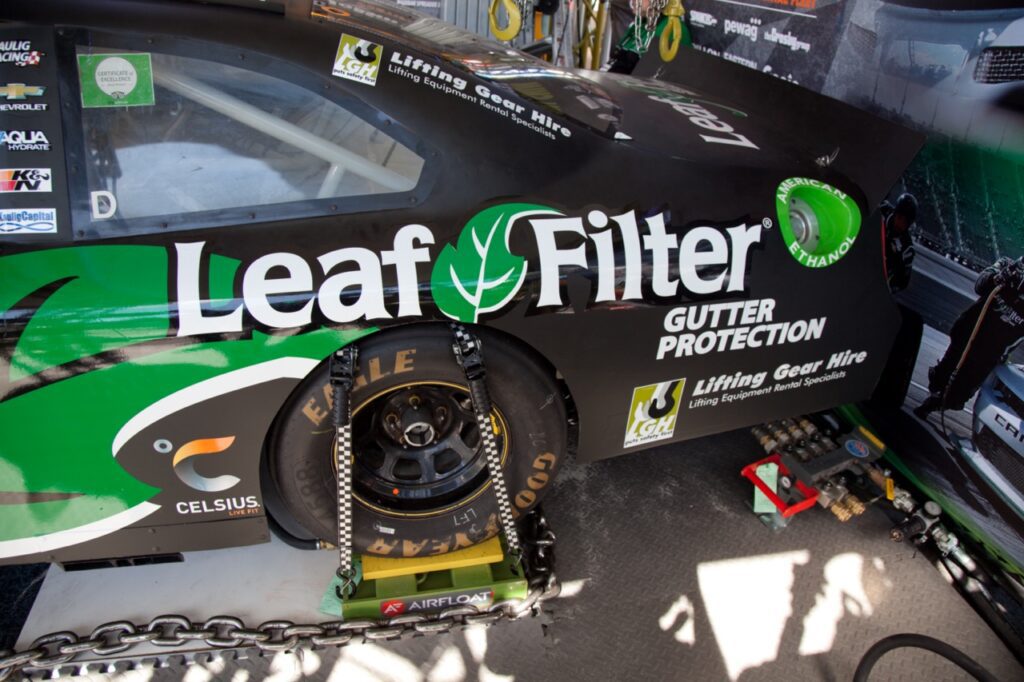
LGH air skates moving a NASCAR race car.
Air skates, also called air casters or air bearing systems, are equipment-moving tools that use compressed air to lift and move heavy loads across a surface.
Instead of relying on wheels or rollers, each air caster uses a flexible diaphragm or membrane. When compressed air enters the system, the diaphragm inflates and forces air beneath the load. This creates a thin air bearing between the caster and the floor.
The load lifts slightly off the ground, reducing direct contact with the surface and allowing crews to move heavy equipment with much less force than traditional methods.
How Do Air Skates Work?
Air skates work by distributing compressed air to multiple air casters positioned under the load. The system typically includes air casters, hose connections, a control manifold, and a properly rated air compressor.
Once the system receives enough air pressure, the air casters create a low-friction cushion beneath the load. This cushion allows the load to move smoothly across a clean, flat surface.
Because the load is floating on air rather than rolling on wheels, air skates can move in multiple directions. This makes them useful when crews need 360-degree maneuverability, tight turning, or precise placement.
When Should You Use Air Skates for Moving Equipment?
Use air skates for moving equipment when the load is heavy, the floor is smooth and level, and the move requires low-friction movement, precise positioning, or 360-degree control.
Air skates are often a good choice when:
Heavy equipment needs to move indoors.
The facility has smooth, level floors.
The move requires tight turns or precise positioning.
Floor protection is a priority.
Low ground clearance limits other options.
Crews need to move the load with minimal pushing or pulling force.
The load must rotate or move in multiple directions.
Traditional skates or rollers may create too much floor pressure or resistance.
Common applications include moving machinery, manufacturing equipment, transformers, electrical equipment, sensitive industrial components, and heavy loads inside plants or facilities.
Why Use Air Skates Instead of Machine Skates or Rollers?
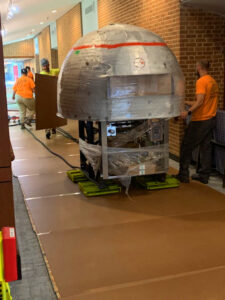
Air skates from LGH moving heavy equipment.
Air skates can significantly reduce the force needed to move a heavy load. Traditional friction-based movement may require a large percentage of the load weight in applied force. Wheeled movement reduces that force, but air skates can reduce it even further by floating the load on a cushion of air.
For example, moving a 10,000 lb load may require much more effort with direct friction or wheeled movement than with an air caster system. In the right conditions, air skates may require less than 1% of the load weight in applied force.
That low-friction movement can help crews move heavy equipment more smoothly, reduce strain on workers, and improve control during final placement.
Key Benefits of Air Skates
Air skates are useful because they combine high load-moving capability with smooth, controlled movement.
Key benefits include:
Low-friction movement: Air skates reduce the force needed to move heavy equipment.
360-degree maneuverability: Loads can move forward, backward, sideways, or rotate in place.
Floor protection: Air skates help reduce scraping, dragging, and concentrated wheel marks.
Precise positioning: Crews can make small adjustments during final placement.
Low-clearance capability: Air caster systems can be useful when load clearance is limited.
Distributed load support: Multiple air casters help spread the load across the floor.
These benefits make air skates especially valuable in facilities where control, floor protection, and maneuverability matter.
Floor Conditions Matter
Air skates only work properly when the floor can support the air bearing. The surface must be smooth, clean, level, and free from gaps, cracks, debris, or rough areas that could break the air seal.
Before using air skates, crews should review:
Floor smoothness
Floor levelness
Cracks or expansion joints
Gaps or open seams
Loose debris
Surface porosity
Floor load capacity
Travel path width
Landing and final placement area
If the floor is too rough, uneven, porous, or damaged, the air cushion may not form correctly. That can reduce control and make the move less predictable.
A good rule of thumb: the floor should be extremely smooth and level before using air skates. If the travel path has significant imperfections, another equipment-moving solution may be better.
What Do You Need to Use Air Skates?
To use air skates for moving equipment, crews need more than the air casters themselves. The full setup should match the load weight, floor conditions, air supply, and travel path.
A typical air skate setup may require:
Properly rated air skates or air casters
A compatible air compressor
Air hoses and fittings
A control manifold or valve system
A clean and prepared floor surface
Adequate load support points
A trained crew familiar with air caster operation
A clear travel path and landing area
Airflow must remain consistent during movement. If the system loses air pressure, the load may settle back onto the floor and become difficult to move.
When Air Skates May Not Be the Best Choice
Air skates are highly effective in the right environment, but they are not ideal for every equipment move.
Another option may be better when:
The floor is rough, cracked, uneven, or porous.
The travel path includes large gaps or expansion joints.
The move takes place outdoors on an unfinished surface.
A reliable air supply is not available.
The load cannot be supported properly by the air caster layout.
The floor cannot support the distributed load.
The job requires movement over slopes or inconsistent surfaces.
In those situations, machine skates, rotating machine skates, dollies, hydraulic skidding systems, or other load-moving solutions may be more appropriate.
Air Skates vs. Machine Skates
Air skates and machine skates both help move heavy equipment, but they work differently.
Machine skates use wheels or rollers to move a load across the floor. They are often a strong option for straightforward moves, especially when the floor can support the wheel loads and the travel path is predictable.
Air skates use compressed air to float the load slightly above the floor. They are often better for smooth indoor surfaces, tight turns, sensitive floors, and moves that require precise positioning or 360-degree control.
Use machine skates when the travel path is less sensitive to rolling contact and the surface can support the wheel loads. Use air skates when low friction, floor protection, and maneuverability are the priority.
Rent Air Skates from LGH
LGH offers air skates and other equipment-moving solutions for rent. Our rental specialists can help evaluate your load weight, floor conditions, travel path, air supply, clearance, and final placement needs to determine whether air skates are the right choice.
If air skates are not the best fit, LGH can also help recommend alternatives such as machine skates, rotating machine skates, dollies, jacks, or hydraulic skidding systems.
Watch Video: Air Skates in Action
Want to see these skates in a real-world scenario? Watch our video below to see a 50,000 lb load being moved with ease using a full air skate system:
Conclusion
Air skates for moving equipment can provide a smooth, low-friction way to move heavy loads across clean, level floors. By using compressed air to create an air bearing beneath the load, air skates help reduce the force required to move equipment while giving crews better control during tight turns and final placement.
They are especially useful for indoor machinery moves, sensitive flooring, low-clearance applications, and projects that require 360-degree maneuverability. However, floor conditions and air supply are critical. If the surface is rough, uneven, cracked, or porous, another equipment-moving solution may be more effective.
For help choosing air skates, machine skates, or another heavy equipment moving solution for your next project, contact LGH today or call 800-878-7305 to speak with a rental specialist.
LGH is North America’s largest single organization devoted exclusively to the provision of lifting and moving equipment for rent. LGH holds the most comprehensive inventory for hoisting, rigging, jacking, pulling, material handling, and safety equipment. With over 90,000 pieces, discover your next project solution at RentLGH.com.