Lever Hoist vs Chain Hoist: Choosing the Right Tool for Lifting and Pulling
Workers using a Griphoist from LGH.
Traditional hand chain hoists are one of the most common lifting tools in rigging, construction, and industrial maintenance. They are reliable, versatile, and well suited for many vertical lifting applications. However, they are not always the best option when a load needs to be pulled horizontally, positioned at an angle, or adjusted in a tight space.
That is where a lever hoist can be the better choice.
A lever hoist, also known as a ratchet hoist, lever chain hoist, or come-a-long, uses a ratcheting handle to lift, pull, tension, or position a load. Unlike a hand chain hoist, a lever hoist can be used in vertical, horizontal, and angled applications when properly rated and rigged.
In this blog post, we’ll compare lever hoists vs. chain hoists, explain how ratchet hoists work, review the difference between come-a-longs and Griphoists, and highlight key safety considerations before using a lever lifting tool.
Quick Answer: Should You Use a Lever Hoist or Chain Hoist?
Use a chain hoist when the load needs to be lifted vertically from an overhead point. Use a lever hoist when the load needs to be pulled, tensioned, aligned, positioned, or moved horizontally or at an angle. A lever hoist, also called a ratchet hoist or come-a-long, offers more flexibility for non-vertical movement, while a hand chain hoist is often better for controlled vertical lifting.
What Is a Chain Hoist?
A chain hoist is a manual, electric, or air-powered lifting device used to raise and lower loads vertically. In this blog, we are primarily referring to manual hand chain hoists, which use a hand chain to operate internal gears and lift the load chain.
Hand chain hoists are commonly used when a load needs to be lifted straight up and down from an overhead anchor point, trolley, beam clamp, or other approved lifting connection. They are a strong choice for many vertical lifting applications because they provide controlled movement, reliable operation, and simple manual power.
However, hand chain hoists are typically not the best choice for horizontal pulling or low-headroom positioning tasks where a lever-operated tool may provide better control and flexibility.
What Is a Lever Hoist?
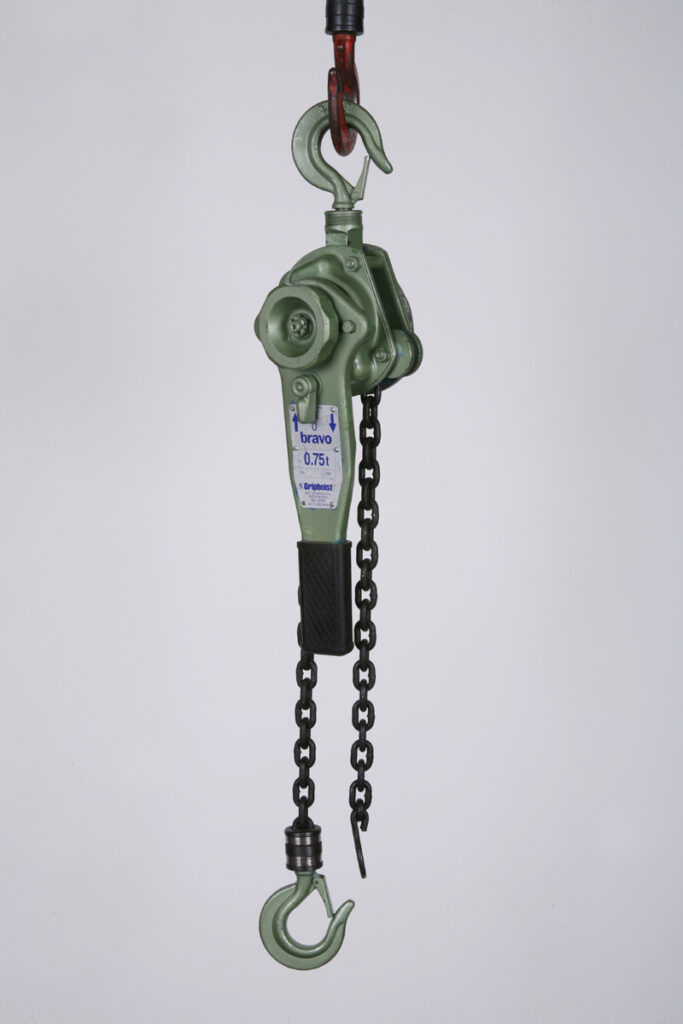
Comealong lever hoist from LGH.
A lever hoist is a compact lifting and pulling device operated by a ratcheting handle. It is also commonly called a ratchet hoist, lever chain hoist, or come-a-long.
Instead of pulling a hand chain to raise or lower a load, the operator moves the lever handle back and forth to advance the load chain. This ratcheting action allows the hoist to lift, pull, tension, align, or position a load with controlled movement.
Lever hoists are commonly used in construction, maintenance, industrial rigging, machinery alignment, equipment positioning, and applications where horizontal or angled force is needed.
Lever Hoist vs Chain Hoist: What Is the Difference?
The main difference between a lever hoist and a chain hoist is how each tool is operated and how it is typically used. A hand chain hoist is operated by pulling a hand chain and is most commonly used for vertical lifting. A lever hoist is operated with a ratcheting handle and can be used for vertical lifting, horizontal pulling, tensioning, and positioning.
A chain hoist is often the better choice when a load needs to be lifted straight up and down from a fixed overhead point. A lever hoist is often the better choice when the load needs to be pulled, adjusted, aligned, or moved at an angle.
In simple terms:
Use a chain hoist when the primary task is vertical lifting.
Use a lever hoist when the task involves lifting, pulling, tensioning, positioning, or horizontal movement.
Both tools must be properly rated, inspected, and used according to the manufacturer’s instructions.
How Does a Ratchet Hoist Work?
A ratchet hoist works by using a lever handle, ratchet mechanism, pawl, load chain, and brake system to move a load in controlled increments. As the operator moves the handle back and forth, the internal mechanism advances the load chain through the hoist body.
The ratchet and pawl help control movement, while the braking system helps hold the load when the operator stops moving the handle. This allows the user to lift, lower, pull, or tension the load gradually.
Because the handle is engineered for the hoist’s rated capacity, operators should never add cheater bars, pipe extensions, or other handle modifications to gain extra leverage. If the load cannot be moved with normal handle effort, stop and reassess the setup rather than forcing the equipment.
Come-A-Long vs. Griphoist: What Is the Difference?
A Griphoist from LGH.
When people think of lever hoists, they often think of chain come-a-longs. A come-a-long is a lever chain hoist that uses a ratchet and pawl mechanism to move a load chain along a straight path. Come-a-longs are useful for lifting, pulling, tensioning, and positioning loads in tight or awkward spaces.
A Griphoist, also commonly referred to as a Tirfor, is also manually operated with a lever, but it uses wire rope instead of a load chain. Inside the unit, grip jaws alternately clamp onto the wire rope, creating a hand-over-hand pulling action. Because the wire rope passes through the unit, the pulling distance is limited mainly by the length of compatible wire rope available.
The right choice depends on the load, direction of pull, required travel distance, available anchor points, and jobsite conditions.
Advantages of Lever Hoists
Lever hoists are useful because they provide controlled lifting, pulling, and positioning in a compact package. Their handle-operated design allows crews to apply force gradually, making them especially valuable when a load needs to be aligned, tensioned, shifted, or held in place.
Key advantages of lever hoists include:
Horizontal and vertical use: Lever hoists can be used for lifting, pulling, tensioning, and positioning.
Compact design: Their small size makes them useful in tight spaces and low-headroom areas.
Precise control: The ratcheting handle allows for gradual movement and fine adjustment.
Portability: Lever hoists are easy to transport and position around the jobsite.
Versatility: They can support a wide range of rigging, maintenance, construction, and equipment alignment tasks.
Simple operation: Manual operation makes them practical when power is unavailable or unnecessary.
These advantages make lever hoists a strong choice when a load needs more than a simple vertical lift.
When Should You Use a Lever Hoist?
A lever hoist may be the right tool when the load needs to be pulled, positioned, tensioned, aligned, or moved in a direction other than straight vertical lifting.
Common applications include:
Horizontal pulling
Angular lifting or positioning
Machinery alignment
Equipment replacement in tight spaces
Load tensioning
Pipe or steel positioning
Maintenance work in tight or restricted areas
Final placement where headroom is limited
Rigging applications where a winch or crane is not practical
For example, if a piece of equipment needs to be replaced in a facility with very limited headroom, no room for skates below the load, and no practical way to anchor a winch, a lever hoist may provide the controlled pulling or positioning force needed to complete the move.
How to Choose Between a Chain Hoist, Come-A-Long, and Griphoist
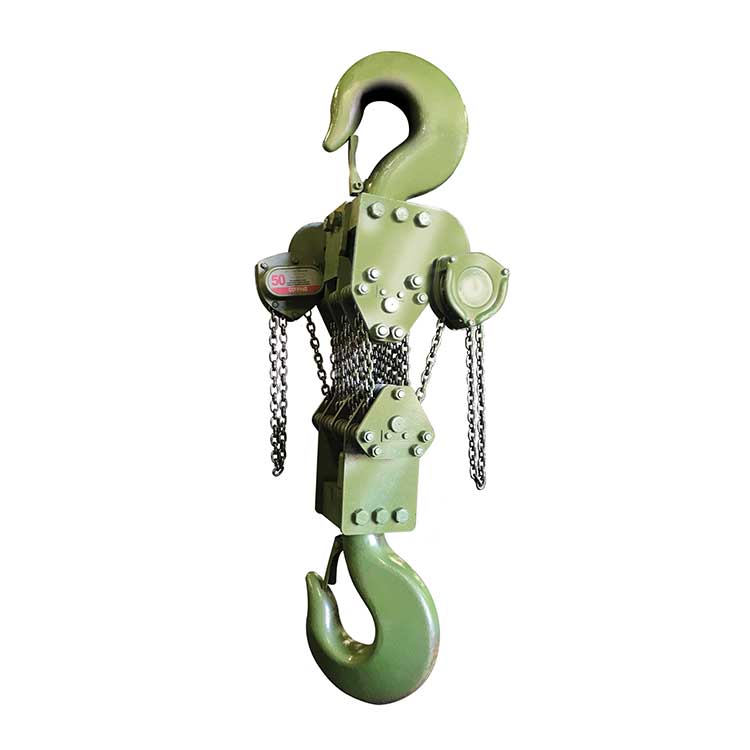
Hand chain hoist from LGH.
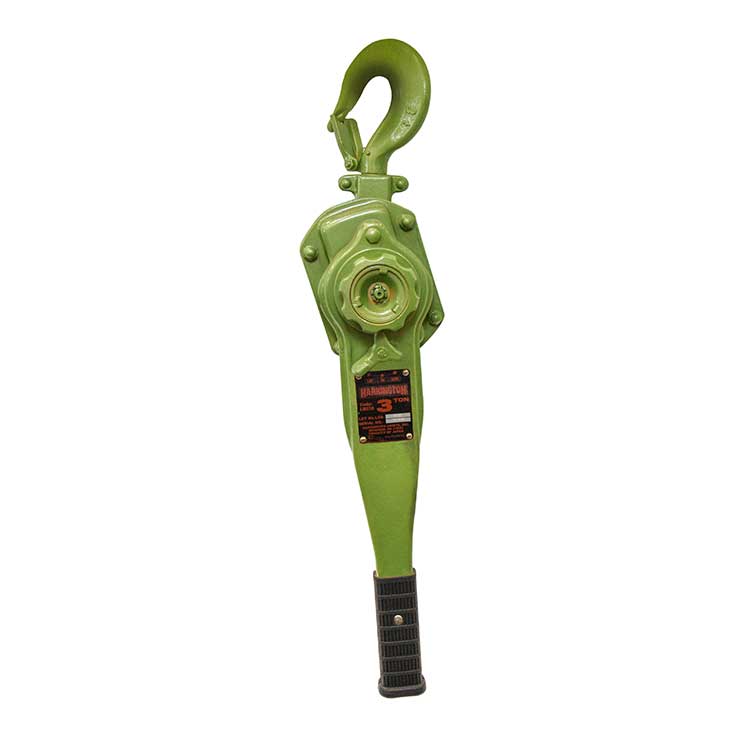
Chain come along lever hoist from LGH.
A Griphoist from LGH.
Choosing the right tool starts with understanding the direction of movement and the force required.
Before selecting equipment, consider:
Load weight
Required lifting or pulling force
Direction of movement
Available anchor points
Required travel distance
Headroom and space restrictions
Whether the load needs to be lifted, pulled, tensioned, or positioned
Whether wire rope or load chain is better suited for the application
Whether sheave blocks are needed for mechanical advantage
Floor conditions, friction, and load movement requirements
A hand chain hoist is often best for vertical lifting. A come-a-long is often best for controlled pulling, tensioning, or short-travel positioning. A Griphoist may be useful when longer pulling distances are needed, provided the correct wire rope is used.
If the exact pulling force is unknown, crews should calculate the force required before selecting equipment. For horizontal movement, this may include load weight, coefficient of friction, slope, and any mechanical advantage used in the system.
Lever Hoist Safety Tips
Lever hoists are simple to operate, but they still require proper planning, inspection, and use.
Important safety precautions include:
Inspect the hoist, hooks, chain, handle, and identification tags before use.
Confirm the rated capacity is appropriate for the load and application.
Never exceed the working load limit.
Never use a cheater bar or extend the lever handle.
Do not side load hooks.
Do not use the load chain as a choker.
Make sure anchor points are properly rated.
Keep the line of pull as straight as possible.
Avoid shock loading.
Do not operate a damaged or questionable hoist.
Follow the manufacturer’s instructions and use care manual.
Make sure personnel stay clear of the load path.
If the lever hoist does not move the load with normal handle effort, stop the operation and reassess the load weight, friction, anchor points, rigging setup, and equipment capacity.
Lever Hoist Rental from LGH
LGH offers come-a-long lever hoists, Griphoists, hand chain hoists, and other lifting and pulling equipment for rent. Whether your project requires vertical lifting, horizontal pulling, load tensioning, or precise positioning, LGH can help match the right equipment to the application.
Our rental specialists can help evaluate load weight, movement direction, available headroom, travel distance, anchor points, and required capacity so you can choose the right tool for the job.
Conclusion
Understanding the difference between a lever hoist vs. chain hoist can help crews choose the right tool for the application. Chain hoists are often best for vertical lifting from an overhead point, while lever hoists are useful for lifting, pulling, tensioning, positioning, and angled movement.
Come-a-longs and griphoists add even more flexibility depending on whether the job requires a load chain or wire rope, shorter positioning movement, or longer pulling distance. The best choice depends on the load, direction of movement, required force, available anchor points, and jobsite conditions.
For help choosing the right lever hoist, chain hoist, come-a-long, Griphoist, or pulling equipment for your next project, contact LGH today or call 800-878-7305 to speak with a rental specialist.
LGH is North America’s largest single organization devoted exclusively to the provision of lifting and moving equipment for rent. LGH holds the most comprehensive inventory for hoisting, rigging, jacking, pulling, material handling, and safety equipment. With over 90,000 pieces, discover your next project solution at RentLGH.com.