CMOD Spreader Beam Systems: Modular Lifting Frames for Complex Lifts

Traditional spreader beams are commonly used to distribute load weight, control sling angles, and expand pick points during a lift. However, some projects require more than a straight-line beam setup. When a load is large, unbalanced, awkwardly shaped, or located in an area with limited headroom, a modular lifting frame may provide a more stable and efficient solution.
That is where the CMOD spreader beam system can help. The CMOD system from Modulift uses corner units and standard spreader beam components to create square or rectangular lifting frames for four-point lifting applications. CMOD systems give crews a compact, customizable way to improve load control without adding unnecessary rigging complexity.
In this blog post, we’ll explain what a CMOD spreader beam system is, how it works, and when it may be the right choice for a complex lift.
What Is a CMOD Spreader Beam System?
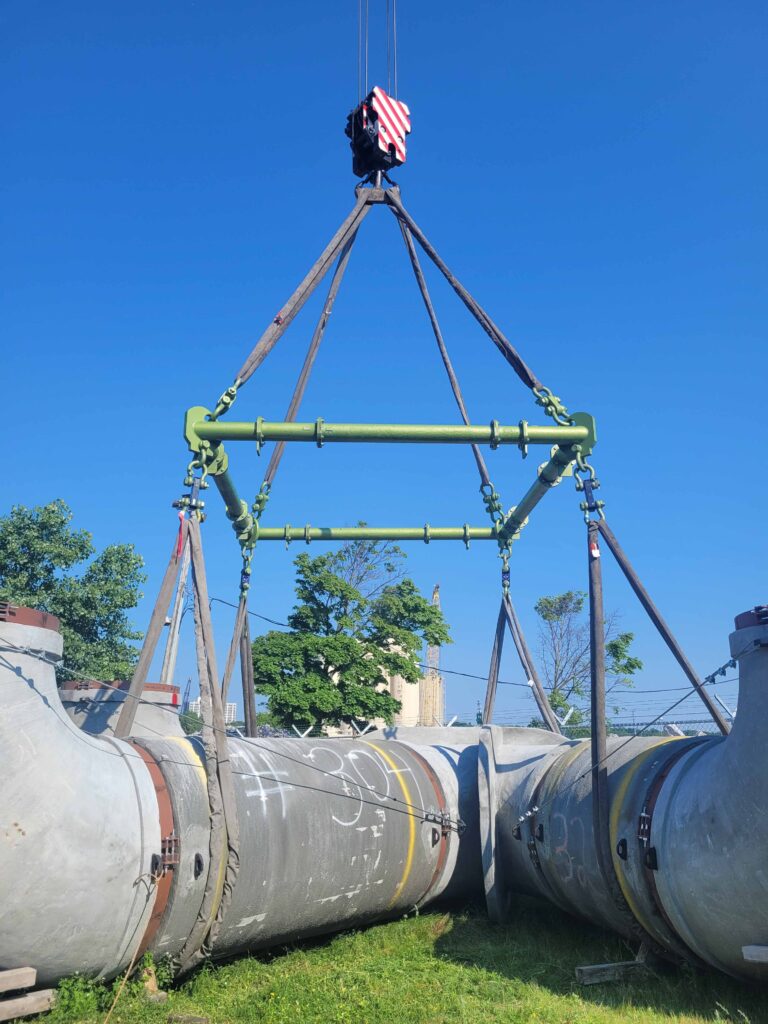
A CMOD spreader beam system is a modular lifting frame system that uses corner units to connect standard Modulift spreader beam components into a square or rectangular frame. Instead of using a single straight spreader beam, the CMOD system creates a four-sided frame that provides four lower pick points for lifting large or complex loads.
The term CMOD stands for “corner modular.” These corner units allow spreader beam struts to be connected at right angles, creating a frame spreader tool that can be configured to match the size and shape of the load.
-

-
A Modulift CMOD corner unit.
-

-
A Modulift CMOD strut unit.
Depending on the lift requirements, CMOD systems can be configured in a range of frame sizes, including square or rectangular layouts. This flexibility makes the system useful when a traditional beam setup does not provide enough stability, control, or headroom efficiency.
How Does a CMOD System Work?
A CMOD system works by connecting modular spreader beam sections with engineered corner units. Once assembled, the frame creates multiple lifting points that help distribute load forces more evenly across the lifting arrangement.
The system is typically used for four-point lifts where the load needs to be supported from multiple locations. By creating a rigid spreader frame, the CMOD system can help maintain separation between pick points, reduce sling interference, and improve load control during the lift.
Because the CMOD system uses modular components, the frame can be adjusted for different lifting dimensions. This allows crews to build a lifting frame that better matches the load geometry and available jobsite space.

A CMOD spreader beam frame from LGH.
Why Use a CMOD Spreader Beam Instead of Traditional Beams?
A traditional spreader beam is often a strong choice for straight-line lifting applications. However, when a lift requires multiple pick points, a traditional setup may require additional rigging, extra slings, or more vertical clearance.
A CMOD spreader beam system can help solve these challenges by creating a compact four-point lifting frame.
Key advantages include:
- Reduced headroom requirements: The frame-style setup can help reduce the vertical space needed for certain multi-point lifts.
- Improved load stability: Four lower pick points can help control large, wide, or awkward loads.
- Fewer sling redirections: The system can reduce the need for second-level slings or additional rigging components.
- Customizable frame sizes: Modular components allow the frame to be configured for different load dimensions.
- Better control for complex lifts: The frame helps maintain pick point spacing and supports more balanced load handling.
For projects with low clearance, tight access, or stability concerns, the CMOD system can provide a more efficient alternative to a conventional spreader beam arrangement.
When Should You Use a CMOD Spreader Beam System?
A CMOD spreader beam system is useful when the lift requires multiple pick points, controlled load distribution, and a compact rigging footprint. It is especially helpful when headroom is limited or when the load shape makes a single-beam setup less practical.
Common applications include:
- Low-headroom lifting
- Four-point lifting
- Modular construction
- Large or wide loads
- Unbalanced or awkwardly shaped loads
- Indoor lifting environments
- Machinery or equipment installation
- Loads requiring extra stability and control
The best rigging setup depends on the load weight, center of gravity, pick point locations, available headroom, sling angles, and jobsite conditions. A qualified lift plan should always determine whether a CMOD system is appropriate for the application.
CMOD Systems for Low-Headroom Lifts
One of the main benefits of a CMOD spreader beam system is its ability to reduce headroom requirements in certain lifting setups. In multi-point lifting, traditional rigging arrangements can require significant vertical clearance because of sling angles, upper rigging, and additional redirection points.
The CMOD system helps address this issue by creating a frame that provides multiple lower pick points in a compact configuration. This can be especially valuable in indoor spaces, plants, facilities, or jobsites where overhead clearance is limited.
By reducing the amount of rigging needed above the load, the CMOD system can help crews complete lifts that may be difficult or inefficient with traditional beam-and-sling arrangements.
Renting CMOD Spreader Beam Systems from LGH
LGH offers Modulift CMOD systems, spreader beams, and lifting beams for rent to support complex lifting applications. Whether the job requires additional pick points, reduced headroom, or improved load stability, LGH can help configure the right rigging setup for the lift.
Our team can help evaluate key lift requirements. This includes load weight, frame size, pick point spacing, headroom, sling angles, and equipment availability. With a wide inventory of certified lifting and rigging equipment, LGH helps crews find practical solutions for challenging lifting environments.

Conclusion
A CMOD spreader beam system gives crews a flexible way to create modular lifting frames for complex, low-headroom, and multi-point lifting applications. By combining standard Modulift spreader beam components with engineered corner units, the system can form square or rectangular frames that improve load stability, reduce rigging complexity, and provide four lower pick points.
For projects involving large, awkward, or unbalanced loads, a CMOD system can offer advantages over a traditional straight spreader beam setup. The right configuration depends on the load, center of gravity, pick point locations, available headroom, and lift plan.
For help selecting or renting a CMOD spreader beam system, spreader beam, lifting beam, or other rigging equipment for your next project, contact LGH today or call 800-878-7305 to speak with a rental specialist.
LGH is North America’s largest single organization devoted exclusively to the provision of lifting and moving equipment for rent. LGH holds the most comprehensive inventory for hoisting, rigging, jacking, pulling, material handling, and safety equipment. With over 90,000 pieces, discover your next project solution at RentLGH.com