How to Use a Turnbuckle: Types, Applications, and Installation Steps
A turnbuckle, sometimes searched as a “turn buckle,” is a rigging device used to adjust tension, remove slack, and fine-tune the length of a rope, cable, sling, or tensioning assembly. In lifting and rigging applications, turnbuckles can also help level a load, adjust for an offset center of gravity, or equalize tension across multiple pick points.
Knowing how to use a turnbuckle properly starts with selecting the correct type, verifying the working load limit, attaching the end fittings correctly, and rotating the body to achieve the desired tension. This guide explains what a turnbuckle is, how it works, common turnbuckle types, and the basic steps for safe installation and adjustment.

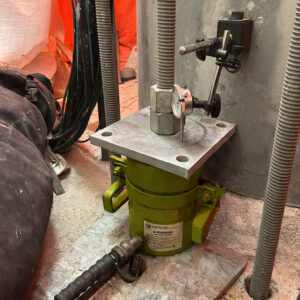
Turnbuckle from LGH.
How to Use a Turnbuckle Step by Step
To use a turnbuckle, first confirm that the turnbuckle’s working load limit is suitable for the application. Then extend the end fittings, connect each end to the proper securement point, and rotate the turnbuckle body to increase or decrease tension.
Here is the basic process:
- Select the correct turnbuckle. Choose the proper size, working load limit, material, and end fitting style for the job. The turnbuckle should be rated for the load or tensioning force it will experience.
- Inspect the turnbuckle before use. Check the body, threads, end fittings, pins, nuts, and attachment points for cracks, bending, corrosion, thread damage, or other signs of wear.
- Extend the end fittings. Unscrew the end fittings evenly from the turnbuckle body until they are near the full take-up length. Do not remove the fittings completely from the body.
- Attach each end to the securement points. Eye fittings are typically connected with shackles or similar rigging hardware. Jaw fittings can connect directly to a lifting lug, eye bolt, or other approved attachment point. Hook fittings are generally used for temporary tensioning applications and should not be used where the connection could unexpectedly release.
- Rotate the turnbuckle body. Turn the center body to draw the end fittings closer together and increase tension. Rotate it in the opposite direction to reduce tension or add length.
- Adjust slowly and evenly. Make small adjustments until the desired tension, alignment, or load balance is reached. In lifting applications, avoid sudden adjustments that could shift the load unexpectedly.
- Secure the assembly. Tighten lock nuts if included, and verify that all pins, nuts, shackles, and fittings are properly installed before loading the system.
- Monitor during use. Make sure the turnbuckle remains aligned with the direction of pull. Make sure it is not side loaded, shock loaded, or used beyond its rated capacity.
When adjusting a turnbuckle, use an appropriately sized wrench on the turnbuckle body. Avoid placing a spud wrench, pry bar, or other tool through the body, as this can damage the turnbuckle and create unsafe conditions.
Types of Turnbuckles
The most common turnbuckle types are: eye and eye, hook and hook, jaw and jaw, jaw and eye, and hook and eye, each named for their combination of end fittings. The fittings are determined by what the turnbuckles need to connect to and whether the solution is permanent or temporary.
• Eye and Eye Turnbuckle:
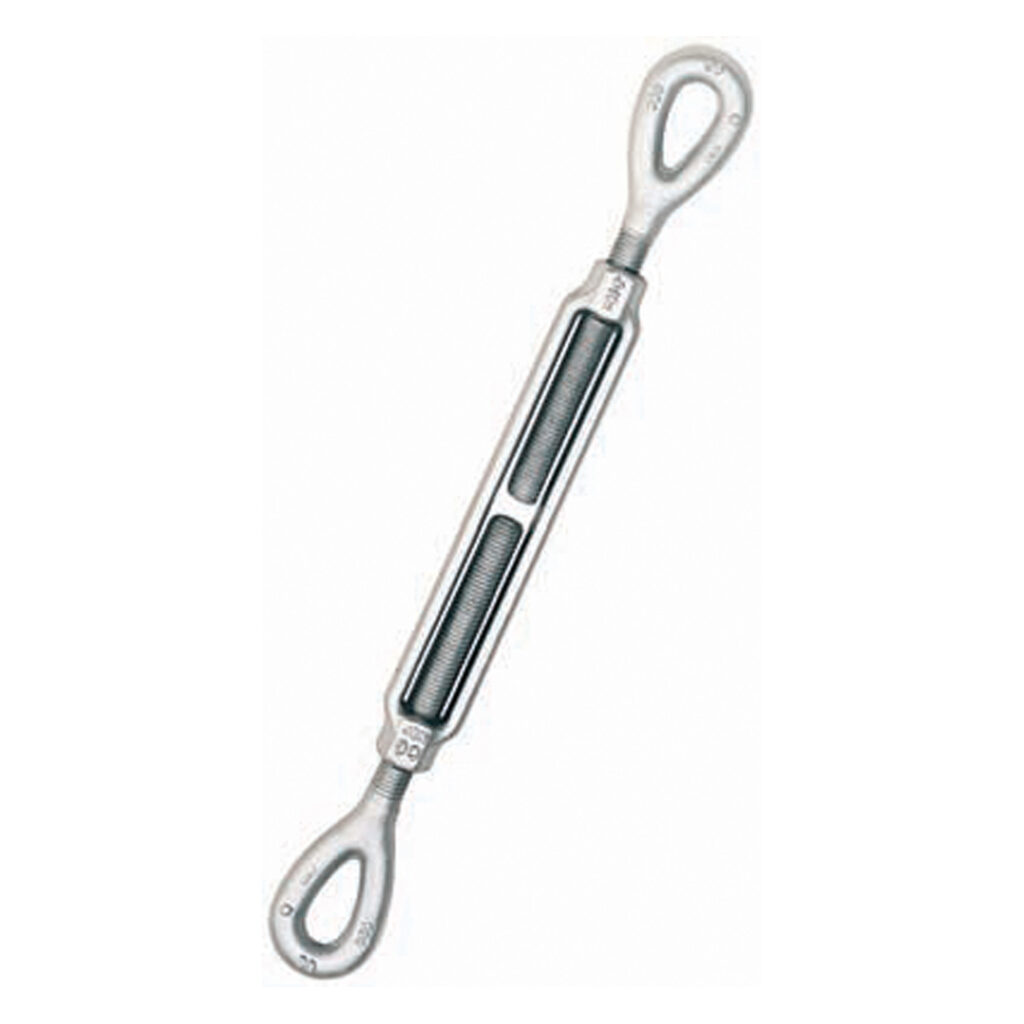
An eye and eye turnbuckle.
The eye and eye configuration is designed with a closed-loop teardrop fitting on each end. It’s the most frequently rented and may be used nearly anywhere. The eye and eye turnbuckle is intended for a shackle to be attached on each end, with the shackle pins going through the turnbuckle eyes.
• Jaw and Jaw Turnbuckle:
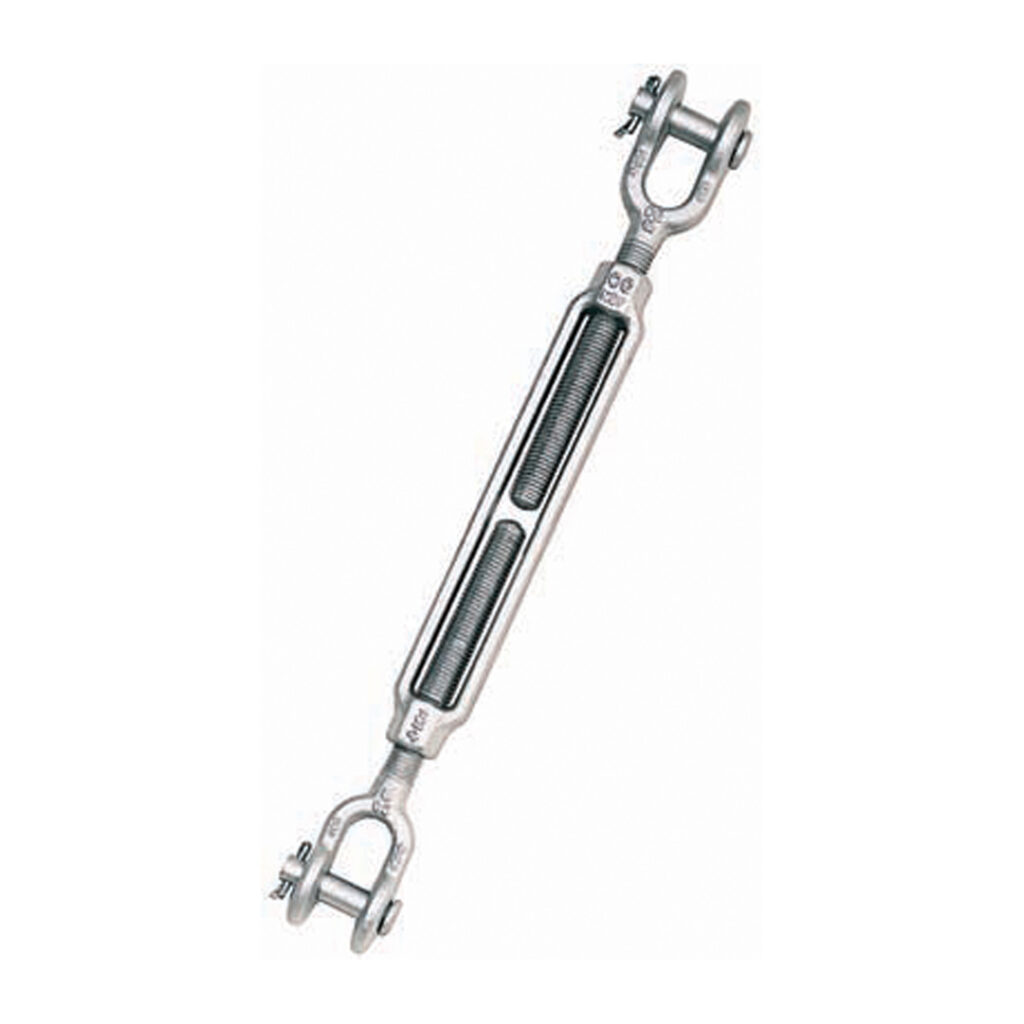
A jaw and jaw turnbuckle.
A jaw end fitting consists of a U-shaped jaw and bolt secured together by a nut or pin. This configuration offers the option to join the sling or lifting lug directly to the turnbuckle. In addition, it works well to connect components that cannot open, such as an eye bolt.
• Hook and Eye Turnbuckle:
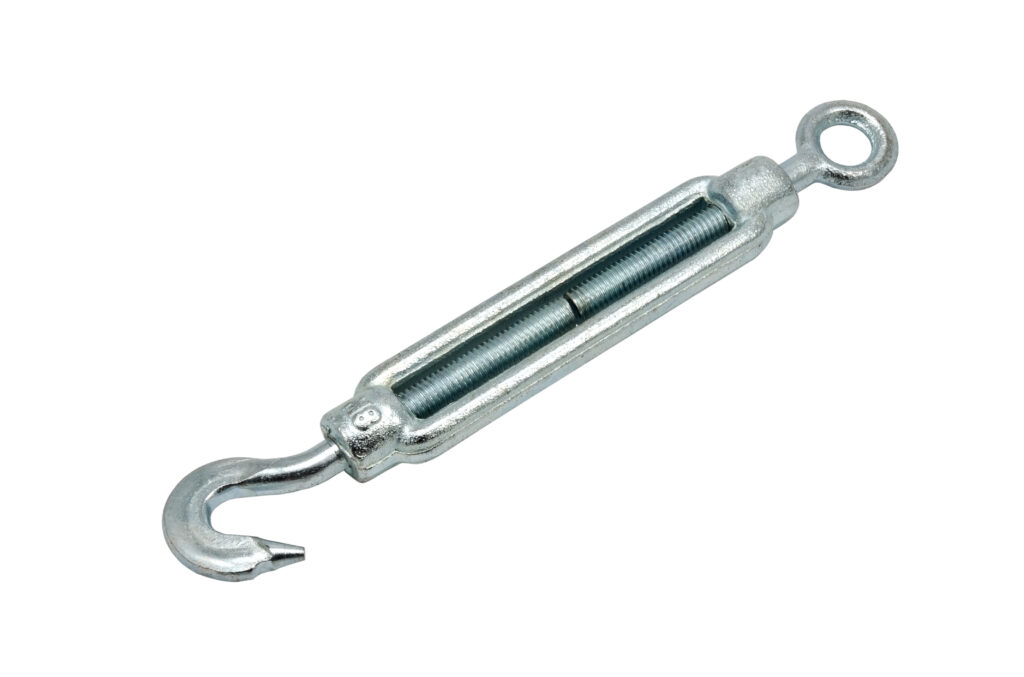
Hook and eye turnbuckle.
Similar to hook and hook, the only difference in this configuration is that the eye end allows for one secure end attached to the rigging hardware.
• Jaw and Eye Turnbuckle:
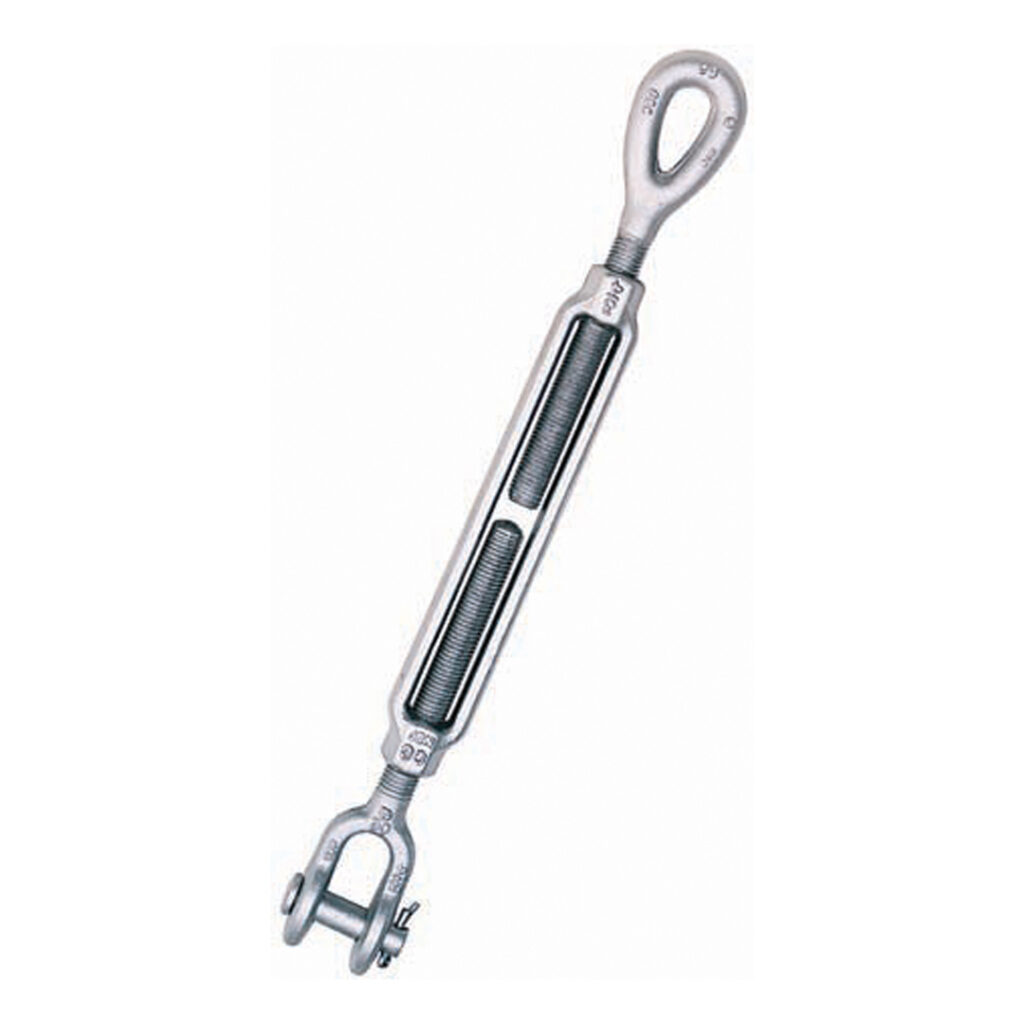
A jaw and eye turnbuckle.
The jaw and eye configuration is nearly the same as the eye and eye configuration, with the added flexibility to directly connect to the lifting lug. This configuration isn’t as common unless you have a fixed point or a lug that’s difficult to work on a lift.
• Hook and Hook Turnbuckle:
The hook end fitting is commonly used to create temporary connections because they are easy to quickly connect and disconnect. However, since the hook configurations lack a safety latch, you should never use them in connections where the tension could unexpectedly release.
Read more about turnbuckle end fittings in Tools You May Not Know We Rent: Turnbuckles.
Turnbuckle Applications
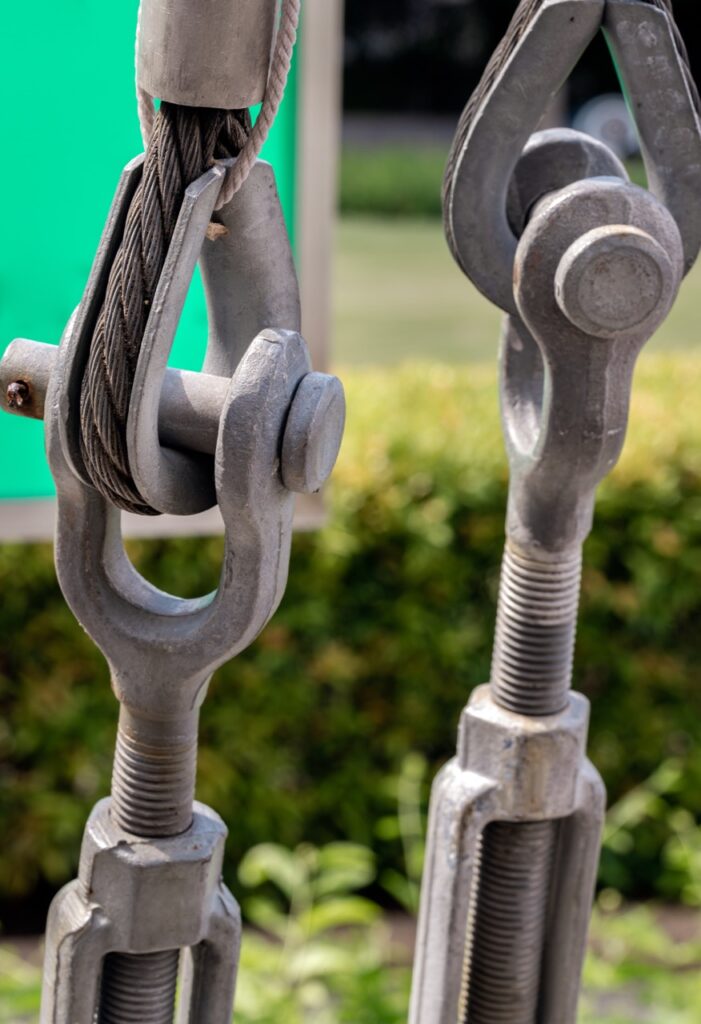
Turnbuckles are used when a rigging or tensioning assembly needs precise adjustment. By rotating the turnbuckle body, users can increase or decrease tension, remove slack, fine-tune length, or help level a load without fully disconnecting the assembly.
In lifting and rigging applications, one of the most common uses for a turnbuckle is correcting an offset center of gravity. If a load is not naturally balanced, a turnbuckle can be added to one leg of the rigging setup. You can then make small length adjustments and help bring the load into a more level position. For example, if a lift requires a total running length of 10 feet, 7 ½ inches and the available sling length does not match that measurement, a turnbuckle can help make up the difference. The rigger can fine-tune the assembly until the load is properly balanced by adjusting the turnbuckle in or out.

More Applications
Turnbuckles are also useful when a lift has multiple pick points. In a six-point vertical lift, for example, it can be difficult to distribute the load evenly across every lifting point. A turnbuckle may be used with a shorter sling or additional lifting beam. This can help adjust tension and help equalize the load across all pick points. This can be especially important when one section of the load begins taking more weight than the others.
Outside of load leveling, turnbuckles are commonly used to tension cables, guy wires, perimeter cables, suspension systems, and other assemblies where controlled adjustment is required. In these applications, the turnbuckle allows users to remove slack and maintain the desired tension without replacing the entire cable or connection.
No matter the application, the turnbuckle must be properly rated, aligned with the direction of pull, and used within the manufacturer’s specifications. Always verify the working load limit, inspect the threads and end fittings, and avoid side loading, shock loading, or using damaged hardware.
Note: When adjusting a turnbuckle, use an appropriately sized wrench on the turnbuckle body. Do not place a spud wrench, pry bar, or other tool through the body. This can damage the turnbuckle and create unsafe conditions.
Conclusion
Knowing how to use a turnbuckle properly starts with understanding its purpose. A turnbuckle is designed to adjust tension, remove slack, fine-tune length, and help balance rigging or tensioning assemblies. Whether it is used to level a load with an offset center of gravity, equalize tension across multiple pick points, or tighten a cable system, the turnbuckle gives crews a simple but effective way to make precise adjustments.
Before using a turnbuckle, always select the correct type and working load limit for the application. Inspect the body, threads, pins, nuts, and end fittings before use, and make sure the turnbuckle remains aligned with the direction of pull. Avoid side loading, shock loading, overloading, or using improper tools through the body during adjustment.
LGH offers a wide range of Crosby turnbuckles and other rigging hardware for lifting, tensioning, and load control applications. For help selecting the right turnbuckle for your next project, contact your local LGH representative or call 800-878-7305.
Frequently Asked Questions About Turnbuckles
What is a turnbuckle used for?
A turnbuckle is used to adjust tension, remove slack, and fine-tune the length of a rope, cable, sling, or rigging assembly. In lifting applications, turnbuckles may be used to level a load, correct for an offset center of gravity, or help equalize tension between multiple pick points.
How does a turnbuckle work?
A turnbuckle works by using opposite threads on each end of the body. As the center body is rotated, the end fittings move closer together or farther apart. This allows the user to increase or decrease tension without disconnecting the assembly.
Which way do you turn a turnbuckle to tighten it?
In most applications, rotating the turnbuckle body in one direction draws the end fittings inward and increases tension. Rotating it in the opposite direction moves the fittings outward and reduces tension. The exact direction depends on the orientation of the turnbuckle and its threaded fittings.
Can turnbuckles be used for lifting?
Turnbuckles can be used in certain lifting and rigging applications when they are properly rated, correctly installed, and used within the manufacturer’s specifications. Always verify the working load limit and confirm that the turnbuckle is suitable for the specific lift.
What are the main types of turnbuckle end fittings?
Common turnbuckle end fittings include eye and eye, jaw and jaw, hook and hook, jaw and eye, and hook and eye configurations. The correct fitting depends on what the turnbuckle needs to connect to and whether the connection is temporary or more secure.
What should you avoid when using a turnbuckle?
Avoid side loading, shock loading, overloading, damaged threads, improper end fitting connections, and using a pry bar or spud wrench through the turnbuckle body. These issues can damage the turnbuckle or create unsafe rigging conditions.
LGH is North America’s largest single organization devoted exclusively to the provision of lifting and moving equipment for rent. LGH holds the most comprehensive inventory for hoisting, rigging, jacking, pulling, material handling, and safety equipment. With over 80,000 pieces, discover your next project solution at RentLGH.com.