Best Gantry Crane for Maintenance Work: How to Choose the Right Option

A steel gantry rental from LGH.
Maintenance and repair work often requires a lifting solution that can move where the work is happening. Whether crews are removing a motor, replacing an HVAC component, servicing equipment, or working in a facility with limited overhead lifting options, a gantry crane can provide the portability and control needed for the job.
The best gantry crane for maintenance work depends on the load, workspace, access limitations, surface conditions, and how often the crane needs to be moved. Steel gantry cranes, aluminum gantry cranes, and hydraulic gantries each serve different maintenance applications.
In this blog post, we’ll explain how gantry cranes work, when they make sense for maintenance and repair operations, and how to choose the right gantry crane for the job.
What Is a Gantry Crane?
A gantry crane is a portable lifting structure made with an overhead beam supported by two vertical legs, often in an A-frame design. Many gantries are mounted on casters or wheels, allowing crews to move the crane into position as needed.
Unlike a fixed jib crane or permanent overhead crane, a gantry crane does not require a building-mounted structure or permanent foundation. This makes gantries useful for temporary maintenance work, multi-location repairs, and jobsites where permanent lifting equipment is not available.
-

-
A steel gantry crane from LGH.
-

-
An aluminum gantry crane from LGH.
Why Use a Gantry Crane for Maintenance Work?
Gantry cranes are useful for maintenance and repair because they give crews a movable lifting point. Instead of bringing the work to a fixed crane, crews can position the gantry near the equipment being serviced.
Common maintenance applications include:
- Removing or replacing motors
- Servicing pumps, compressors, or transmissions
- Lifting HVAC components
- Supporting machinery repair
- Moving equipment in plants or facilities
- Temporary indoor or outdoor lifting
- Maintenance work where forklifts or fixed cranes cannot reach
For short-term or project-based work, renting a gantry crane can also help crews access the right lifting capacity without purchasing equipment that may not be needed long term.
Steel Gantry Cranes for Heavy Maintenance
Steel gantry cranes are often the better choice when maintenance work involves heavier loads, industrial equipment, or applications that require more lifting capacity.
A steel gantry crane may be a good fit for:
- Engine or motor removal
- Electrical equipment maintenance
- Machinery repair
- Plant maintenance
- Heavy indoor lifting
- Applications requiring adjustable height, span, or tread width
Many steel gantries offer adjustability, allowing crews to position the beam over the load and work around equipment, walls, or other obstacles. Some configurations may also support cantilevered beams, which can help crews reach into equipment without positioning the legs directly around the load.
Aluminum Gantry Cranes for Portable Maintenance Work
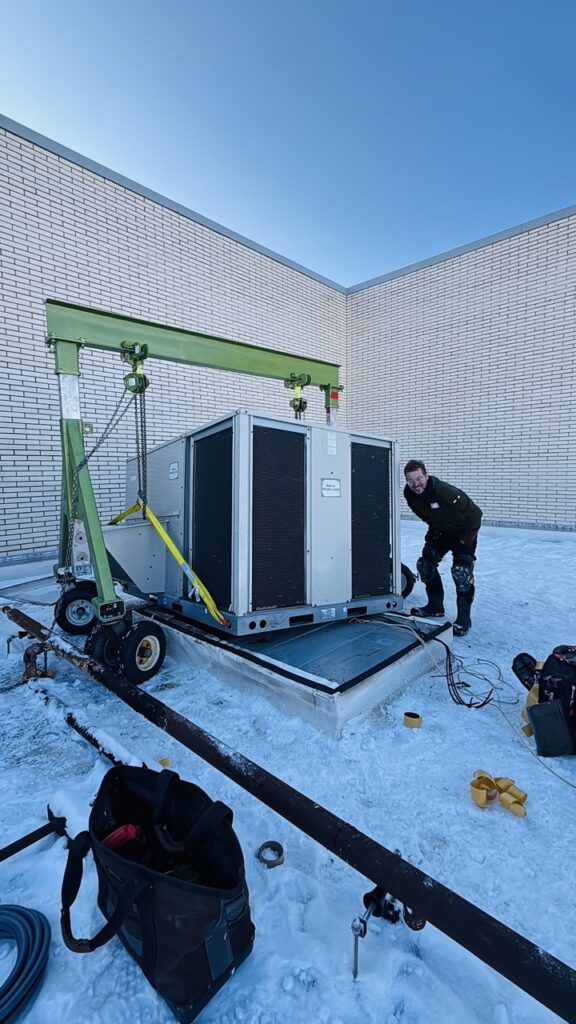
Aluminum gantry cranes are often the best choice when portability matters most. Their lightweight design makes them easier to transport, assemble, and position, especially for crews moving between work areas.
An aluminum gantry crane may be a good fit for:
- HVAC maintenance
- Rooftop work
- Remote jobsite repairs
- Lighter equipment lifts
- Work that requires frequent setup and teardown
- Applications where crews need to carry or transport the gantry
Aluminum gantries can be especially useful when a service team needs a lifting solution that fits in a vehicle, moves through a facility, or reaches an area where heavier equipment would be difficult to position.
How to Choose the Best Gantry Crane for Maintenance Work
Before choosing a gantry crane, consider the full lifting environment, not just the load weight.
Key factors include:
- Load weight: Confirm the crane capacity matches the load and rigging.
- Lift height: Make sure the gantry provides enough hook height.
- Span: Confirm the beam can reach across the work area.
- Portability: Decide whether the crane needs to move frequently.
- Surface conditions: Review floors, rooftops, outdoor surfaces, or uneven ground.
- Access: Consider doorways, aisles, equipment rooms, and setup space.
- Assembly needs: Determine how many workers can safely assemble and position the crane.
- Indoor vs. outdoor use: Choose the right style based on the work environment.
In general, steel gantries are better for heavier industrial maintenance, while aluminum gantries are better for portable service work, HVAC applications, and jobs where transport and setup speed matter.
Why Rent a Gantry Crane for Maintenance?

Maintenance needs can change from job to job. One project may require a heavy-duty steel gantry, while another may need a lightweight aluminum gantry that can be moved to a rooftop or remote area.
Gantry crane rental gives crews access to the right crane for the specific task without the cost, storage, inspection, and maintenance responsibilities of ownership.
Renting can help:
- Reduce upfront equipment costs
- Support temporary or emergency repairs
- Match the crane to the application
- Avoid permanent installation
- Improve flexibility across multiple jobsites
- Access job-ready lifting equipment when needed
Rent Gantry Cranes from LGH
LGH offers gantry crane rental options for indoor and outdoor maintenance applications, including steel gantries, aluminum gantries, and hydraulic gantries. Our rental specialists can help match the right crane to your workspace, load requirements, lift height, surface conditions, and project timeline.
For help choosing the best gantry crane for maintenance work, contact LGH today or call 800-878-7305.
LGH is North America’s largest single organization devoted exclusively to the provision of lifting and moving equipment for rent. LGH holds the most comprehensive inventory for hoisting, rigging, jacking, pulling, material handling, and safety equipment. With over 90,000 pieces, discover your next project solution at RentLGH.com.