Case Study: Launching the Longest Single-Span Bridge in Alaska
LGH Equipment Used:
Introduction
In the remote, mountainous terrain of the Alaskan wilderness, the longest single-span steel girder bridge in the nation was recently launched. But bridging the gap in the middle of Alaska raised logistical hurdles that demanded innovative solutions.
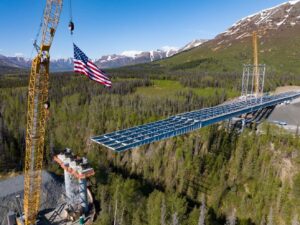
Photos courtesy of Traylor Bros.
The bridge construction at Juneau Creek is part of the Sterling Highway project on Alaska’s Kenai Peninsula. Spanning a deep canyon in mountainous terrain, the project presented challenges that extended beyond the size of the bridge itself. Remote site logistics, high winds, limited crane access, and the need to maintain precise control during the launch determined how the bridge launch was planned for and executed.
When Traylor Bros., Inc. prepared to launch the bridge, they needed specialized rigging equipment built to operate in the most demanding environments. LGH supplied the rigging equipment needed to execute the bridge launch, including more than 100 hand chain hoists and pulling equipment to match the project’s unique requirements.
“What’s special about this project is that it was built in place off to the side. We called it the launch bed,” says Jason Palamarchuk, Field Engineer for Traylor Bros. “What we ended up doing was rolling it across the canyon to the other side and lowering it down into place.”
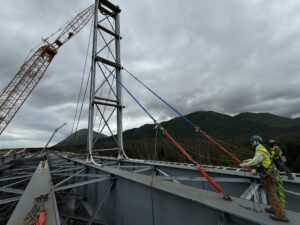
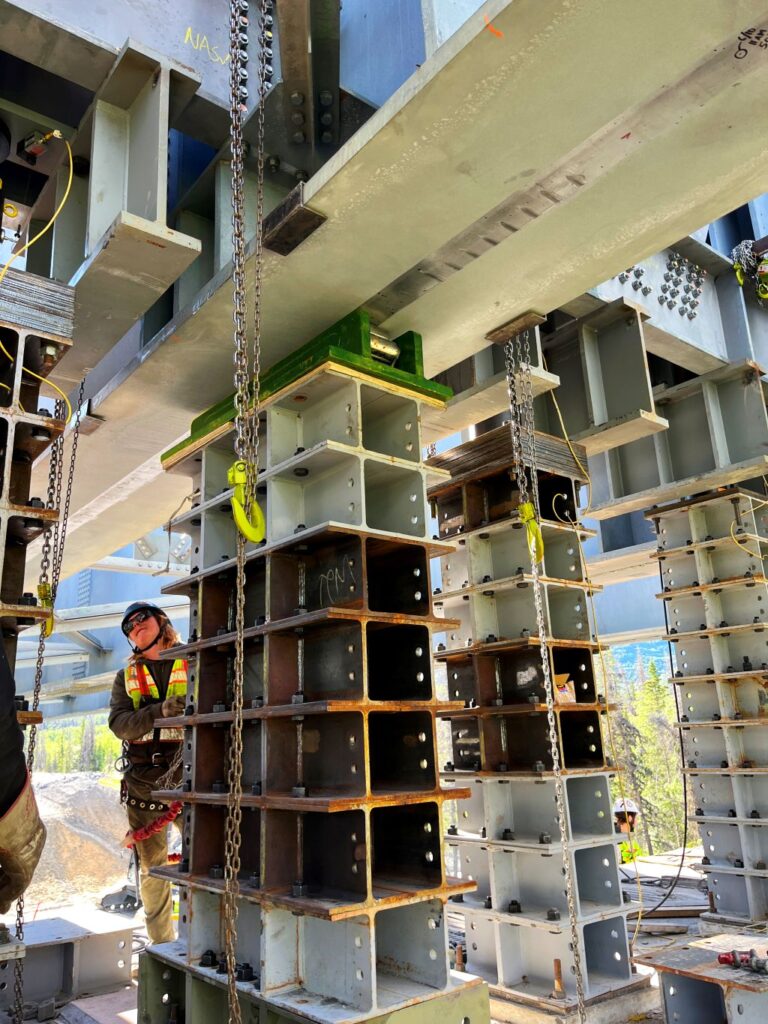
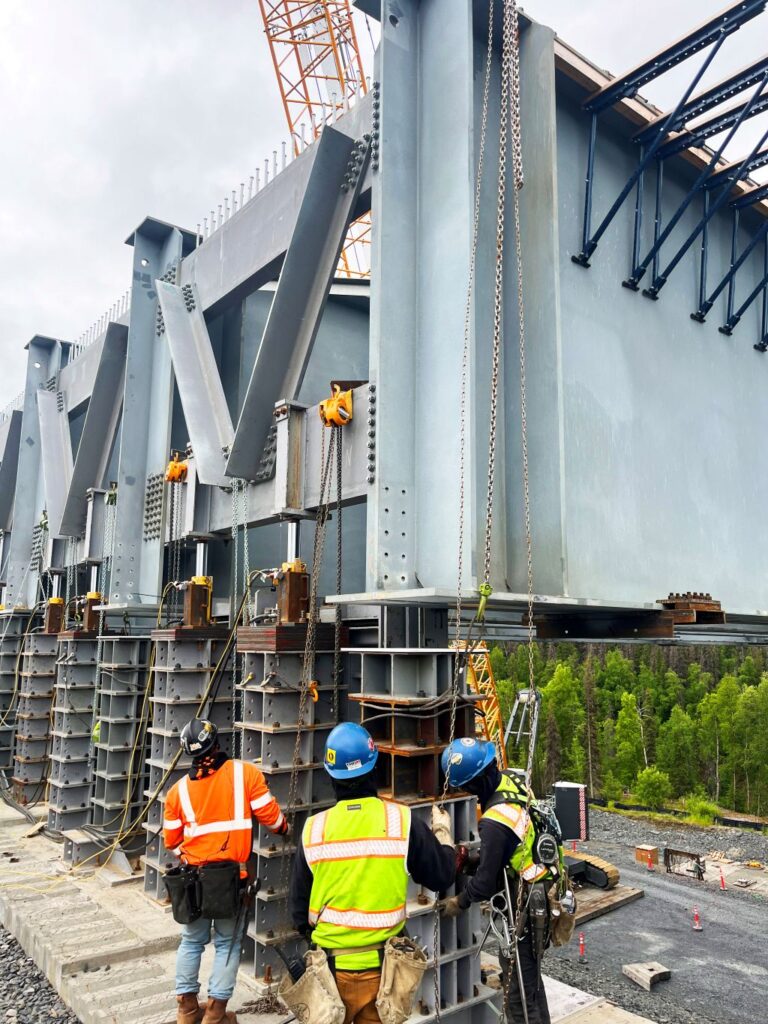
Traylor Bros. turned to LGH for rigging gear that could withstand the environment to complete this job, which had never been done before. Hand chain hoists, commonly referred to as chain falls, were stationed at support locations along the piers and abutment, allowing the crew to lower the multi-million-pound bridge into its final resting place.
Challenges
A bridge launch of this scale required careful coordination between subcontractors to mitigate any challenges. With the remote location, crane capacity, load sizes, and the need to control the structure from multiple points, selecting the properly rated equipment was critical.
Four challenges in particular shaped the approach:
1. Material Transportation & Site Logistics
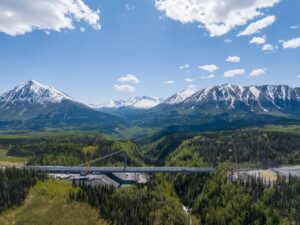
One of the first major challenges was getting materials to the remote Alaska jobsite, with highway construction still underway. “The girders alone are almost 100 feet long and 13 feet tall,” Palamarchuk says. Fabricated in Arizona, the steel girders traveled thousands of miles to reach Alaska. Transporting bridge components of this size required lots of coordination between trucking companies, barges, and material suppliers to ensure everything arrived on site when needed.
2. Crane Limitations & Lift Planning
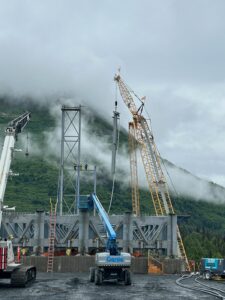
The crane on the jobsite provided the reach necessary for the project but had limited lifting capacity. “These cranes are really good for reach, but [they] are only 300-ton cranes,” says Palamarchuk. Because of these constraints, the team had to carefully engineer the bridge launch around crane load charts and capacity limits.
3. Bridge Launching & Alignment Control
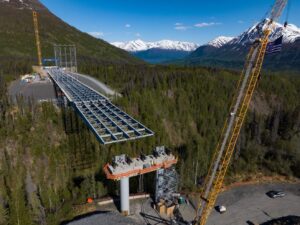
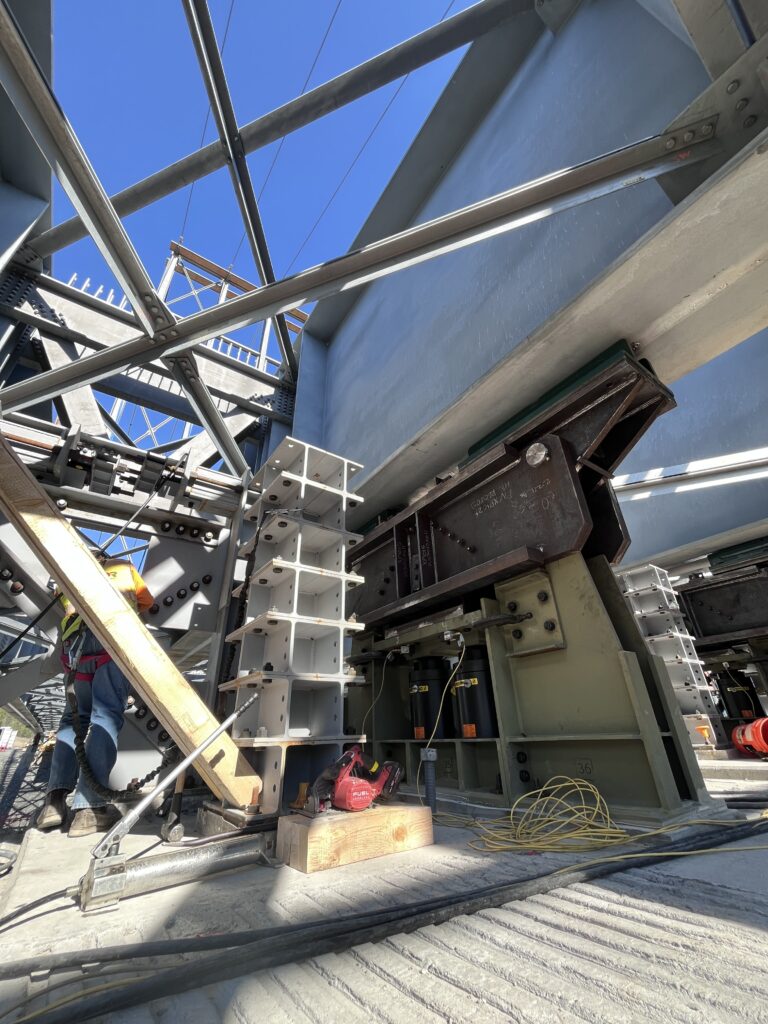
Launching the bridge across the canyon was one of the most technically demanding phases of the project. The bridge was pushed forward by two hydraulic pistons, which had to remain synchronized. If one piston advanced faster than the other, the bridge could begin steering off course. At the same time, a series of guide rollers had to remain precisely aligned. “Even if one of those rollers came out of plumb or came out of alignment, the bridge would start to steer and buckle the supports,” Palamarchuk explains. “It was a lot of eyes and a lot of engineering.”
4. King Post System & Stay Cable Installation
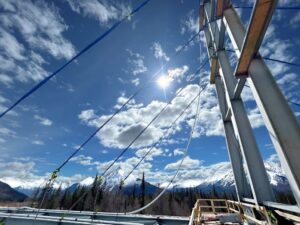
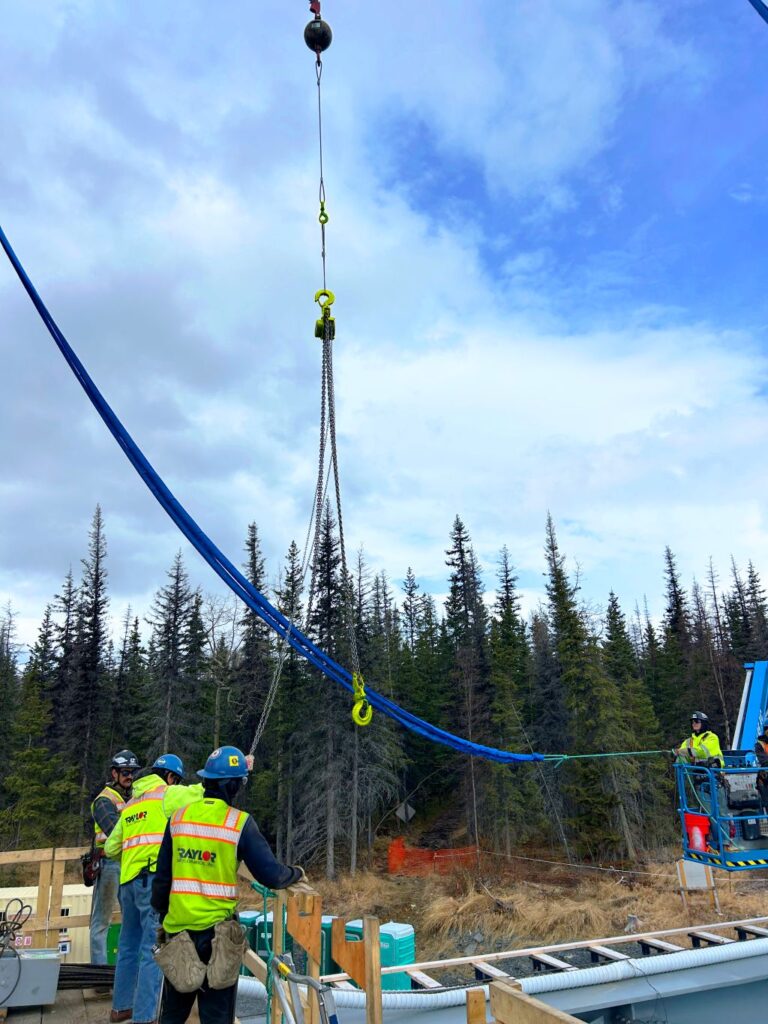
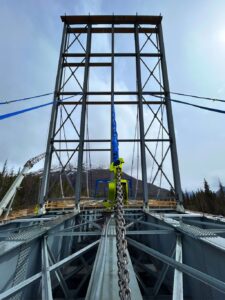
The greatest challenge was in constructing and operating the temporary king post system used during the bridge launch, according to Palamarchuk. The 100-foot-tall tower supported stay cables that carried the leading end of the bridge as it extended over the canyon.
The team had to determine how to erect the approximately 200,000-pound king post within the cranes’ lifting limitations, install and tension the stay cables, and later dismantle the entire system once the bridge was in place. During removal, crews developed a solution using LGH chain falls as temporary guide cables while the main stay cables were disconnected.
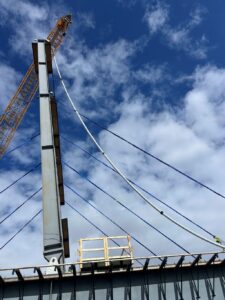
“No one expected it to be this difficult,” says Palamarchuk. As construction progressed, they realized the scale and complexity of this operation exceeded what they initially planned for. The temporary system required dependable rigging solutions that could safely handle loads while providing crews with precise control throughout the installation and dismantling.
Solution
After comparing the cost of purchasing the chain falls and other equipment required for the bridge launch, Traylor Bros. deemed it more practical and cost-effective to rent specialized rigging gear. The scale of the operation was a major factor in their decision. The bridge needed to be raised, lowered, stabilized, and adjusted from multiple locations simultaneously.
To determine the capacities and quantities required, Traylor Bros. evaluated each lifting location based on these primary questions:
- What is the weight of the material being lifted?
- How many pick points are needed?
- How many chain falls are required?
One option would have been to purchase half of the chain falls needed and move equipment around.
“The time it takes to set everything up, we figured we should buy one for each location where we need to pick up the bridge and keep the pieces in place,” Palamarchuk explains. “It was a lot of long conversations with foreman, superintendents, and engineers.”
In addition to the hand chain hoists, multiple winches were needed for the installation and removal of the cable system. They knew the bridge lift required something capable of pulling 10,000 pounds from 300 feet away, which helped to determine the proper winch.
When Palamarchuk initially asked LGH Rental Representative Scott Jones whether LGH could provide 104 hand chain hoists, he said, ‘You’re joking, right?” He wasn’t.
LGH worked with Traylor Bros. to match equipment capacities, quantities, and configurations to the rigging configuration plan and ensure the right equipment was available. Being able to rent the necessary equipment helped crews execute the bridge launch without having to continually move a limited number of hoists from one location to another.
Results
The long conversations and extensive planning paid off. Traylor Bros. successfully launched Alaska’s longest single-span bridge while using rigging equipment rentals from LGH. This helped keep the project on schedule and nearly $50,000 under the projected equipment budget.
Additionally, having chain falls positioned throughout allowed crews to work at multiple locations simultaneously rather than relying on a single crane.
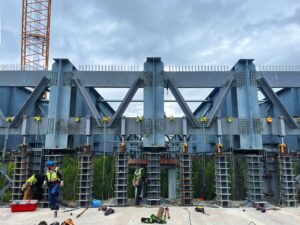
“It saved us a lot of time and wear and tear on our crane, because we could have just used our crane,” Palamarchuk elaborated. “But there’s one crane and essentially eight locations versus being able to do everything simultaneously to come up at once, come down at once.”
The equipment continued to support the project after the bridge launched. Once the bridge was in place, the chain falls were then used during removal of the temporary king post system.
“We rigged the crane with no weight; the chain falls were taking all the load, and then we lowered the king post into the crane so the crane picked up the load as it kind of tripped towards the crane and then we tripped it down the rest of the way after the cables took away the load,” Palamarchuk explains.
Overall, having the right quantity of equipment on site gave them the ability to control multiple points of the bridge structure at the same time, reduce reliance on the crane, avoid repeated rigging setups, and adapt the equipment to different phases of the project.
From determining the capacities and quantities required to supply more than 100 chain falls and the pulling equipment needed for the cable system, LGH supported Traylor Bros. in turning a complex lift plan into a successful launch.
Conclusion
While work on the Sterling Highway project continues, one of its most technically challenging milestones is complete. The bridge has crossed Juneau Creek, the temporary launching systems have been dismantled, and crews are moving forward with the remaining roadway and bridge work.
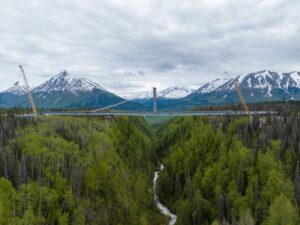
“Crazy to think about, crazy to see, and crazy that it got done,” Palamarchuk remarks. LGH is proud to have supported Traylor Bros. in reaching this milestone with the specialized lifting and rigging equipment required to put the plan into motion.
Planning a complex infrastructure project? LGH is here to support you with the right rigging solutions.
Traylor Bros., Inc. is one of the nation’s leading heavy civil contractors. A third-generation family-owned company, their staff of dedicated professionals employ some of the most innovative construction techniques in the industry to build landmark bridges, tunnels, and marine structures.
LGH is North America’s largest organization dedicated exclusively to the rental of lifting and moving equipment. With one of the most comprehensive inventories of hoisting, rigging, jacking, pulling, material handling, and safety equipment available, LGH supports contractors with expert guidance and proven solutions for even the most complex jobsites.