Compression Load Cell: Wireless Load Cell Rentals from LGH
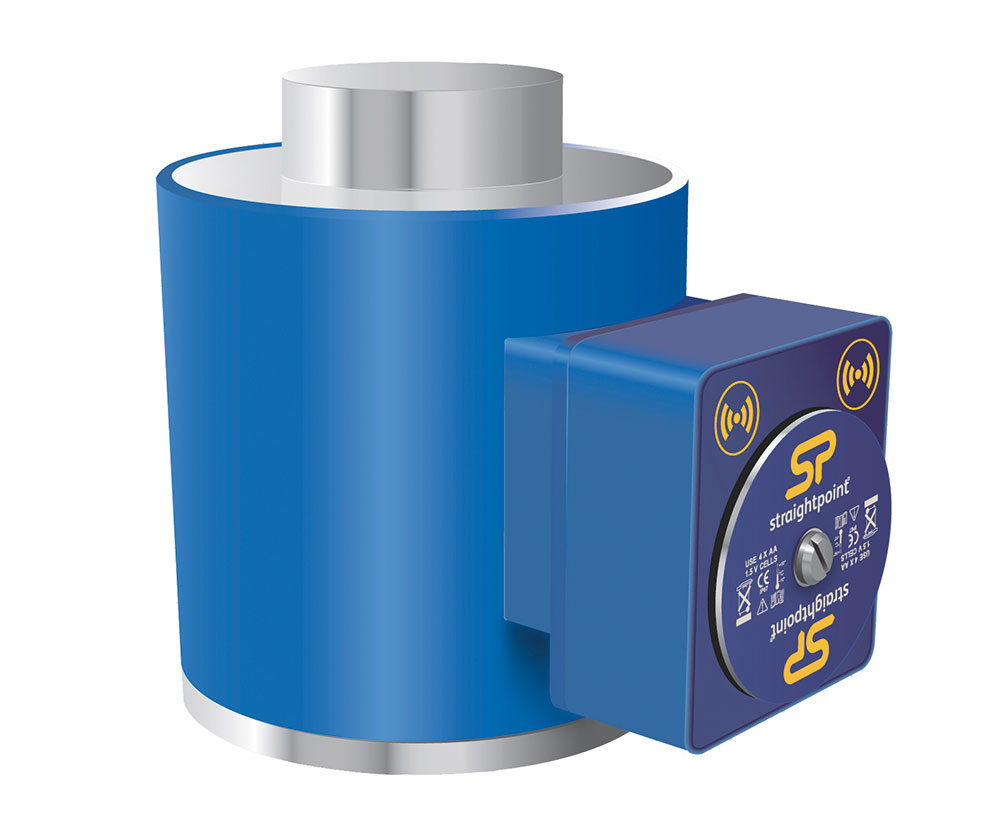
Example of a Straightpoint compression load cell, also available for rent from LGH.
A compression load cell is a force measurement device used to measure weight or force when a load presses down on the sensor. In lifting, rigging, weighing, and heavy transport applications, compression load cells can help crews verify load weight, measure load distribution, and calculate center of gravity.
LGH rents Crosby Straightpoint WN Series wireless compression load cells, including the WNI50TCU and WNI150TCU models. These Straightpoint load cell rentals are commonly used for heavy equipment weighing, center-of-gravity verification, proof load testing, load monitoring, and multi-point weighing applications.
This product spotlight explains how a compression load cell works, when to use one, and how it differs from a digital load link or tension load cell.
What Is a Compression Load Cell?

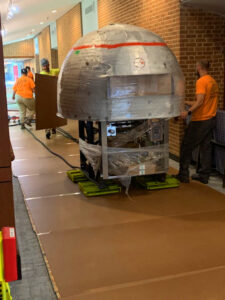
Four compression load cells that were used to lift and weigh a missile tracker. The tracker itself weighed 8,125 lbs, which the load cells calculated correctly.
A compression load cell is a load cell sensor that measures force when a load is applied downward onto the device. It is sometimes called a compressive load cell, button load cell, or loadcell.
In simple terms, a compression load cell measures the force created when a load sits on top of it. This makes it useful for weighing large objects, checking load distribution, and determining whether one side or corner of a load is carrying more weight than another.
Compression load cells are commonly used in heavy lift, energy, defense, rigging, shipping, industrial transportation, manufacturing, and construction applications.
How Does a Compression Load Cell Work?

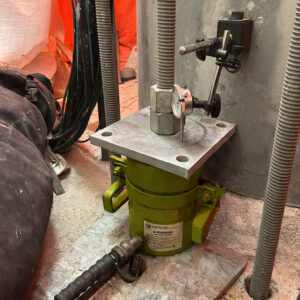
A worker using the wireless Straightpoint compression load cell system from LGH.
A compression load cell works by converting force into an electrical signal. When a load presses down on the sensor, the material inside the load cell experiences a small amount of strain. Internal electronics measure that strain and convert it into a load reading.
With wireless compression load cells, the load data can be sent to a handheld display or compatible software. This allows crews to monitor the load from a distance instead of standing directly next to the equipment being weighed or tested.
Multiple compression load cells can also be used together. In those applications, software can show the load on each individual sensor, the total weight, and the calculated center of gravity.
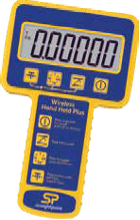
The handheld wireless display allows for safe readout from the Straightpoint load cell system.
Compression Load Cell Models Available from LGH
LGH rents the Crosby Straightpoint WN Series wireless compression load cells, including the WNI50TCU and WNI150TCU models.
The WNI50TCU has a capacity of 110,000 lbs., a 20 lb. resolution, and weighs approximately 13.64 lbs.
The WNI150TCU has a capacity of 330,000 lbs., a 100 lb. resolution, and weighs approximately 34 lbs.

Both models feature a 3:1 safety factor, 2.4 GHz wireless frequency, a system range of up to 2,300 ft., IP67/NEMA 6 protection, and a data rate of 3 Hz that can be configured up to 200 Hz. These units require a wireless handheld display or wireless software package. See the illustrations below for more information about the dimensions of these Straightpoint WN load cell models.
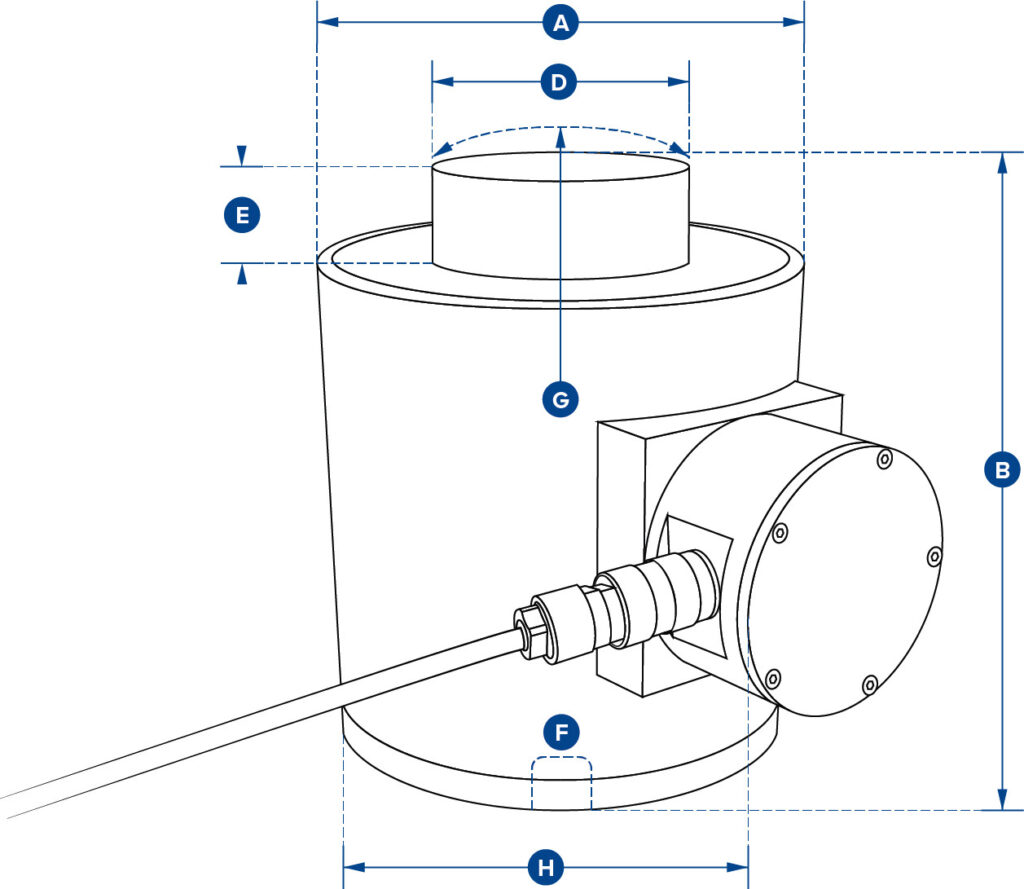
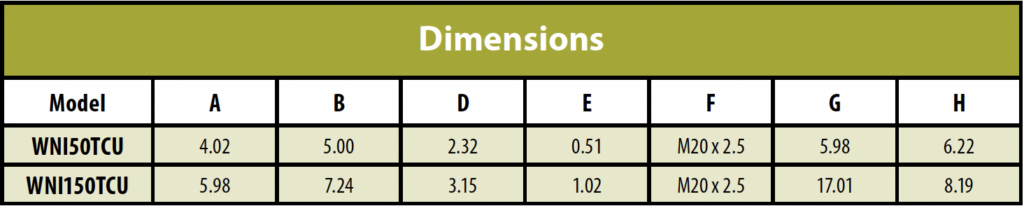
Dimensions of the WNI Straightpoint compression load cell rentals from LGH.
What Are Compression Load Cells Used For?
Compression load cells are used when crews need to measure downward force under a load. They are especially useful when a load rests on multiple points and crews need to understand how weight is distributed.
Common applications include:
- Heavy equipment weighing
- Center-of-gravity verification
- Multi-point weighing
- Proof load testing
- Structural weighing
- Load distribution checks
- Heavy lift planning
- Transport and shipping preparation
- Industrial machinery weighing
- Transformer, press, and equipment weighing
- Load monitoring during jacking or positioning
Compression load cell rentals from LGH have been used to weigh a missile tracker, a high-voltage transformer, and an injection molding machine. Those examples show how compression load cells can help verify the actual weight of large or irregular equipment before lifting, moving, or transporting it. Learn more about finding the center of gravity from this LGH blog post.
Tension Load Cells vs. Compression Load Cells
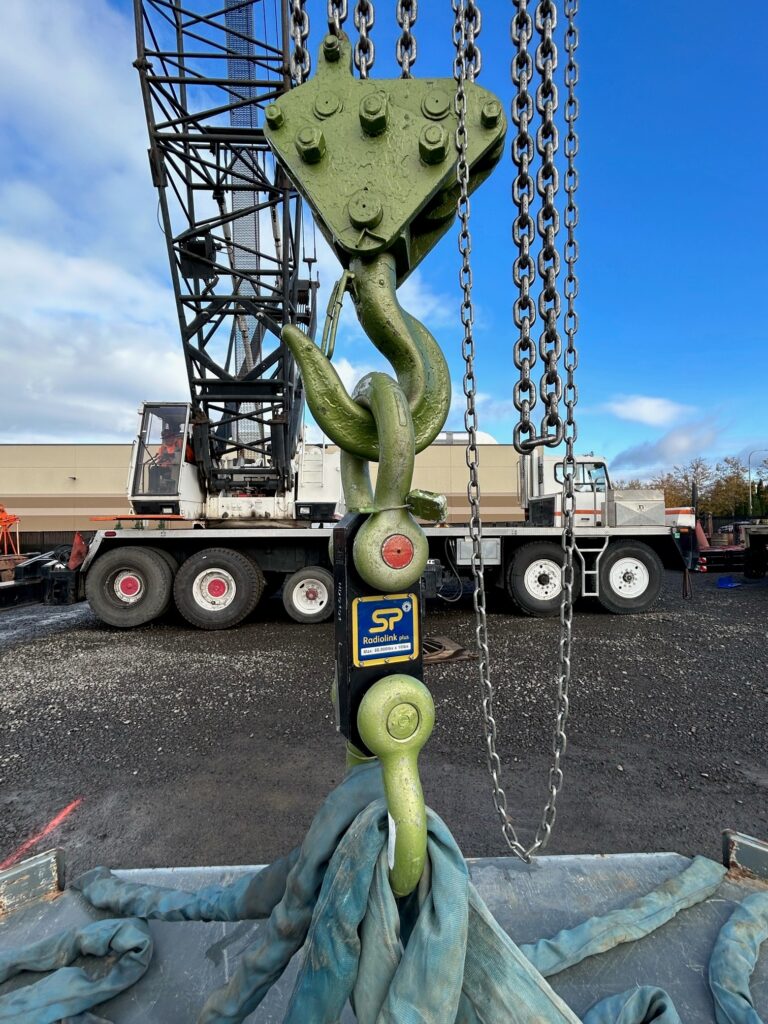
A Straightpoint Digital Load Link rental from LGH, measuring the tension of a load.
Tension load cells and compression load cells both measure force, but they measure force in different ways.
A tension load cell measures pulling force. LGH’s digital load link rentals are tension load cells because they are installed in line with rigging and measure force as the load pulls on the device. They are commonly used between shackles, hooks, slings, or other rigging components.
A compression load cell measures pushing or downward force. Instead of being pulled in line with the rigging, it sits under the load and measures the force pressing down on it.
In simple terms:
- Tension load cells measure force in a lifting line or rigging leg.
- Compression load cells measure force under a load.
- Digital load links are used for tension measurement.
- Compression load cells are used for weighing, center-of-gravity checks, and load distribution measurement.
Both tools support load monitoring, but the right choice depends on whether the force needs to be measured in tension or compression.
How Do Load Cells Measure Tension and Compression Forces?
Load cells measure force by detecting strain inside the sensor body. When force is applied, the load cell material deforms slightly within its elastic range. Internal strain gauges detect that deformation and convert it into an electrical signal.
The difference is the direction of force.
In a tension load cell, the device is pulled from opposite ends. In a compression load cell, the device is compressed by force applied downward.
Both measurement types can produce accurate load data, but they are used in different parts of the lifting or weighing setup.
Wireless Load Cell Monitoring and Insight Software
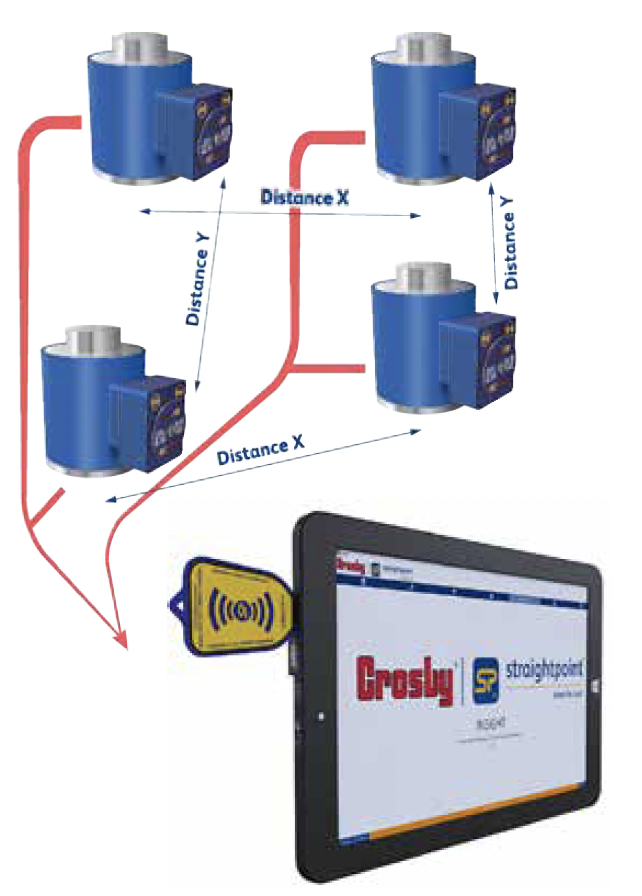
Connect multiple wireless compression load cells to a tablet.
LGH’s wireless compression load cells can be used with compatible Crosby Straightpoint handheld displays or INSIGHT software. This allows crews to monitor load data without cables running between each sensor and the display.
INSIGHT software can support several important functions:
- Multi-channel display
- Data logging
- Total load display
- Center-of-gravity mode
- Proof load testing
- Real-time graphing
- Auto-generated test certificates
- Load data exports for later review
- Simultaneous connection to multiple wireless load cells
The software can show the load placed on each compression load cell, total weight, and center of gravity. In center-of-gravity applications, the larger circle on the display indicates the larger weight concentration.

Info from the LGH catalog about the Straightpoint Insight software, which is used to measure compression load cells.
Tips for Using a Compression Load Cell
Compression load cells are precise measuring devices, so proper setup matters. Here are several practical tips for using a compression load cell.
Before use:
- Place the compression load cell on a firm, flat surface.
- If using a single load cell, place the center of mass over the centerline of the load cell.
- For better wireless performance, face the electronics enclosure toward the receiving handheld display, computer, or wireless receiver when possible.
- Check or replace batteries before placing the load onto the compression load cell.
- Confirm that each load cell is properly positioned and protected before loading.
- Make sure the load path is stable and controlled.
- Use the correct display, software, or wireless package for the application.
For multi-point weighing, crews should also confirm the number of load cells, sensor placement, load distribution, and center-of-gravity requirements before beginning.
Why Use a Wireless Compression Load Cell?
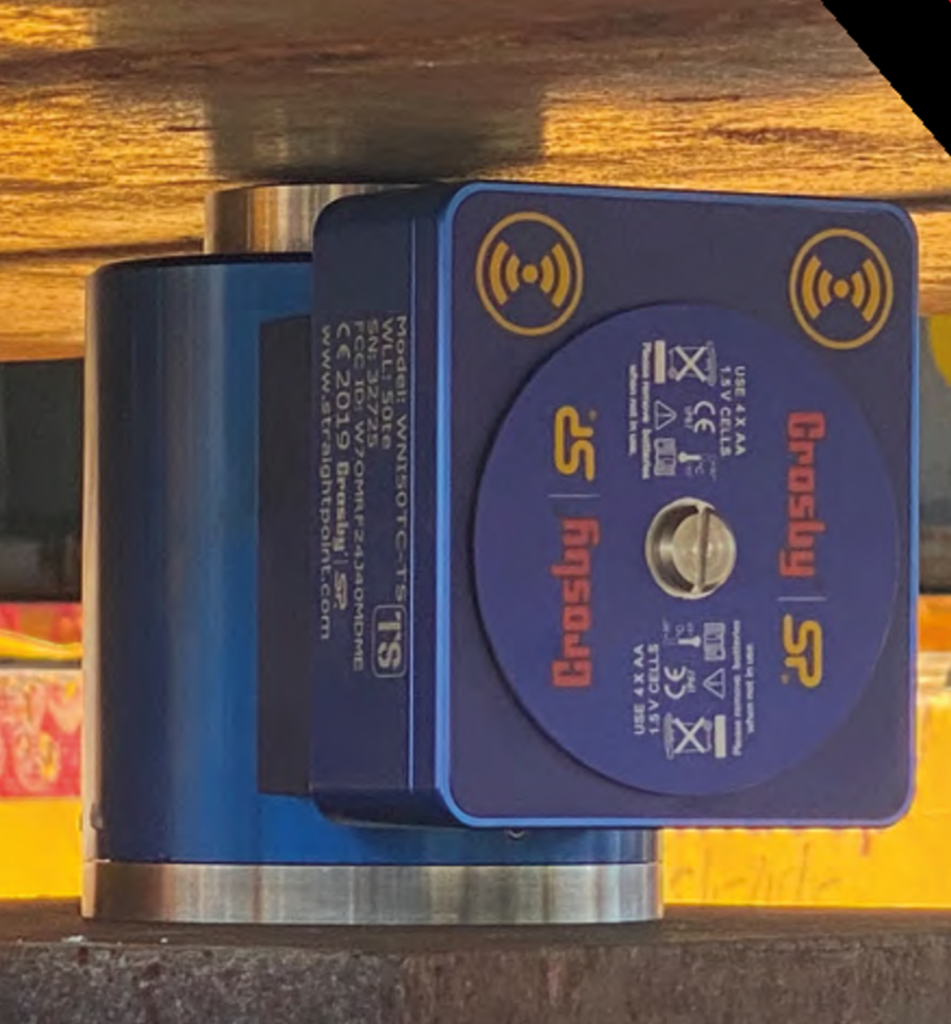
A wireless compression load cell allows crews to monitor load data without running cables across the jobsite. This can simplify setup, reduce cable damage risk, and allow operators to stand farther away from the test or weighing area.
Wireless compression load cells are especially useful when crews need to:
- Weigh large equipment
- Monitor multiple support points
- Calculate center of gravity
- Record load data
- Perform proof load testing
- Reduce cable clutter
- Keep personnel farther from the load
- Generate reports for documentation
For large-scale projects, the wireless design can make load monitoring more practical and more efficient.
Compression Load Cell vs. Digital Load Link: Which One Do You Need?
Choose a digital load link when you need to measure tension in a rigging line, sling leg, hoist line, or crane load testing setup. Digital load links are installed in line with the rigging and are useful for suspended-load applications.
Choose a compression load cell when you need to measure downward force under a load. Compression load cells are useful for weighing, center-of-gravity verification, load distribution checks, and applications where the load rests on multiple sensors.
Before choosing a load cell, consider:
- Whether the force is tension or compression
- Load weight
- Number of measurement points
- Required accuracy
- Required wireless range
- Display or software needs
- Environmental conditions
- Documentation requirements
- Whether the project involves weighing, proof testing, or live monitoring
LGH carries both digital load links and compression load cells, so customers can rent the right tool for the way force needs to be measured.
Rent Compression Load Cells from LGH
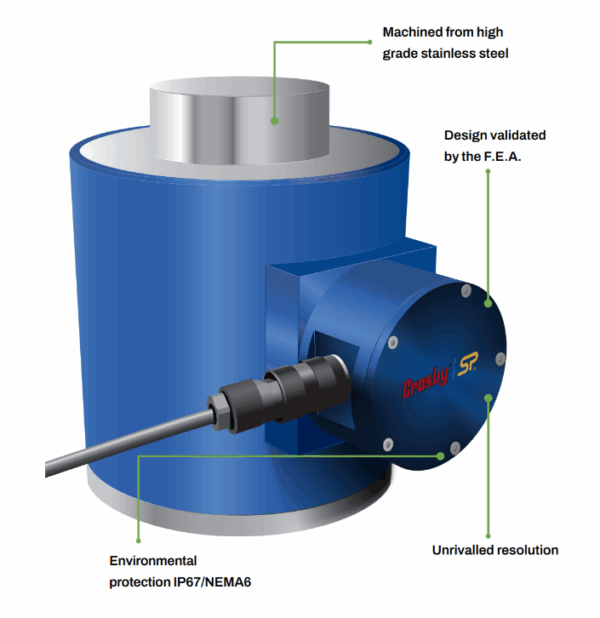
LGH rents Crosby Straightpoint WN Series wireless compression load cells for heavy lift monitoring, weighing, proof testing, center-of-gravity verification, and load distribution applications.
LGH carries the WNI50TCU and WNI150TCU models, giving crews 110,000 lb. and 330,000 lb. capacity options. Each rental includes certified calibration documentation, helping crews access documented equipment for temporary weighing, testing, and monitoring applications.
Whether your project requires a compression load cell, wireless load cell, load cell with display, button load cell, Straightpoint load cell, or digital load link, LGH can help match the right load monitoring equipment to the job.
Conclusion
A compression load cell gives crews a reliable way to measure downward force, verify load weight, monitor load distribution, and calculate center of gravity. Unlike a digital load link, which measures tension in a rigging line, a compression load cell measures force under a load.
LGH rents Crosby Straightpoint WN Series wireless compression load cells, including the WNI50TCU and WNI150TCU models. These load cells support heavy lift monitoring, proof load testing, multi-point weighing, and center-of-gravity verification for demanding industrial applications.
For help choosing a compression load cell, digital load link, wireless load cell, or other load monitoring equipment for your next project, contact LGH today or call 800-878-7305 to speak with a rental specialist.
Frequently Asked Questions About Compression Load Cells
What is a compression load cell?
A compression load cell is a force measurement device that measures downward force when a load presses onto the sensor. It is commonly used for weighing, center-of-gravity checks, proof testing, and load distribution measurement.
What is the difference between a tension load cell and a compression load cell?
A tension load cell measures pulling force in a rigging line or lifting setup. A compression load cell measures downward force under a load. Digital load links are tension load cells, while wireless compression load cells are placed beneath the load.
How do load cells measure tension and compression forces?
Load cells measure force by detecting strain inside the sensor body. When force is applied, internal strain gauges convert that small deformation into an electrical signal, which is processed into a load reading.
What compression load cell models does LGH rent?
LGH rents the Crosby Straightpoint WNI50TCU and WNI150TCU wireless compression load cells. The WNI50TCU has a 110,000 lb. capacity, and the WNI150TCU has a 330,000 lb. capacity.
Do compression load cells need a display?
Yes. LGH’s WN Series compression load cells require a wireless handheld display or wireless software package to view and monitor load data.
Can compression load cells calculate center of gravity?
Yes. When multiple compression load cells are connected to compatible software, they can help weigh large objects and calculate center of gravity based on the load distribution across each sensor.
What is another name for a compression load cell?
A compression load cell may also be called a compressive load cell, button load cell, flat load cell, wireless load cell, load cell sensor, industrial load cell, or loadcell.
When should I use a compression load cell instead of a digital load link?
Use a compression load cell when the load needs to be weighed or monitored from underneath. Use a digital load link when the force needs to be measured in tension through a rigging line or suspended lifting setup.
LGH is North America’s largest single organization devoted exclusively to the provision of lifting and moving equipment for rent. LGH holds the most comprehensive inventory for hoisting, rigging, jacking, pulling, material handling, and safety equipment. With over 90,000 pieces, discover your next project solution at RentLGH.com.