Air Winch vs. Electric Winch: Which One Should You Use?
An air winch rental from LGH.
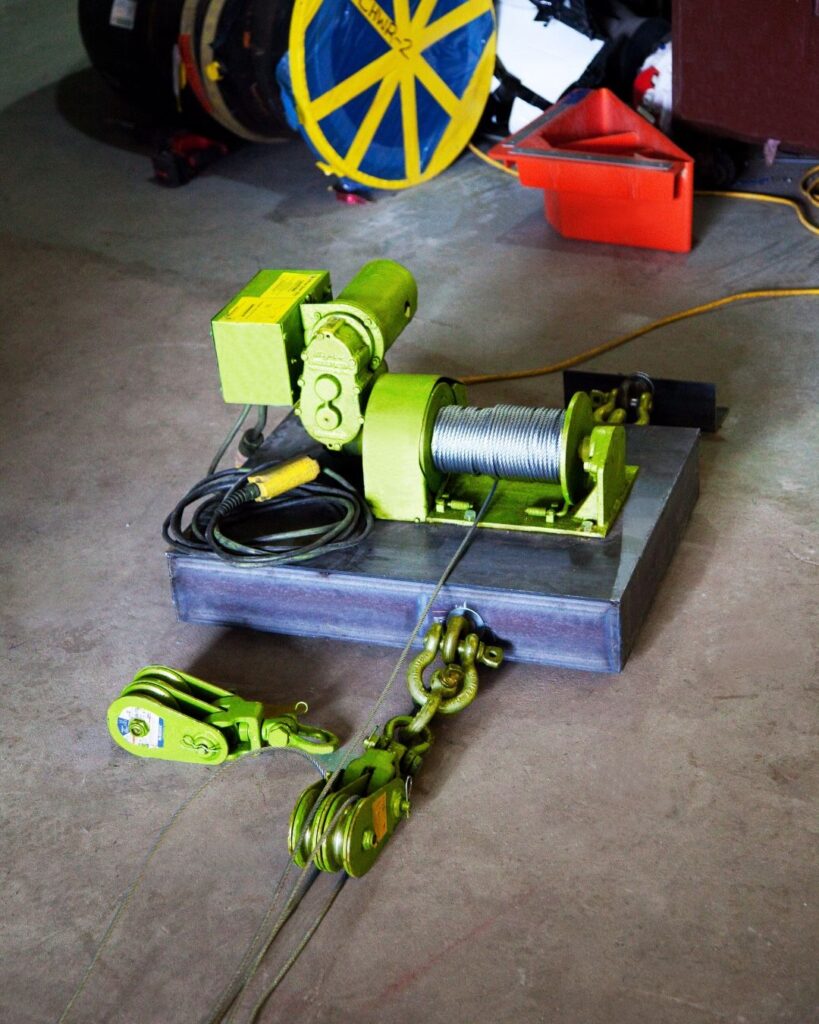
An electric winch rental from LGH.
Choosing between an air winch and an electric winch depends on the load, jobsite conditions, available power source, required line speed, duty cycle, and available space. Both winch types can help lift, pull, or position loads, but they are not interchangeable in every application.
An air winch, also called a pneumatic winch or air powered winch, uses compressed air to power the drum. An electric winch uses an electric motor, often with a standard power source such as 115 volts depending on the model. Each option has advantages, limitations, and common jobsite uses.
In this blog post, we’ll compare air winches vs electric winches and explain what crews should consider before choosing a winch rental.
What Is an Air Winch?
An air winch is a winch powered by compressed air. It uses a pneumatic motor to rotate a drum, which winds or unwinds wire rope to lift, pull, tension, or position a load.
Air winches are commonly used in construction, industrial maintenance, power generation, oil and gas, mining, maritime, utilities, and other demanding environments. They are often selected for heavy-duty applications where crews need higher rated capacities, faster line speeds, larger wire rope drum storage, or continuous operation.
LGH rents air winches from trusted manufacturers such as Thern, Ingersoll Rand, Wintech, Ram, and Michigan Pneumatic Tool. Available capacities range from 1,000 lbs. to 22,000 lbs., with both long drum and short drum configurations available.
What Is an Electric Winch?
An electric winch uses an electric motor to wind or unwind wire rope on a drum. Electric winches are often compact, lighter than comparable air winch setups, and easier to position in smaller work areas.
Electric winches are commonly used for material handling, pulling riser pipes, setting prefabricated steel staircases, and other lifting or pulling applications where electric power is available and an air compressor setup would be impractical.
LGH carries electric winch options including the Ingersoll Rand 1,000 lb. capacity 100A model and the My-Te AC36B model. These winches are often selected for lighter or medium-duty applications where portability, simple power access, and a smaller footprint matter.
Air Winch vs Electric Winch: Main Differences
The biggest difference between an air winch and an electric winch is the power source. Air winches require compressed air, while electric winches require an electrical source. That difference affects footprint, setup time, duty cycle, lifting capacity, line speed, and where each winch can be used.
Air winches usually require more support equipment, including an air compressor and sometimes an air receiver tank. This can increase the overall footprint of the setup. Electric winches are typically smaller and easier to move, but they may have duty cycle limits and lower capacity ranges compared to heavy-duty air winches.
When to Choose an Air Winch
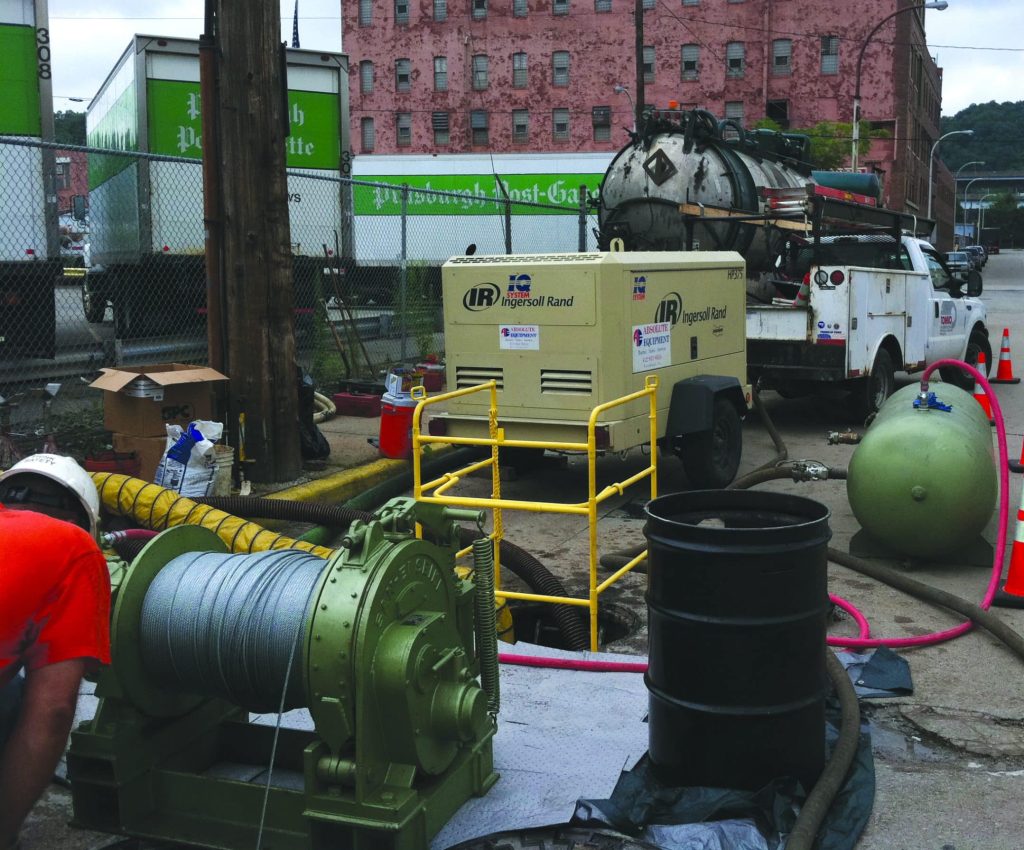
Air winch rental from LGH on a jobsite.
An air winch may be the right choice when the application requires higher capacity, faster line speeds, larger drum storage, or extended operation. Air winches can also be useful when crews need to redirect wire rope through sheave blocks across a larger area.
Air winches are often used in power plants, refineries, industrial facilities, shipyards, mines, and other heavy-duty environments. In complex facilities with vessels, equipment, obstructions, and limited access points, crews may use sheave blocks to redirect the wire rope and move the load through a difficult path.
Consider an air winch when:
The project requires higher rated capacity.
The job needs faster line speeds.
The application requires larger wire rope drum storage.
The winch may run for longer periods.
The jobsite has compressed air available.
Sheave blocks will be used to redirect the line of pull.
The application involves heavy-duty lifting, pulling, or tensioning.
Space is available for the winch, compressor, hoses, and receiver tank.
Air winches can be powerful and versatile, but the air supply must be properly sized. Compressor output, hose size, fittings, pressure, and air consumption all affect performance.
When to Choose an Electric Winch
An electric winch may be the better option when the jobsite has limited space, the load is lighter or moderate, and a sufficient electrical source is available. Electric winches are usually easier to position and may be moved by one or two people depending on the model and application.
Electric winches can be a strong option for commercial construction, steel erection support, material handling, riser pipe pulling, and smaller environments where an air compressor and receiver tank would take up too much space.
Consider an electric winch when:
Space is limited.
The job requires a smaller equipment footprint.
A sufficient electrical source is available.
The load falls within the winch’s rated capacity.
The application involves light or medium loads.
Portability is important.
An air compressor setup is not practical.
The work fits within the winch’s duty cycle.
Electric winches can be very practical, but users must understand duty cycle, power requirements, cable capacity, and rated lifting or pulling limits.
Capacity and Weight Considerations
Air winches generally offer higher rated capacities than many compact electric winches. LGH’s air winch rental options range from 1,000 lbs. to 22,000 lbs., while LGH’s electric winch options include models commonly used for lighter or medium-duty lifting and pulling applications.
Capacity can also change based on the wire rope layer on the drum. A winch usually provides its highest line pull on the first layer of rope. As more rope builds up on the drum, the effective drum diameter increases, which can reduce available line pull.
Before choosing either winch type, crews should review:
Load weight
Required line pull
Lifting vs pulling requirements
Number of wire rope layers on the drum
Wire rope size and length
Required design factor
Use of sheave blocks or pulleys
Mounting requirements
Full rigging arrangement
The winch must be rated for the work being performed, and all rigging components must be compatible with the application.
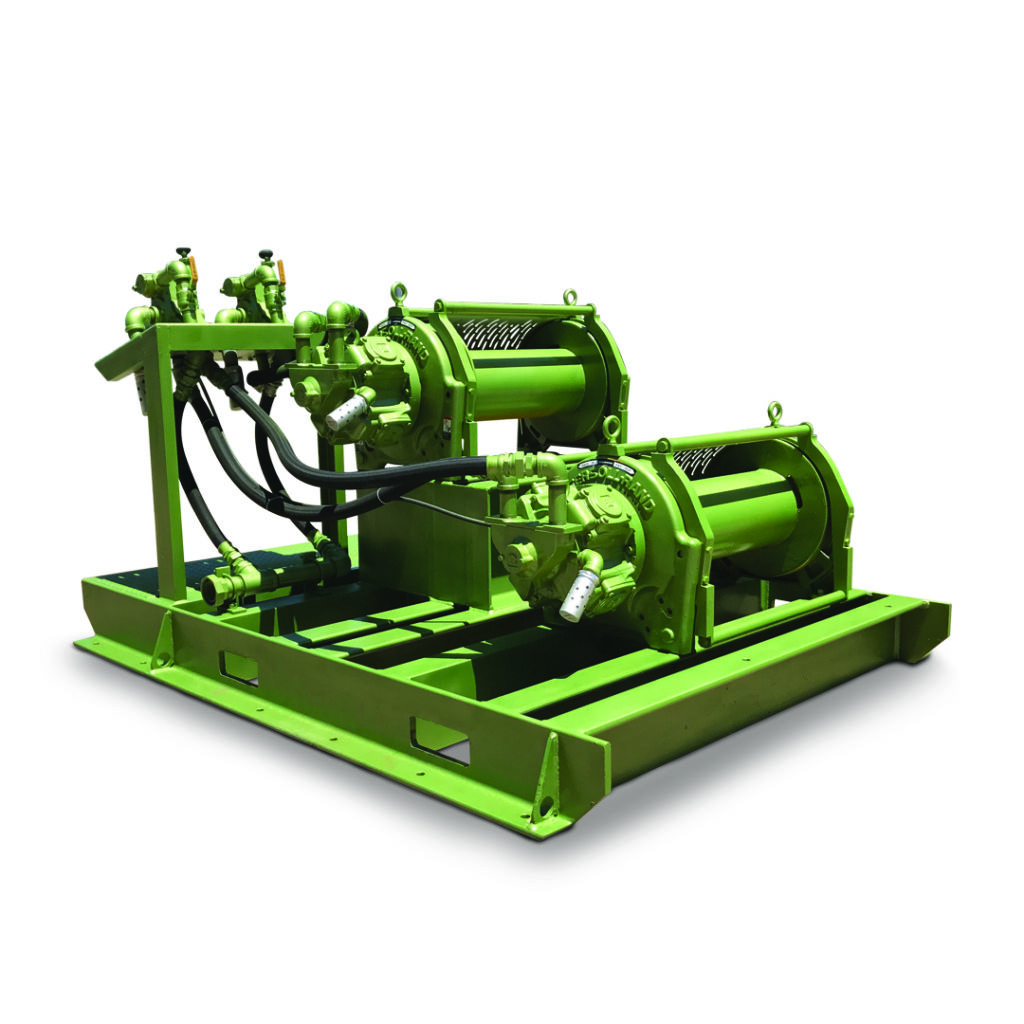
The Ingersoll Rand FA2B 4,000 lbs. capacity Double Drum Air Winch rental from LGH.
Power Source and Jobsite Setup
Power source is one of the most important factors in the air winch vs electric winch decision.
An air winch requires a compressor that can provide the required air pressure and volume. The setup may also require hoses, fittings, filters, regulators, lubricators, and an air receiver tank. Undersized air supply components can reduce winch performance.
An electric winch requires a sufficient electrical source. Some electric winches can plug into a 115-volt grounded outlet, depending on the model. However, users must still confirm voltage, amperage, cord requirements, duty cycle, and jobsite power availability before operation.
In simple terms:
Air winch: Requires compressed air, hoses, and often more setup space.
Electric winch: Requires a sufficient electrical source and may be easier to position in tight areas.
Duty Cycle and Continuous Operation
Duty cycle is another key difference between air and electric winches. Air winches are often selected for applications that involve longer run times or repeated operation because they can handle prolonged use when properly supplied with compressed air.
Electric winches may have duty cycle limits. For example, some electric winches are rated for a 25% duty cycle, such as 15 minutes per hour at full load. This makes them useful for many applications, but users need to plan around run time, load, and cooling requirements.
For frequent or continuous operation, an air winch may be the better fit. For shorter, lighter, or intermittent lifts and pulls, an electric winch may be more practical.
An electric winch rental from LGH.
Footprint and Portability
Air winches may require a larger overall footprint because the setup can include the winch, compressor, hoses, fittings, and receiver tank. They may also require a forklift or crane to position the equipment, depending on the model and jobsite.
Electric winches are often smaller and lighter. This can make them useful in confined or congested areas where there is not enough room for a compressor and air receiver setup.
The graphics in this blog show several common differences between air winches and electric winches, including footprint, power source, duty cycle, capacity, line speed, and portability.
Common Applications
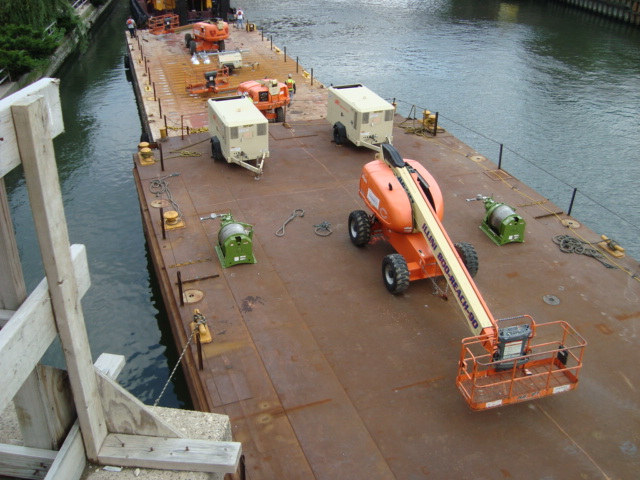
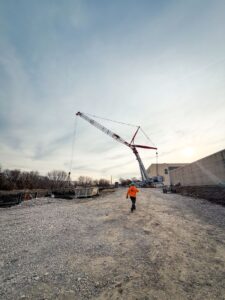
These air powered winch rentals from LGH were used to help lower the bridge.
Air winches and electric winches can both support lifting and pulling work, but their common applications often differ.
Air winches are commonly used for:
Power plant maintenance
Industrial pulling and lifting
Oil and gas work
Mining applications
Maritime and shipyard work
Heavy equipment pulling
Conveyor belt splicing
Long-distance pulls using sheave blocks
Higher-capacity lifting or tensioning
Electric winches are commonly used for:
Pulling riser pipes
Setting prefabricated steel staircases
Commercial construction
Ironworker support
Light or medium material handling
Smaller work areas
Applications with available 115V power
Intermittent lifting or pulling
Air Winch vs Electric Winch: Quick Comparison
Air winches are often preferred when the application requires higher capacity, faster line speeds, larger wire rope storage, extended use, or the ability to redirect the line through sheave blocks. They require a properly sized air supply and enough space for the full setup.
Electric winches are often preferred when the application requires a smaller footprint, easier portability, lighter or medium-duty lifting and pulling, and access to a sufficient electric power source. They may be limited by duty cycle and lower capacity ranges, depending on the model.
Neither option is automatically better. The right winch depends on the job.
Questions to Ask Before Choosing a Winch
An air winch rental from LGH.
Before selecting a winch rental, review the application in detail.
Important questions include:
Is the winch being used for lifting or pulling?
What is the load weight?
What line pull is required?
How far does the load need to move?
How fast does the load need to move?
How much wire rope is required?
Will the rope run through sheave blocks?
What power source is available?
Is there space for a compressor and receiver tank?
Does the project require continuous or intermittent operation?
What is the required duty cycle?
How will the winch be mounted?
Are personnel lifting restrictions clearly understood?
Answering these questions helps determine whether an air winch or electric winch is the right fit.
Rent Air Winches and Electric Winches from LGH
LGH offers air winch rentals, double-drum air winch rentals, and electric winch rentals for lifting, pulling, tensioning, and material handling applications. Our rental specialists can help review your load weight, line pull, rope length, power source, duty cycle, mounting requirements, and jobsite conditions.
Whether your project requires an air winch rental for heavy-duty industrial work or an electric winch rental for a smaller jobsite, LGH can help match the equipment to the application.
Conclusion
The air winch vs electric winch decision comes down to power source, capacity, line speed, duty cycle, footprint, and jobsite conditions. Air winches are often used for higher-capacity, heavy-duty, or longer-duration applications where compressed air is available. Electric winches are often used for smaller environments, lighter or medium loads, and jobs where a sufficient electrical source is easier to access.
Choosing the right winch helps crews work more efficiently and avoid mismatched equipment. For help selecting an air winch, electric winch, pneumatic winch, or other winch rental, contact LGH today or call 800-878-7305 to speak with a rental specialist.
LGH is North America’s largest single organization devoted exclusively to the provision of lifting and moving equipment for rent. LGH holds the most comprehensive inventory for hoisting, rigging, jacking, pulling, material handling, and safety equipment. With over 90,000 pieces of equipment, discover your next project solution at RentLGH.com.