Rigging Slings: Wire Rope Slings vs. Polyester Round Slings
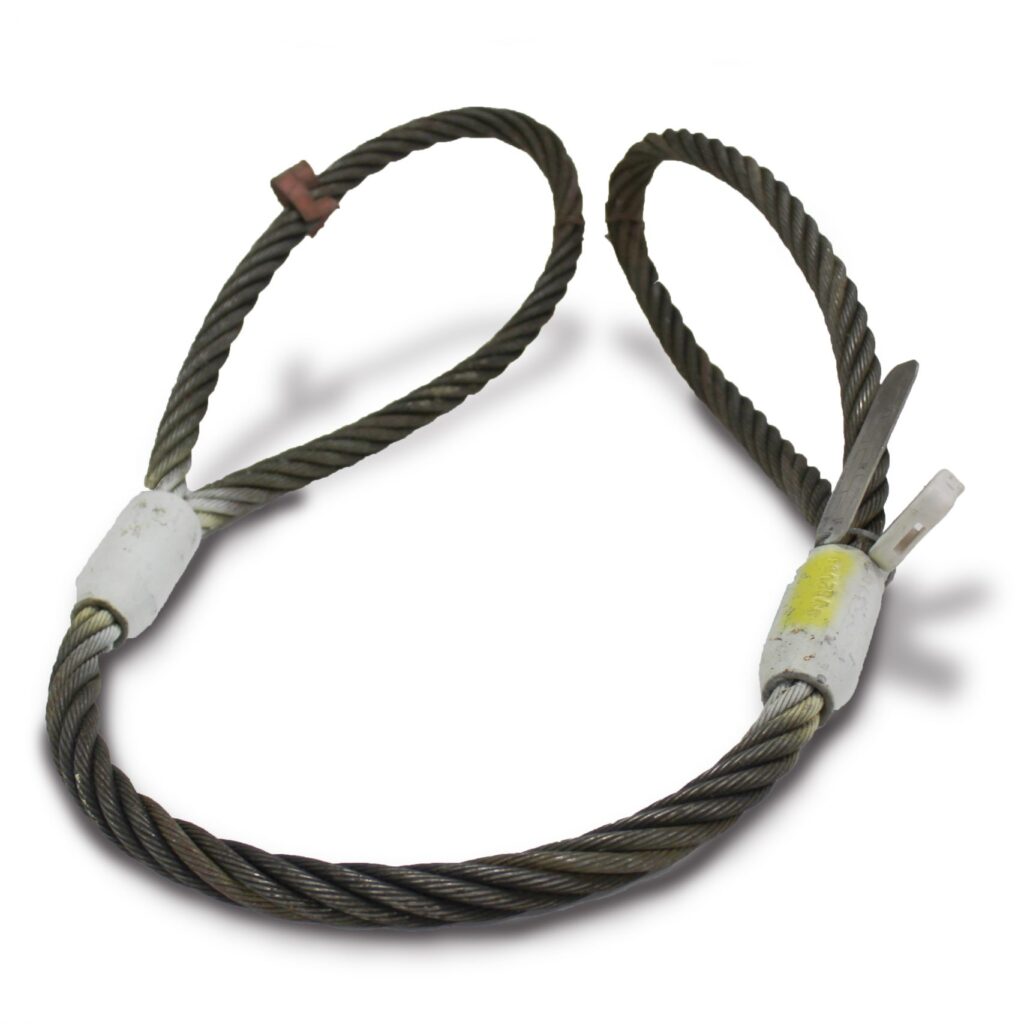
A wire rope sling from LGH.
A polyester round sling from LGH.
Choosing the right rigging slings is an important part of planning a safe and efficient lift. Two of the most common sling options are wire rope slings and polyester round slings. Both are used across construction, manufacturing, industrial maintenance, shipping, infrastructure, and heavy lifting applications, but they are not always used for the same reasons.
A wire rope sling is often selected for durability, heat resistance, long service life, and easy inspection. A polyester round sling is often selected for flexibility, lighter weight, easier handling, and better surface protection for the load.
The right sling depends on the load weight, surface condition, lift configuration, environment, inspection requirements, and how the sling will interact with the load.
What Are Rigging Slings?
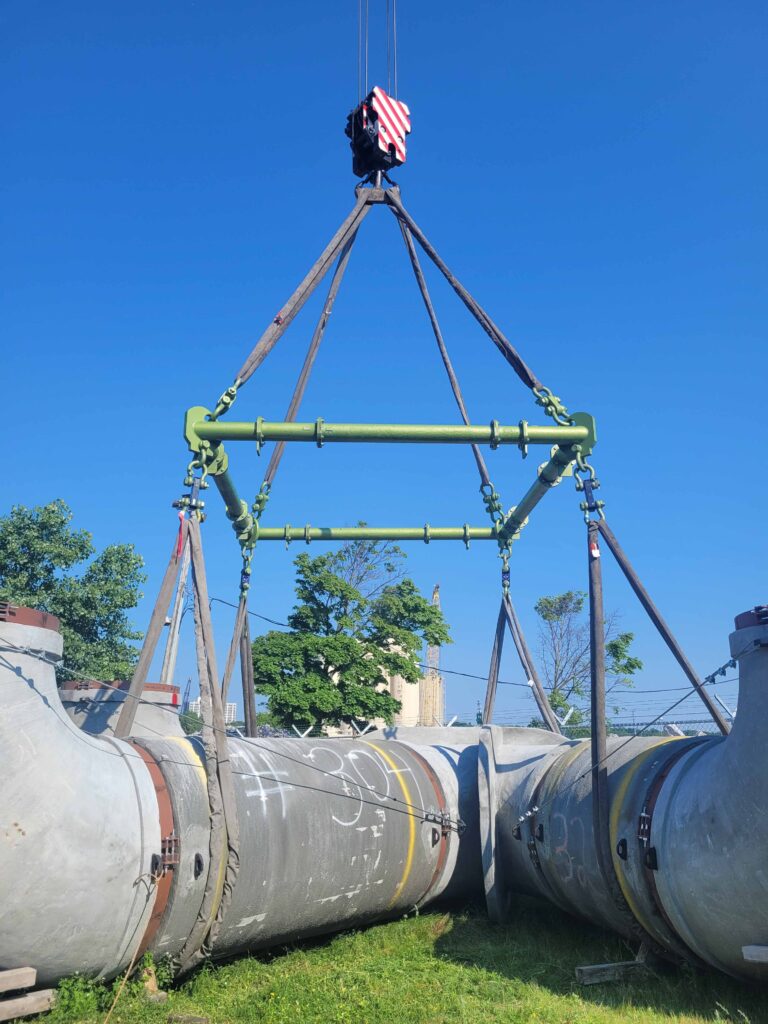
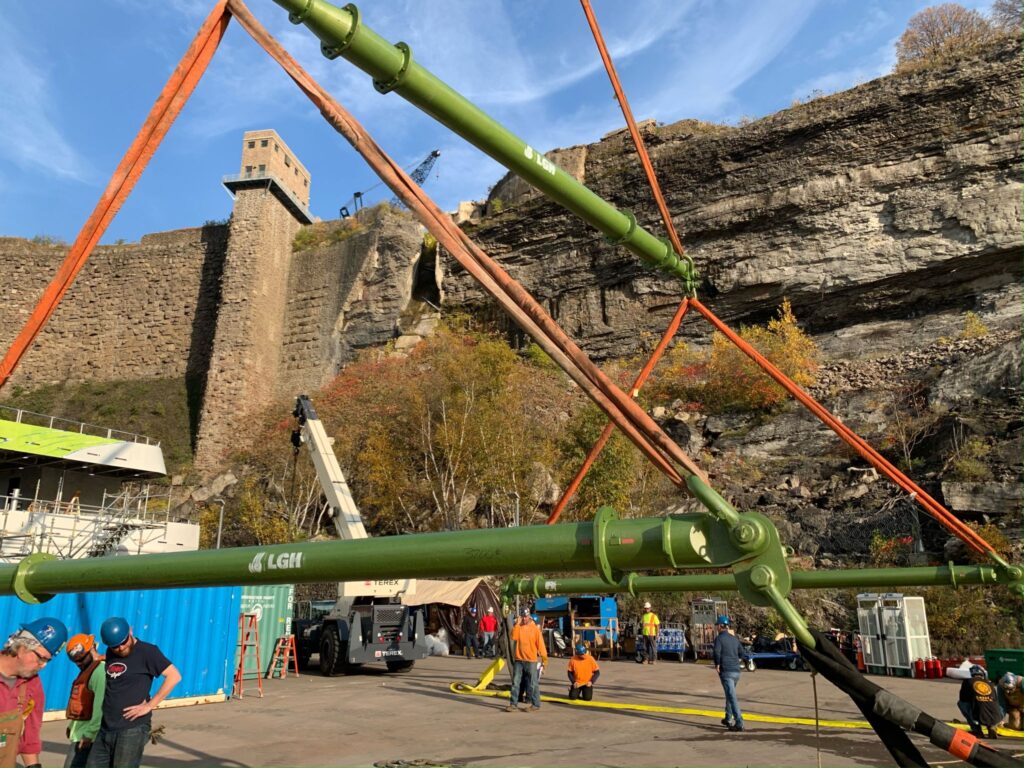
Polyester round slings help to lift a pipe section.
Rigging slings are lifting devices used to connect a load to a crane, hoist, hook, lifting beam, spreader bar, or other lifting equipment. Slings help transfer force from the lifting equipment to the load.
Common types of rigging slings include wire rope slings, synthetic web slings, polyester round slings, chain slings, and high-performance fiber slings. This blog focuses specifically on two common options: wire rope slings and polyester round slings.
Both sling types can be useful, but each one has different strengths and limitations.
What Is a Wire Rope Sling?
A wire rope sling is made from individual steel wires twisted into strands and formed into a rope. These slings are commonly used for heavy lifting, rigging, straight lifts, basket hitches, choker hitches, sheave block setups, turnbuckles, and applications where durability is important.
LGH offers wire rope slings in several configurations, including 6×19, 6×36, and 6×37 wire rope constructions. Options may include single-leg slings, multi-leg bridle slings, braided wire rope slings, eye-and-eye configurations, hooks, thimbles, master links, chokers, and other end fittings.
Wire rope slings are known for strength, abrasion resistance, and toughness in demanding environments.
What Is a Polyester Round Sling?
A polyester round sling is an endless synthetic sling made from polyester core yarns protected by a tubular jacket. The load-bearing core yarns are contained inside the jacket, while the outer cover helps protect the sling from wear.
LGH offers polyester round slings, also known as endless round slings or poly round slings, in capacities ranging from 13,200 lbs. to 400,000 lbs. These slings are lightweight, flexible, color-coded for identification, and commonly used in general and heavy industrial lifting applications.
Because polyester round slings are soft and flexible, they can help protect finished, painted, machined, or delicate load surfaces when used properly.
Wire Rope Sling vs. Polyester Round Sling: Main Differences
The main difference between wire rope slings and polyester round slings is the material. Wire rope slings are made from steel wire rope, while polyester round slings are made from synthetic polyester fibers.
That material difference affects weight, flexibility, inspection, durability, surface protection, environmental resistance, and handling.
In general:
Wire rope slings are durable, easy to inspect, and well suited for rugged lifting environments.
Polyester round slings are lightweight, flexible, and useful when load surface protection and easy handling are priorities.
Neither option is automatically better. The correct sling depends on the application. Check out our video from the LGH YouTube channel comparing the different types of rigging slings below.
Advantages of Wire Rope Slings
Wire rope slings are commonly used because they are durable, versatile, and familiar to rigging crews. They can be a strong option when the load or environment may be too harsh for some synthetic sling materials.
Advantages of wire rope slings include:
Lower upfront cost in many applications
Durable construction when treated properly
Less stretch than synthetic round slings
Long service life with proper use and maintenance
Easier visual inspection for many types of damage
Strong performance in rugged environments
Useful with shackles, hooks, sheave blocks, and turnbuckles
Suitable for many standard rigging configurations
Wire rope slings are often a good fit when the load has minimal concern for surface scratches and the application requires a tough, steel sling.
Disadvantages of Wire Rope Slings
Wire rope slings also have limitations. Because they are made from steel, they are heavier than polyester round slings and less flexible in certain applications.
Disadvantages of wire rope slings include:
Heavier weight
Less flexibility than synthetic slings
Smaller bearing surface against the load
Can scratch or mark load surfaces more easily
May corrode over time depending on storage and environment
Can be more difficult to handle in large sizes
May cost more in certain configurations or higher capacities
Wire rope slings may not be the best choice when the load surface must be protected or when crews need a lightweight, highly flexible sling.
Advantages of Polyester Round Slings
Polyester round slings are often selected when ease of handling, flexibility, and load surface protection are important. Their synthetic construction makes them lighter than many steel sling options at comparable capacities.
Advantages of polyester round slings include:
Lightweight compared to carrying capacity
Flexible and easy to handle
Large bearing surface against the load
Less likely to scratch or mar load surfaces
Long-lasting when properly stored and used
Resistant to moisture, UV exposure, and many chemicals
Endless design allows rotation to distribute wear
Easier to transport and hook up
Useful for delicate, painted, or finished surfaces
Because polyester round slings are soft and flexible, they are often preferred when the load surface must be protected during lifting.
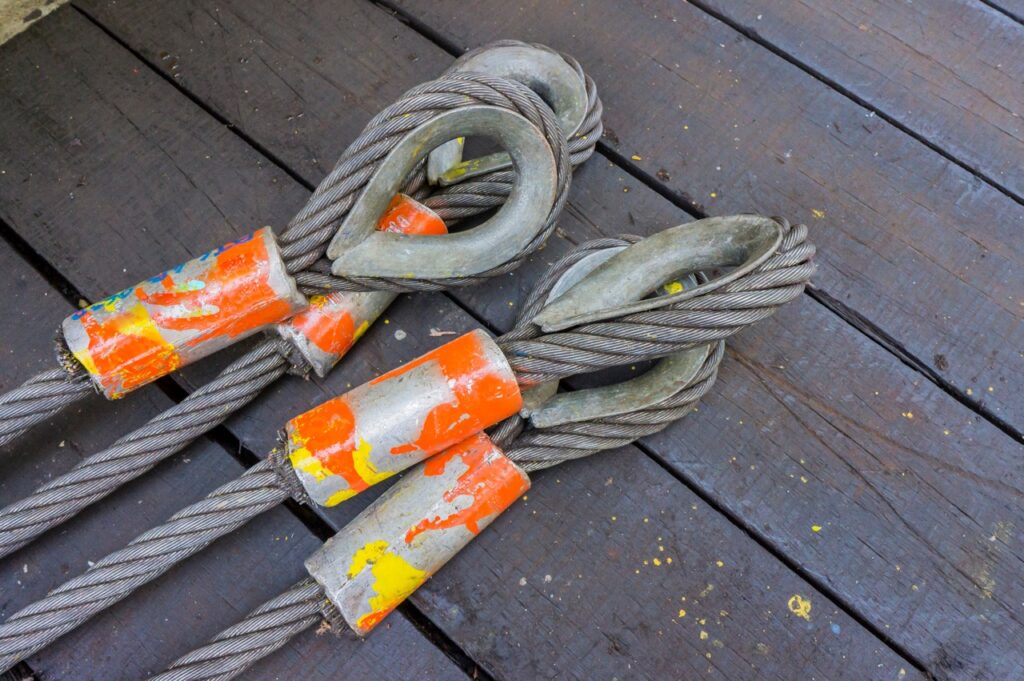
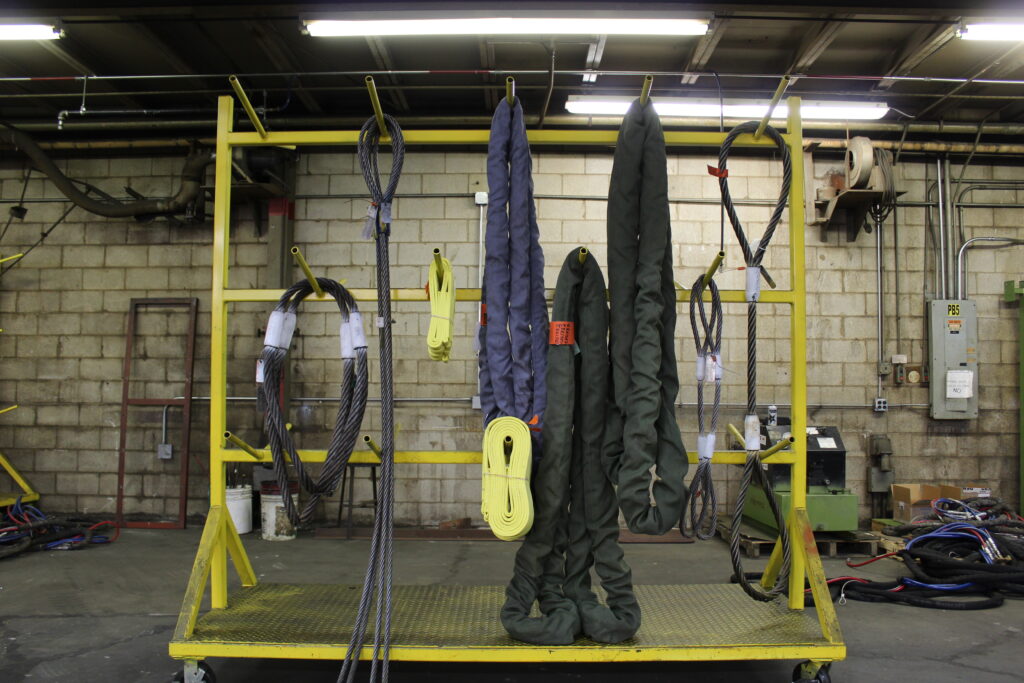
Both wire rope slings and polyester rigging slings, stored on a storage rack in the LGH Rental Center warehouse.
Disadvantages of Polyester Round Slings
Polyester round slings also have important limitations. Synthetic slings require careful protection from sharp edges, heat, chemical exposure, and abrasive surfaces.
Disadvantages of polyester round slings include:
Higher upfront cost in many applications
Not suitable for every environment
More vulnerable to sharp edges and cutting
Can stretch more than wire rope slings
May be more difficult to inspect internally
Require proper edge protection in many lifts
Can be damaged by heat, chemicals, or abrasion
A polyester round sling should never be wrapped around sharp corners or abrasive edges without proper protection. The outer jacket protects the load-bearing yarns, but damage to the cover may require the sling to be removed from service.
How Do I Choose the Right Sling for My Lifting Needs?
To choose the right sling for your lifting needs, start by reviewing the load, environment, lift configuration, and handling requirements.
Important questions include:
What is the load weight?
What is the center of gravity?
How many lift points will be used?
Will the sling be used in a vertical, choker, or basket hitch?
What sling angle will be created?
Does the load have sharp edges?
Does the load surface need protection?
Will the sling be exposed to heat, chemicals, moisture, or abrasion?
Is lightweight handling important?
How easy does the sling need to be to inspect?
Will the sling be used with shackles, hooks, beams, or sheave blocks?
Choose a wire rope sling when durability, abrasion resistance, low stretch, and easy visual inspection are priorities. Choose a polyester round sling when lower sling weight, flexibility, and surface protection are more important. Learn more about calculating load weight and determining the center of gravity from our other blog posts.
When to Use Wire Rope Slings
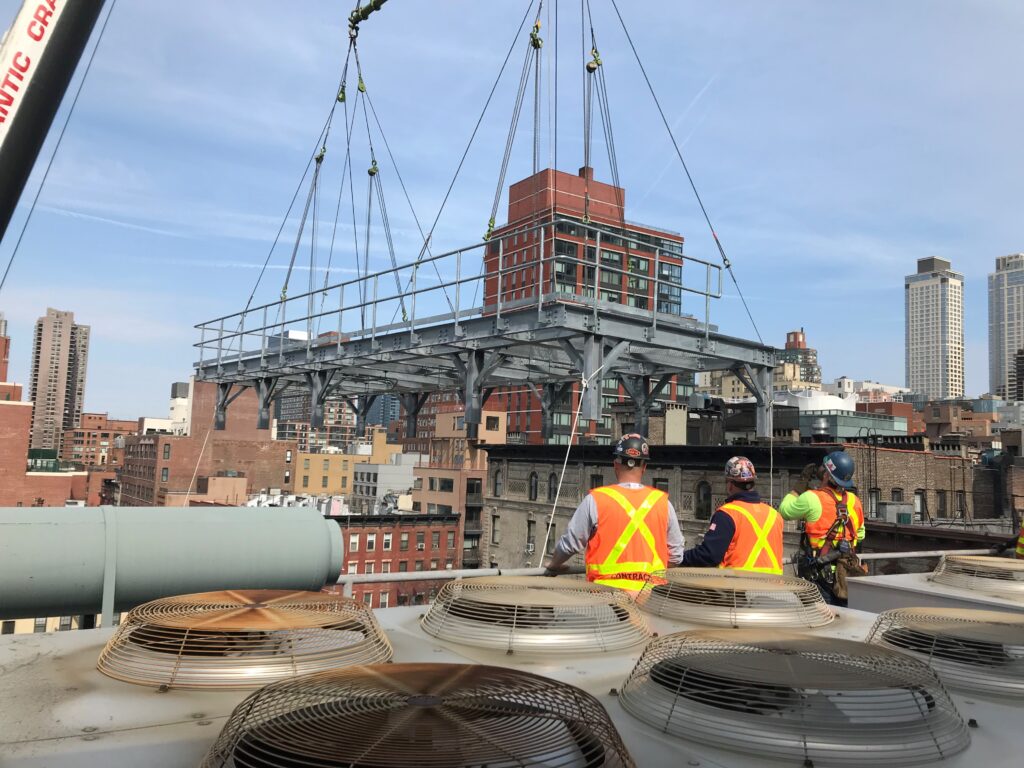
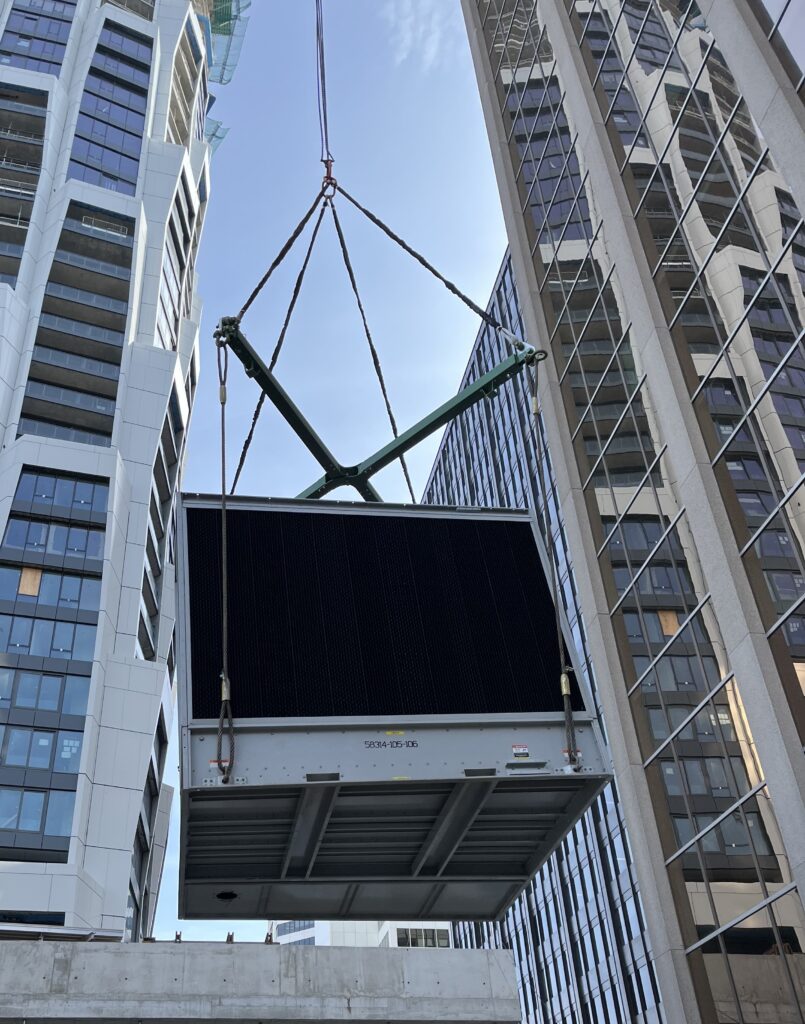
Lifting an NYA MTA platform with wire rope slings and other rigging equipment rentals from LGH.
Wire rope slings may be the right choice when the job requires a rugged sling for heavy lifting, industrial work, or loads that can tolerate contact with steel rigging.
Common wire rope sling applications include:
Straight lifts
Choker hitches
Basket hitches
Heavy equipment lifts
Steel erection
Construction rigging
Marine and industrial work
Sheave block applications
Turnbuckle applications
Loads with minimal surface sensitivity
Wire rope slings are often preferred when there is less concern about scratching the load and more emphasis on durability and inspection.
When to Use Polyester Round Slings
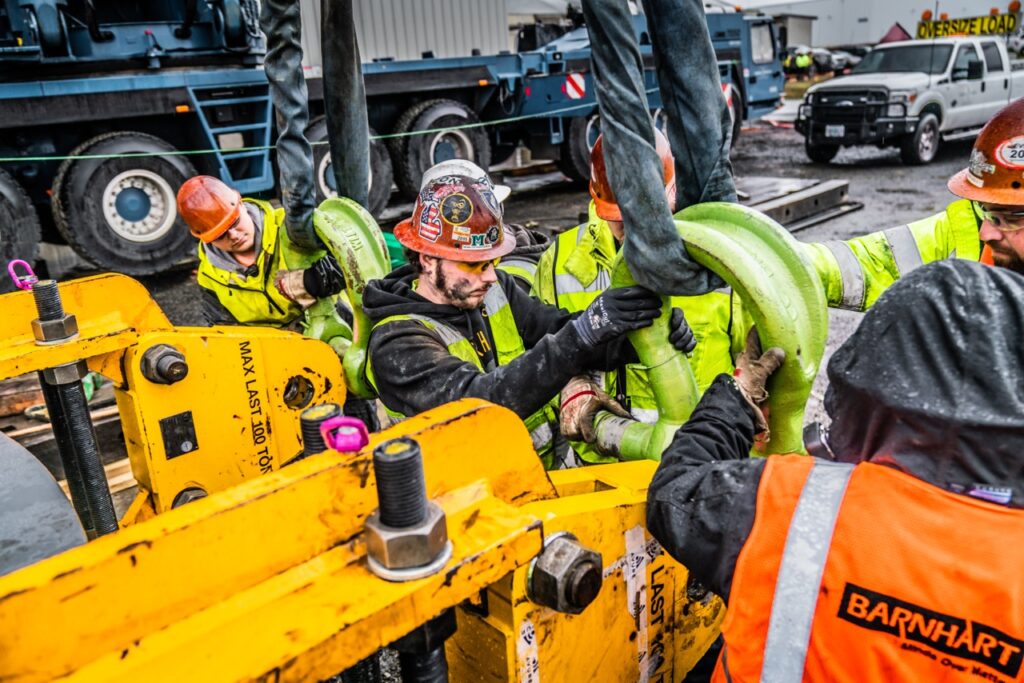
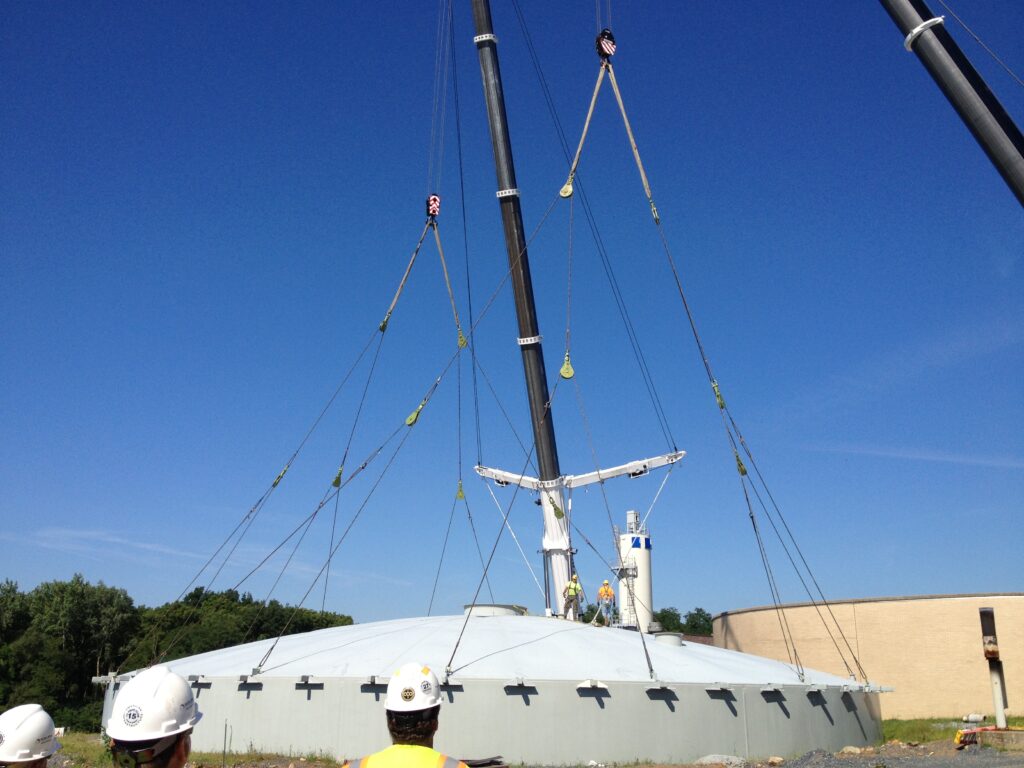
An industrial heavy-duty jobsite lift, featuring polyester round slings and modular spreader beam rentals from LGH.
Polyester round slings may be the right choice when crews need a lightweight, flexible sling that can help protect the load surface.
Common polyester round sling applications include:
Finished or painted equipment
Delicate machinery
Large or awkward loads
Loads requiring a wider bearing surface
General industrial lifting
Heavy lifting with reduced sling weight
Applications where handling weight matters
Lifts where the sling needs to conform to the load
Polyester round slings are especially useful when ease of handling is a priority and the load surface needs more protection than a wire rope sling may provide.
Sling Protection and Edge Concerns
Both wire rope slings and polyester round slings may require protection depending on the load. Sharp corners, abrasive surfaces, small contact areas, and rough edges can damage slings and reduce their safe use.
Polyester round slings are more vulnerable to cuts and should be protected from sharp edges with proper wear pads, corner protection, or other approved sling protection. Wire rope slings are more resistant to cutting, but they can still be damaged by abrasion, crushing, kinking, corrosion, or improper bending.
Before lifting, inspect the sling and review every contact point between the sling and the load.
Inspection Considerations
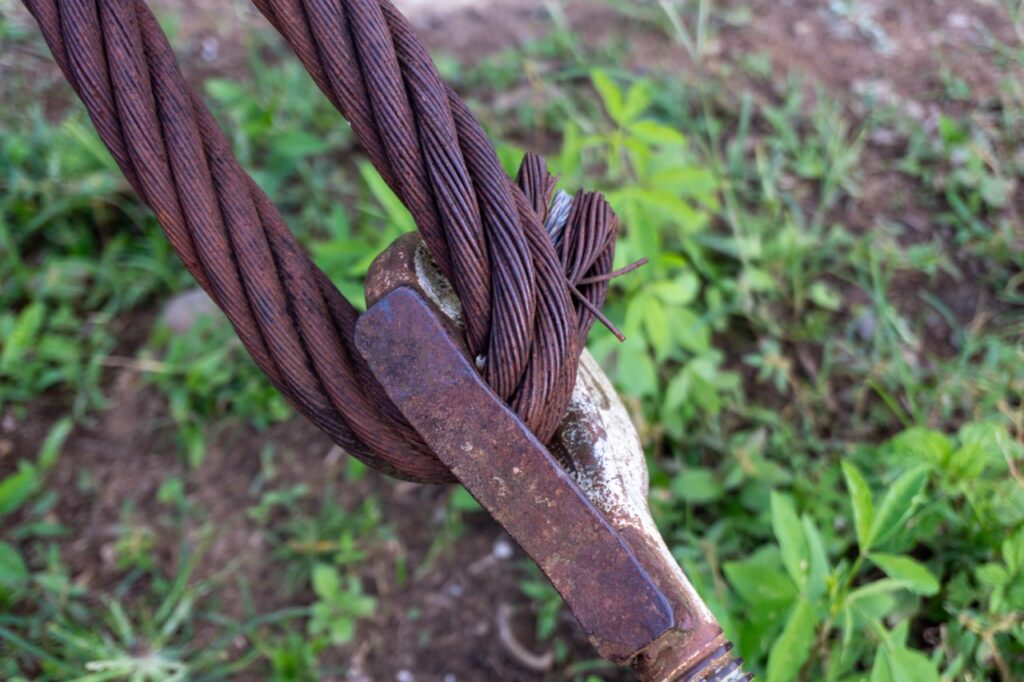
An example of a damaged wire rope sling.
Inspection requirements are another important part of sling selection.
Wire rope slings are often easier to inspect for visible damage such as broken wires, kinks, corrosion, crushing, birdcaging, worn fittings, and damaged eyes. Check out this blog post about how to inspect wire rope slings to learn more.
Polyester round slings require inspection of the outer jacket, stitching, tags, burns, cuts, tears, chemical damage, knots, abrasion, exposed core yarns, and other visible damage. Because the load-bearing yarns are inside the jacket, some internal damage may be harder to see. Check out this blog post about how to inspect polyester round slings to learn more.
Any sling should be removed from service if the identification tag is missing or illegible, if damage is found, or if there is any doubt about whether the sling is safe to use.
Quick Comparison: Wire Rope Slings vs. Polyester Round Slings
Wire rope slings are often better when the job requires durability, lower stretch, rugged use, and easier visual inspection. They are commonly used for industrial rigging, construction, steel handling, and loads that are not highly sensitive to surface scratches.
Polyester round slings are often better when the job requires lighter handling, flexibility, a larger bearing surface, and protection for the load surface. They are commonly used for finished equipment, painted components, delicate machinery, and applications where sling weight matters.
The graphic in this blog compares the advantages, disadvantages, and ideal applications of both sling types. It highlights wire rope slings for environments with minimal stretching tolerance and polyester round slings when ease of handling is the priority.
Rent Rigging Slings from LGH
LGH offers wire rope sling rentals, polyester round sling rentals, and other slings for rigging applications across construction, infrastructure, industrial maintenance, manufacturing, shipping, utilities, and heavy lifting.
Our rental specialists can help review your load weight, hitch type, sling angle, environment, surface protection needs, and rigging hardware requirements to determine the right sling for your job.
Conclusion
Choosing the right rigging slings starts with understanding the load and the lifting environment. Wire rope slings and polyester round slings are both valuable lifting tools, but they serve different needs.
Wire rope slings are rugged, durable, and easier to inspect for many types of visible damage. Polyester round slings are lightweight, flexible, and better suited for protecting sensitive load surfaces.
For help choosing a wire rope sling, polyester round sling, round sling, or other sling for your next lift, contact LGH today or call 800-878-7305 to speak with a rental specialist.
Frequently Asked Questions About Rigging Slings
What are the most common types of rigging slings?
Common types of rigging slings include wire rope slings, chain slings, synthetic web slings, polyester round slings, and high-performance fiber slings. This blog focuses on wire rope slings and polyester round slings because they are common options for many lifting applications.
How do I choose the right sling for my lifting needs?
Choose the right sling by reviewing the load weight, center of gravity, hitch type, sling angle, load surface, environment, edge protection needs, and handling requirements. Wire rope slings are often preferred for rugged durability, while polyester round slings are often preferred for flexibility and surface protection.
What is the difference between a wire rope sling and a polyester round sling?
A wire rope sling is made from steel wire rope, while a polyester round sling is made from synthetic polyester fibers protected by an outer jacket. Wire rope slings are typically more rugged and easier to inspect visually. Polyester round slings are typically lighter, more flexible, and better for protecting load surfaces.
Are polyester round slings stronger than wire rope slings?
Not necessarily. Strength depends on the sling’s rated capacity, construction, hitch type, sling angle, and manufacturer specifications. Both wire rope slings and polyester round slings are available in high-capacity options. Always choose based on the rated capacity and full lifting configuration.
When should you use a wire rope sling?
Use a wire rope sling when the application requires a durable sling for rugged lifting environments, lower stretch, easy visual inspection, or compatibility with shackles, hooks, sheave blocks, or turnbuckles. Wire rope slings are often used when load surface scratches are not a major concern.
When should you use a polyester round sling?
Use a polyester round sling when the application requires a lightweight, flexible sling with a larger bearing surface and better load surface protection. Polyester round slings are often used for finished, painted, delicate, or awkward loads when proper edge protection is in place.
Do rigging slings need edge protection?
Yes, rigging slings may need edge protection when they contact sharp corners, rough surfaces, or abrasive areas. Polyester round slings are especially vulnerable to cutting and should be protected with proper wear pads or corner protection when needed. Wire rope slings may also require protection depending on the load and contact points.
Can LGH help choose the right sling?
Yes. LGH can help review your load weight, sling angle, hitch type, lift points, rigging hardware, and load surface requirements to help determine the right sling for your application.
LGH is North America’s largest single organization devoted exclusively to the provision of lifting and moving equipment for rent. LGH holds the most comprehensive inventory for hoisting, rigging, jacking, pulling, material handling, and safety equipment. With over 90,000 pieces of equipment, discover your next project solution at RentLGH.com.