How to Use a Synchronous Lifting System: Enerpac Demo from LGH
Synchronized lifting is used when a load must be raised from multiple points with controlled, even movement. For complex jacking applications, synchronous lifting systems help crews monitor and control cylinder movement, load distribution, stroke position, and system alarms from one centralized unit.
In this LGH video blog, Pat Clark demonstrates how to use the Enerpac Synchronous Lift System. The video walks through system setup, hydraulic hose connections, stroke sensor installation, PLC control screens, alarm troubleshooting, lifting modes, and shutdown procedures.
What Is a Synchronous Lifting System?
A synchronous lifting system is a computerized hydraulic jacking system designed to raise and lower a load from multiple lifting points at the same time. Instead of relying on manual control at each cylinder, the system uses hydraulic circuits, sensors, and a PLC control unit to help keep the lift synchronized.
LGH’s Enerpac synchronous lifting systems allow crews to control multiple lifting points, monitor cylinder stroke, track load values, set work and stop tolerances, and record data during the lift. This makes the system useful for applications where precision, documentation, and controlled movement matter.
How Do You Use a Synchronous Lifting System?
To use a synchronous lifting system, crews must select the proper cylinders, connect the hydraulic hoses to the control valve manifold, install the stroke sensors, connect the sensor cables, power up the PLC control unit, enter the proper parameters, clear any alarms, cycle the system, and then begin the lifting operation.
The video shows how these steps work together during setup. For double-acting cylinders, the system uses both advance and retract connections. For single-acting cylinders, only the upper portion of the manifold may be required.
Stroke sensors play a key role in synchronized lifting. They allow the system to track cylinder movement and help maintain the difference between the leading and lagging cylinders within the selected tolerance.
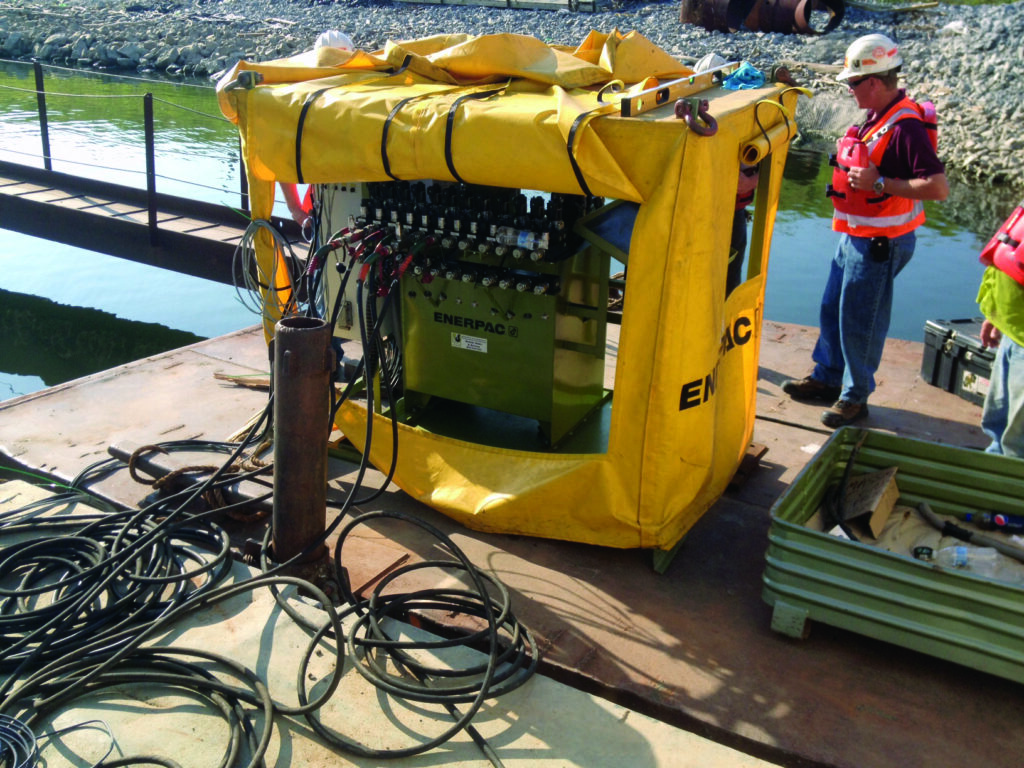
Jobsite photo of the Enerpac EVO Synchronous Lifting System, available for rent from LGH.
Why Synchronized Lifting Matters
Synchronized lifting helps crews control movement across multiple lifting points. This is especially important when lifting or leveling a structure, component, or piece of equipment that could be damaged by uneven movement.
A synchronous lifting system can help reduce the risk of one cylinder advancing faster than another. The system monitors the difference between leading and lagging cylinders and can stop movement if the selected stop tolerance is exceeded.
This level of control can be important for applications such as:
Bridge lifting
Structural leveling
Bearing replacement
Building lifting
Load transfer
Heavy machinery positioning
Multi-point hydraulic jacking
Synchronizing multiple lifting columns or cylinders
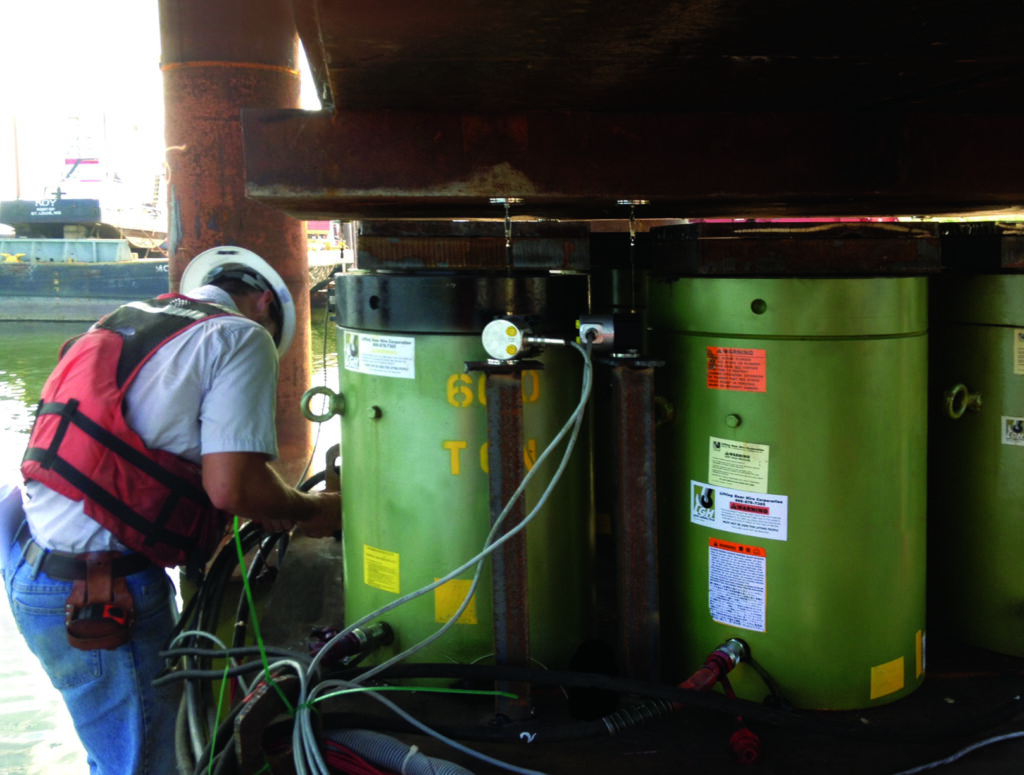
Synchronized lifting jacks from LGH under a bridge.
Enerpac Synchronous Lift System Features
The Enerpac synchronous lift system allows for computerized synchronous lifting and jacking across multiple points. Depending on the model and setup, the system can support precise movement, stroke monitoring, load monitoring, alarms, data recording, and use with standard single-acting or double-acting cylinders.
Key features may include:
Control of multiple lifting points
Stroke and load-controlled movement
Load and stroke alarms
Integrated hydraulic pump and controls
PLC touchscreen interface
Data storage and recording
Manual, sync, load, and tilting modes
Work and stop tolerance settings
LGH offers synchronous lifting system models with 8, 12, and 24 ports, with reservoirs ranging from 40 to 60 gallons.
Common Setup and Troubleshooting Reminders
Before lifting, crews should confirm that all hoses, couplers, stroke sensors, sensor cables, and electrical connections are secure and matched to the correct cylinder points. The system should also be cycled before the lift to confirm proper function and help remove excess air.
The video above also explains several common alarms, including stroke sensor connection issues, emergency stop alarms, low oil level alarms, motor off alarms, and synchro alarms. In many cases, troubleshooting starts by checking connections, confirming sensor placement, verifying oil level, resetting emergency stops, or reviewing tolerance settings.
Crews should always consult the manufacturer’s guidelines and use-and-care instructions before setup or operation.
Rent Synchronous Lifting Systems from LGH
LGH rents Enerpac synchronous lifting systems, hydraulic cylinders, hoses, gauges, manifolds, and other jacking equipment for complex lifting applications. Our rental specialists can help review your load weight, number of lift points, cylinder type, stroke requirements, tolerance needs, and jobsite conditions.
Whether your project requires synchronized lifting, synchronizing multiple lifting columns, or an Enerpac EVO synchronous lifting system for precise multi-point control, LGH can help match the right equipment to the job.
Conclusion
Learning how to use a synchronous lifting system starts with proper setup, correct cylinder selection, secure hose and sensor connections, accurate parameter settings, and careful system monitoring. The Enerpac synchronous lift system helps crews control multiple lifting points with greater precision than a conventional hydraulic setup.
For help choosing a synchronous lifting system or hydraulic jacking setup for your next project, contact LGH today or call 800-878-7305 to speak with a rental specialist.
About LGH
LGH is North America’s largest single organization devoted exclusively to the provision of lifting and moving equipment for rent. LGH holds the most comprehensive inventory for hoisting, rigging, jacking, pulling, material handling, and safety equipment. With over 90,000 pieces, discover your next project solution at RentLGH.com.