The Stability of 3 Legs vs 4 Legs in Rigging and Load Moving
Which is more stable: 3 legs vs 4 legs? At first, the answer may seem obvious. A four-legged stool sounds like it should be more stable than a three-legged stool. But in practice, that is not always the case.
The same concept applies in rigging, lifting, and machinery moving. Whether you are comparing a 3-leg bridle sling to a 4-leg bridle sling, or three load points to four machine skates, the number of contact points can affect how weight is distributed. In many cases, a three-point setup can provide more predictable stability because all three points naturally share the load. A four-point setup can be stable, but only when all four points are properly loaded and remain in contact with the supporting surface.
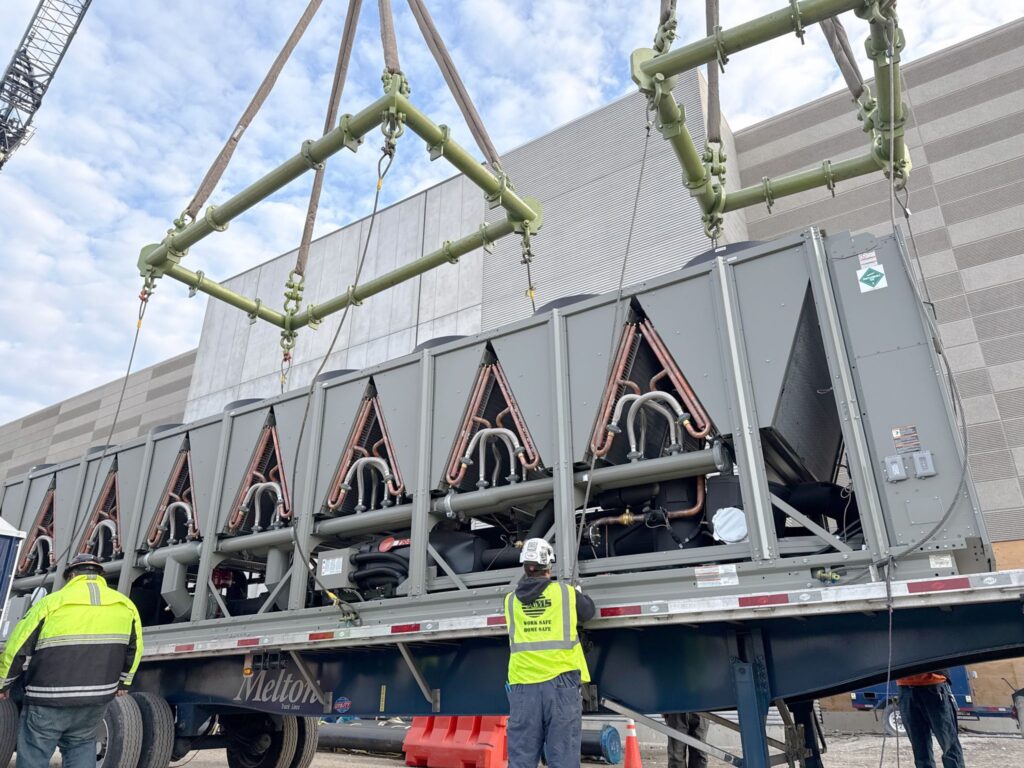
Shackles and polyester round slings are vital pieces of below-the-hook rigging for this generator lift at a data center.
Why 3 Legs Can Be More Stable Than 4 Legs
A three-legged object will usually sit evenly on a flat or uneven surface because three points define a plane. In simple terms, all three legs can contact the ground at the same time without rocking.
With four legs, the situation changes. If the surface is uneven or the load is not perfectly balanced, one leg may not carry weight equally. The result can be rocking, shifting, or uneven loading. That uneven load distribution can create problems when moving, lifting, or supporting heavy equipment.
This is why the 3 legs vs 4 legs comparison matters in rigging and load handling. More contact points do not automatically mean better load distribution. In some cases, a fourth point can make the setup harder to control if the weight is not equalized.
The Stability Challenge in Rigging and Load Moving
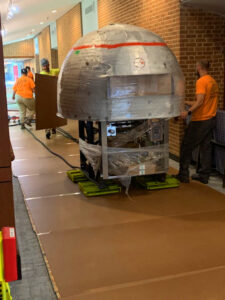
The challenge becomes especially important when a load is transferred onto dollies, machine skates, load equalizing systems, cribbing, or other transport equipment. Heavy loads often have an offset center of gravity. This means the weight is not distributed evenly from one side to the other. (Check out our blog post about locating the center of gravity to learn more about this topic.)
If the load is placed on four machine skates without accounting for the center of gravity, one or two skates may carry significantly more weight than expected. This can overload the moving equipment even if the total load weight appears to fall within the combined capacity of all four skates.
For example, a 40,000-pound load placed on four 10,000-pound skates may seem acceptable on paper. However, if the center of gravity is offset, one skate could take far more than 10,000 pounds. Another skate could carry very little weight. That creates a serious risk of equipment damage, load instability, or an uncontrolled shift.
3-Leg vs 4-Leg Bridle Slings
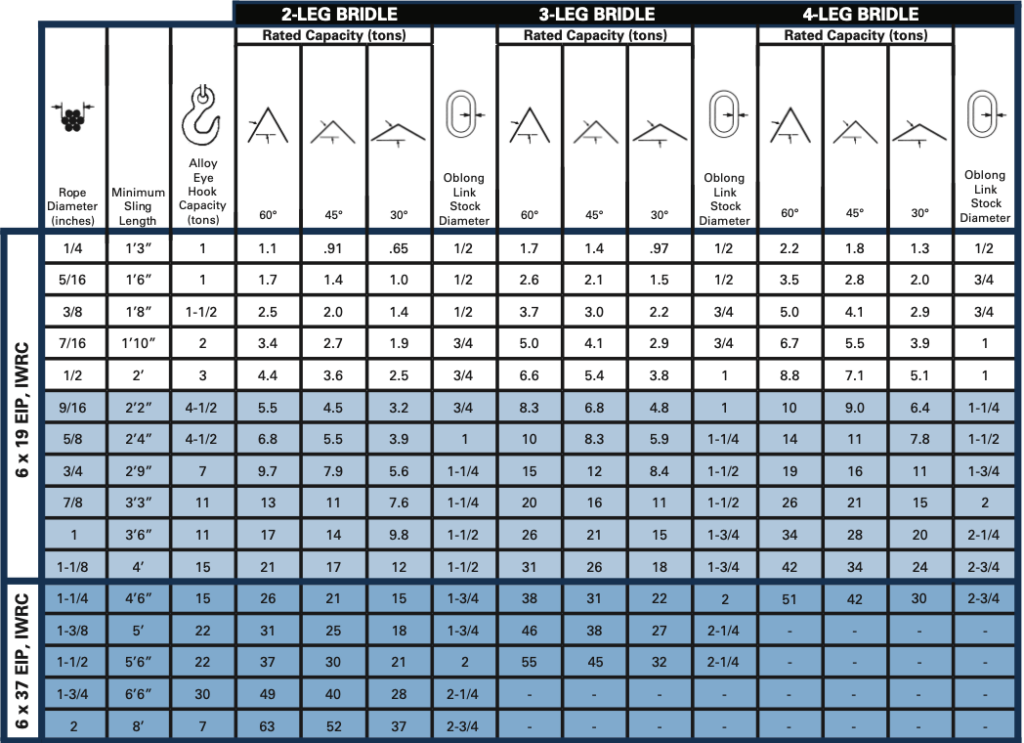
The same principle applies when comparing 3-leg vs. 4-leg bridle slings. A 3-leg bridle sling can often provide more predictable load sharing because three sling legs can naturally establish a stable lifting plane.
A 4-leg bridle sling may seem stronger because it has an additional leg, but the fourth leg does not always carry an equal share of the load. If the lifting points are not perfectly level, the sling lengths are not equal, or the center of gravity is offset, two or three legs may carry most of the load while the fourth leg contributes little or no support.
That does not mean a 4-leg bridle sling should never be used. It means the lift must be planned carefully. Riggers must understand the load’s center of gravity, sling angles, pick point locations, and how the load will distribute across each leg of the bridle.
3 Skates vs 4 Skates for Load Moving

When moving heavy equipment, the 3 legs vs. 4 legs concept also applies to machine skates and dollies. A three-point support system may provide more predictable contact because all three points are more likely to remain loaded.
Using four skates can work, but it requires careful planning. If the floor is uneven, the load is rigid, or the center of gravity is not centered, one skate may become overloaded while another skate carries very little. In these situations, load equalizing dollies or engineered load moving systems may be a better option because they help distribute weight more evenly across the equipment.
The key question is not simply whether to use three or four support points. The better question is: how will the weight actually be distributed once the load is placed on the equipment?
A Safer Approach to Load Transfer
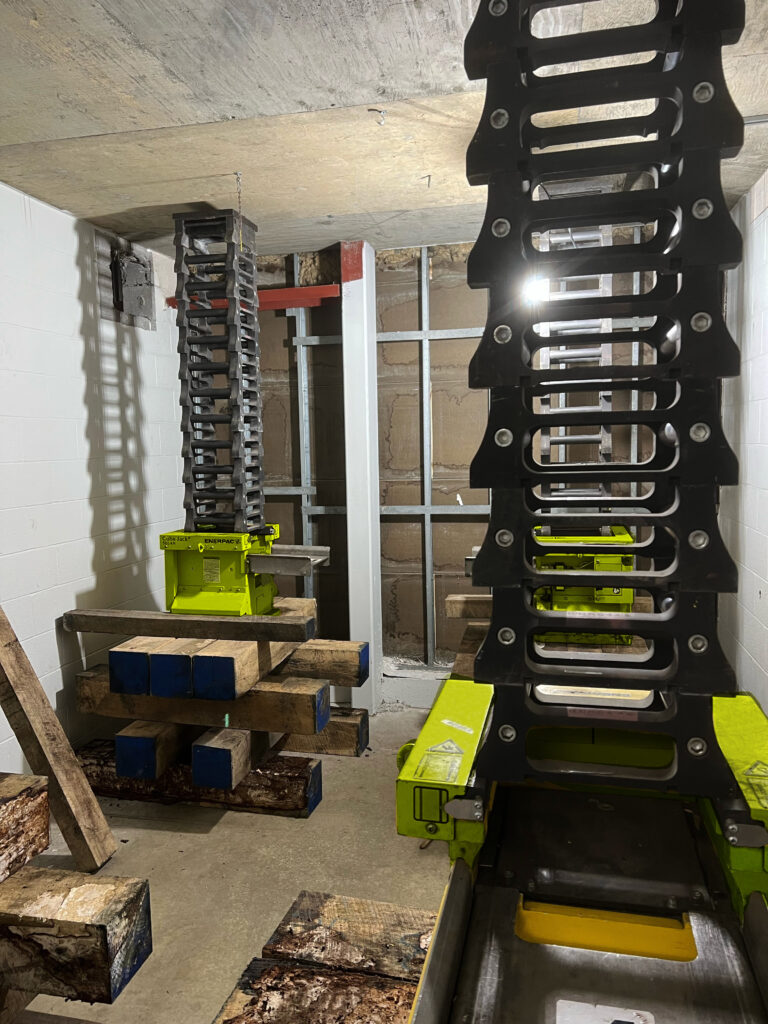
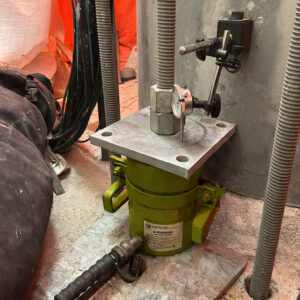
Hydraulic cube jack system from LGH.
A good practice is to set the load on cribbing or blocks first. Then, use jacks to lift and lower the load onto the transport equipment in a controlled way. This allows the crew to verify contact points, check load distribution, and make adjustments before the move begins.
Although this process can take additional time, it helps reduce the risk of overloading a skate, dolly, jack, or support point. It also gives the crew more control when working with heavy, rigid, or unevenly weighted loads.
Before moving the load, confirm the weight, locate the center of gravity, inspect the floor or travel path, and verify that each component is rated for the force it will actually experience.
Conclusion
When comparing 3 legs vs 4 legs, the most stable option is not always the one with more contact points. In rigging and load moving, three points often provide more predictable stability because they naturally share the load and reduce the chance of rocking. Four points can be effective, but only when the load is properly equalized across each point.
Whether you are working with bridle slings, machine skates, dollies, cribbing, or jacks, load distribution must be planned carefully. Taking the time to locate the center of gravity, calculate point loading, and use the right equipment can help prevent overloads, equipment damage, and unsafe movement during the job.
For help selecting the right rigging, jacking, or load moving equipment for your next project, contact your local LGH representative or call 800-878-7305 to speak with a rental specialist.
LGH is North America’s largest single organization devoted exclusively to the provision of lifting and moving equipment for rent. LGH holds the most comprehensive inventory for hoisting, rigging, jacking, pulling, material handling, and safety equipment. With over 90,000 pieces of equipment, discover your next project solution at RentLGH.com.