Cranes are essential on many construction and industrial jobsites, but not every heavy load needs to be lifted through the air. When a load must move horizontally, especially in a tight space or under limited headroom, a hydraulic skidding system may be a better fit.
A Hydra-Slide skidding system, also called a jack and slide system, keeps the load supported close to the ground while hydraulic cylinders move it along an engineered track. This approach can be useful when overhead obstructions, access limits, ground bearing concerns, or project logistics make crane use difficult.
In this blog post, we’ll explain when to use a skidding system instead of a crane and how hydraulic skidding systems can support controlled horizontal load movement.
What Is a Skidding System?
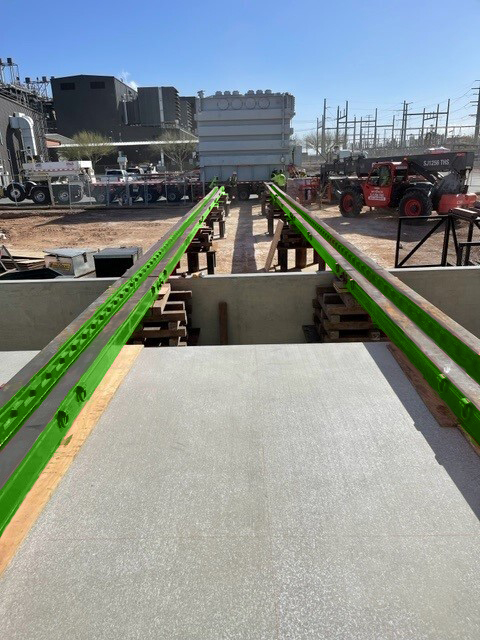
The Hydra-Slide HT500 heavy-duty skidding system rental from LGH on a jobsite.
A skidding system is a heavy-load moving system designed to move loads horizontally along a defined path. Instead of suspending the load from a crane hook, the load sits on skid shoes or slide components while hydraulic cylinders push or pull it along track sections.
A hydraulic skidding system typically includes:
Track sections
Skid shoes or slider plates
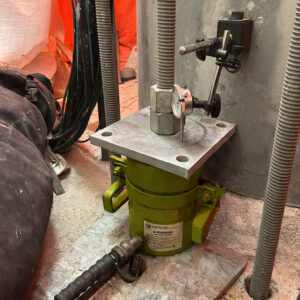
Hydraulic cylinders
Push-pull heads or push cylinders
A hydraulic power unit
Hoses and controls
Blocking or support materials as required
Because the load stays supported throughout the move, skidding systems can be useful for projects where the load needs to travel across a floor, platform, foundation, railcar, trailer, or other planned movement path.
When Should You Use a Skidding System Instead of a Crane?
You should consider using a skidding system instead of a crane when the load needs to move horizontally, headroom is limited, crane access is difficult, ground bearing pressure is a concern, or the job requires controlled movement close to the ground.
A crane is often the best option when a load needs to be lifted vertically, swung into position, or placed over an obstruction. A skidding system is often better suited for moving a heavy load along a planned route without suspending it.
In many projects, the answer is not “crane or skidding system.” The right plan may use both. A crane may unload or position the load initially, while a skidding system moves it into its final location.
1. Use a Skidding System When Headroom Is Limited
A jack and slide system, aka skidding system, is ideal when headroom is limited.
Cranes need vertical space. Depending on the lift, crews may need clearance for the crane boom, rigging, hook, block, spreader beam, slings, and the load itself. In facilities with low overhead clearance, overhead piping, power lines, structural steel, or other obstructions, that vertical space may not be available.
A skidding system keeps the load much closer to the ground. Hydra-Slide systems are designed for low-profile horizontal movement, which can make them useful inside buildings, plants, power facilities, industrial spaces, and tight access areas where overhead lifting is not practical.
If the load does not need to travel upward, and the main requirement is horizontal movement, a skidding system may help reduce headroom concerns.
2. Use a Skidding System When Crane Access Is Restricted
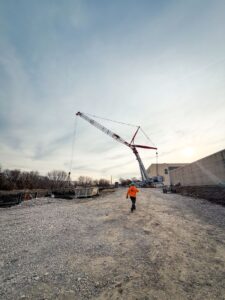
Crane access is not always simple. Large cranes require room for setup, counterweights, outriggers, swing radius, mats, transport vehicles, assembly, and disassembly. Some jobsites do not have the space, ground conditions, or access route needed to bring in the right crane.
A Hydra-Slide skidding system can be transported, assembled, and configured around the movement path. Depending on the system and project, this can make skidding a practical option for interior moves, congested jobsites, narrow access points, and facilities where crane setup space is limited.
This is especially relevant for industrial maintenance, transformer replacements, plant upgrades, and equipment installations where the final location is inside a facility or behind existing infrastructure.
3. Use a Skidding System for Horizontal Load Movement
The Hydra-Slide XLP jack and slide skidding system, moving heavy machinery.
A crane is designed to lift and place loads. A skidding system is designed to move loads horizontally.
If the project requires a heavy load to move from a truck, railcar, doorway, foundation, pad, or staging area into its final position, a hydraulic skidding system may provide a more direct method of movement.
Common horizontal load movement applications include:
Transformer moves
Generator moves
Machinery installation
Machinery removal
Equipment replacement
Pressure vessel movement
Boiler or chiller movement
Railcar or trailer transloading
Power plant maintenance
Industrial facility upgrades
Skidding systems can be especially useful when the load must move in a straight or controlled path and final placement accuracy matters.
4. Use a Skidding System When Ground Bearing Pressure Matters
Crane planning often requires careful review of ground bearing pressure. The crane, counterweights, outriggers, mats, and lifted load can create significant forces on the ground or structure below.
A skidding system can help spread the load along the track and support path, depending on the setup. This may be useful when crews need to move a heavy load across a surface where concentrated crane loads are difficult to manage.
Ground and structural conditions still matter. The track path, blocking, foundations, slab capacity, support points, and any unsupported spans must be reviewed before use. A skidding system does not eliminate engineering considerations, but it may provide a different way to manage load movement compared to a crane lift.
5. Use a Skidding System When Mobilization Is a Challenge
Large cranes can be expensive and time-consuming to mobilize. Depending on the crane size, transportation may require multiple truckloads, permits, assembly time, disassembly time, and a larger crew.
A skidding system may offer a more efficient option for certain horizontal moves, especially when the load does not need to be lifted high or swung into place. For example, some Hydra-Slide systems can be transported more compactly than large crane equipment and assembled around the movement path.
This can be helpful when project schedules are tight, jobsite access is limited, or crane availability is uncertain.
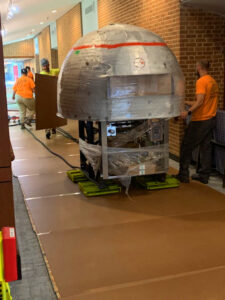
The Hydra-Slide heavy-duty skidding system from LGH, being used to slide cooling units into a data center construction site.
6. Use a Skidding System When Controlled Movement Is the Priority
Hydraulic skidding systems move loads in short, controlled increments. The system pushes or pulls the load along the track, resets, and repeats the movement until the load reaches its destination.
This makes skidding useful when crews need slow, predictable movement rather than suspended movement. Because the load remains supported, crews can monitor the move continuously and make adjustments as needed.
Controlled horizontal movement can be especially valuable when moving sensitive equipment, placing loads in tight tolerances, or working around existing infrastructure.
Skidding System vs. Crane: What Is the Difference?
The biggest difference between a skidding system and a crane is how the load moves.
A crane lifts the load through the air. This is useful when the load must be raised, swung, or placed over an obstruction.
A skidding system moves the load horizontally while it stays supported on a track or slide surface. This is useful when the load needs to move across a defined path and overhead lifting is not practical or necessary.
In simple terms:
Use a crane when the load must be lifted, swung, or placed from above.
Use a skidding system when the load must move horizontally while staying supported close to the ground.
Use both when the project requires unloading, transfer, and final positioning through different stages.
The best option depends on the load, site conditions, clearance, route, schedule, and final placement requirements.
Which Hydra-Slide System Is Right for the Job?
LGH rents multiple Hydra-Slide skidding systems, including XLP models and the HT500 Heavy Track System. The right system depends on load weight, working height, move path, access, and whether the project requires a low-profile or heavy-duty solution.
The Hydra-Slide XLP30 is an extra-low-profile system that can push or pull up to 30 tons. It is hand-portable and useful for lighter loads, indoor machinery moves, tight-access work, and applications where limited jacking height is available.
The Hydra-Slide XLP150 is also an extra-low-profile system and can push or pull up to 150 tons. It is useful for heavier equipment moves where access is limited, overhead restrictions exist, or forklifts are not practical.
The Hydra-Slide HT500 is a heavy-duty skidding system designed to push loads up to 500 tons. It uses rigid steel tracks and is often selected for transformer swaps, large pressure vessels, refineries, power plants, and other heavy industrial moves.
Questions to Ask Before Choosing a Skidding System
Before deciding between a crane and a skidding system, review the full movement plan.
Helpful questions include:
Does the load need to move vertically, horizontally, or both?
What is the load weight?
What is the center of gravity?
How far does the load need to move?
What is the available headroom?
Are there overhead obstructions?
Is crane access available?
Can the ground or structure support the equipment and load?
What is the required final placement tolerance?
Is the movement path level and clear?
Are there pits, gaps, or unsupported spans?
Will the load need to be jacked before skidding?
What system capacity is required?
Is the move taking place inside an active facility?
Answering these questions helps determine whether a hydraulic skidding system, crane, gantry, air skate, jack system, or combination of equipment is the best fit.
Rent Hydra-Slide Skidding Systems from LGH
LGH rents Hydra-Slide skidding systems for heavy load moving, horizontal load movement, transformer moves, industrial maintenance, machinery installation, and other controlled-movement applications.
Our rental specialists can help review your load weight, movement path, clearance, ground conditions, support requirements, and project constraints to determine the right skidding system for your job.
A skidding system can be a practical alternative to a crane when the job requires controlled horizontal movement, limited headroom, restricted access, lower-profile equipment, or a grounded load path. Cranes remain essential for many lifts, but they are not always the best tool when the load mainly needs to move across a defined route.
Hydra-Slide skidding systems help crews move heavy loads while keeping them supported close to the ground. From low-profile XLP systems to the 500-ton HT500 Heavy Track System, LGH offers skidding solutions for a wide range of heavy load-moving applications.
For help deciding when to use a skidding system instead of a crane, contact LGH today or call 800-878-7305 to speak with a rental specialist.
LGH is North America’s largest single organization devoted exclusively to the provision of lifting and moving equipment for rent. LGH holds the most comprehensive inventory for hoisting, rigging, jacking, pulling, material handling, and safety equipment. With over 90,000 pieces, discover your next project solution at RentLGH.com.