Griphoist: How It Works, Features, and Common Applications
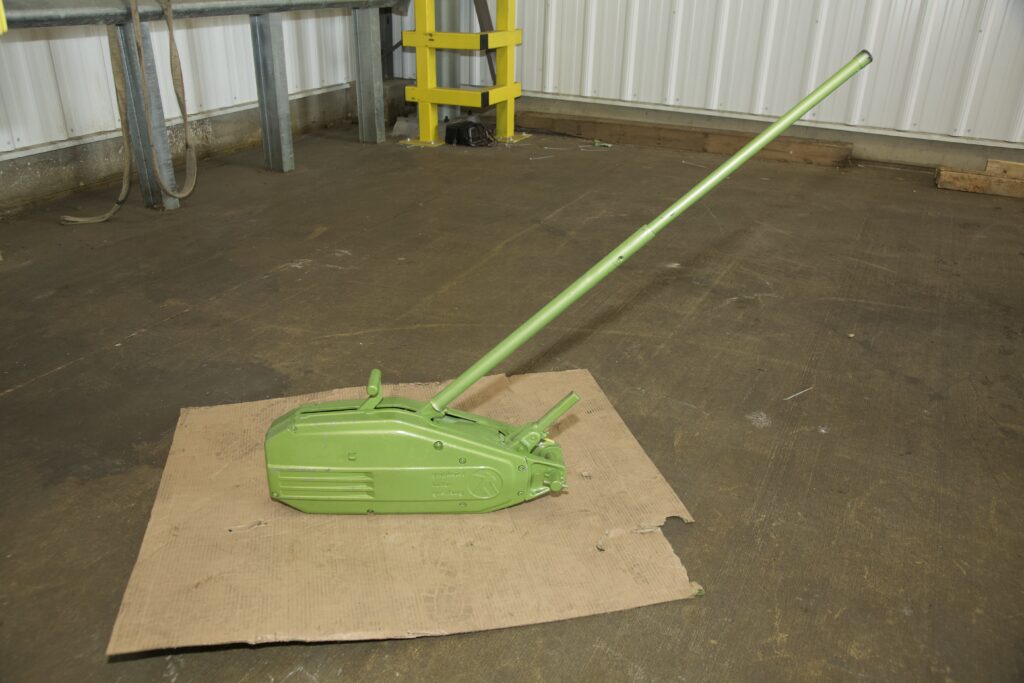
The Tractel TU-32 Griphoist rental from LGH.
A Griphoist is a portable manual wire rope hoist used for lifting, pulling, lowering, tensioning, and positioning loads. Also known as a Tirfor, grip hoist, Tractel Griphoist, manual wire rope hoist, or rope hoist, this tool is valued for its portability, control, and ability to work in areas where powered hoists or winches may not be practical.
Unlike traditional hoists that use chain or drum-stored cable, a Griphoist uses a specialized wire rope that passes through the hoist body. This allows the tool to provide long travel distances, precise load positioning, and controlled movement in horizontal, vertical, or angled applications.
For rigging crews, contractors, maintenance teams, and industrial users, a Griphoist can be one of the most versatile tools on the jobsite.
What Is a Griphoist?
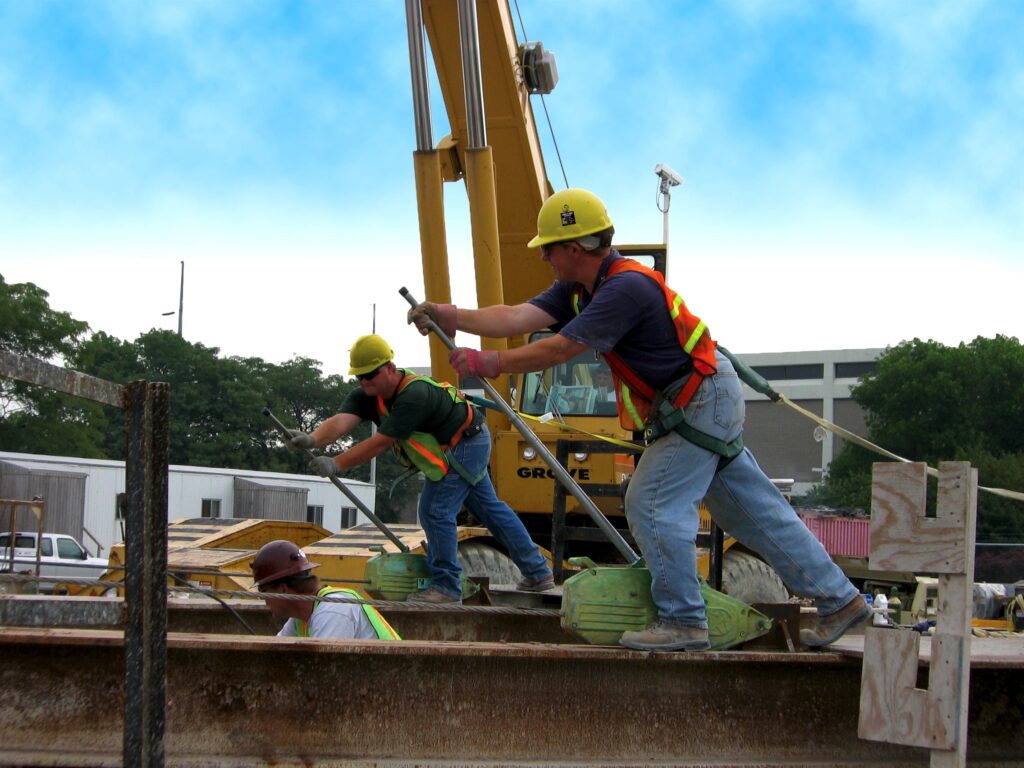
Jobsite construction workers using a Tractel Griphoist rental from LGH to hoist a load.
A Griphoist is a hand-operated wire rope hoist designed to move loads with controlled, incremental force. Depending on the setup, it can be used as a hoist, winch, tensioner, puller, or positioning tool.
Griphoists are commonly used when crews need to move a load but do not have access to electric power, compressed air, a crane, or a larger hoisting system. Because the tool is compact and portable, it works well in remote locations, tight-access areas, confined spaces, and field applications.
Common names for this equipment include:
Griphoist
Grip hoist
Tractel Griphoist
Tirfor
Tractel hoist
Manual wire rope hoist
Wire rope puller
Rope hoist
How Does a Griphoist Work?
A Griphoist operates by using internal jaws that grip and move a special wire rope through the hoist body. As the operator moves the handle, the jaws alternately grip the rope and pull it forward in a hand-over-hand motion.
The wire rope does not wrap around a drum. Instead, it passes straight through the unit. This means the available pulling length or lifting height is limited mainly by the length of wire rope being used.
The operator can use the forward lever to lift, pull, or tension the load. The reverse lever allows the load to be lowered, released, or repositioned in controlled increments.
This design gives the Griphoist precise control, making it useful for alignment, positioning, tensioning, and controlled load movement. Check out our YouTube video below to see a visual demonstration of how a Griphoist works.
Main Features of a Griphoist
The main features of a Griphoist are portability, manual operation, long wire rope travel, precise load control, and the ability to work in multiple orientations.
Key features include:
Manual operation without electric or air power
Specialized wire rope passing through the hoist body
Forward and reverse movement
Precise incremental control
Long pulling or lifting distance with the proper wire rope length
Use in horizontal, vertical, or angled applications
Compact design for tight-access locations
Strong strength-to-weight ratio
Compatibility with accessories such as sheave blocks and swivel hooks
Important note: Griphoists require the correct manufacturer-approved wire rope. Using generic, damaged, or incompatible wire rope can damage the hoist and create serious safety risks.
Griphoist vs. Other Hand Winches
The biggest difference between a Griphoist and many other hand winches is how the rope moves through the tool.
Many hand winches store cable on a drum. As the winch operates, the cable winds onto or off the drum. A Griphoist does not use a drum. Instead, the wire rope passes through the hoist body, allowing for long pulling distances without being limited by drum storage capacity.
This makes a Griphoist especially useful when crews need:
Longer travel distances
Precise load positioning
Compact equipment
Field portability
Manual operation
Pulling, lifting, lowering, or tensioning from different angles
A traditional hand winch may work well for shorter pulls or fixed setups. A Griphoist may be the better choice when the job requires flexibility, portability, and controlled movement over longer distances.
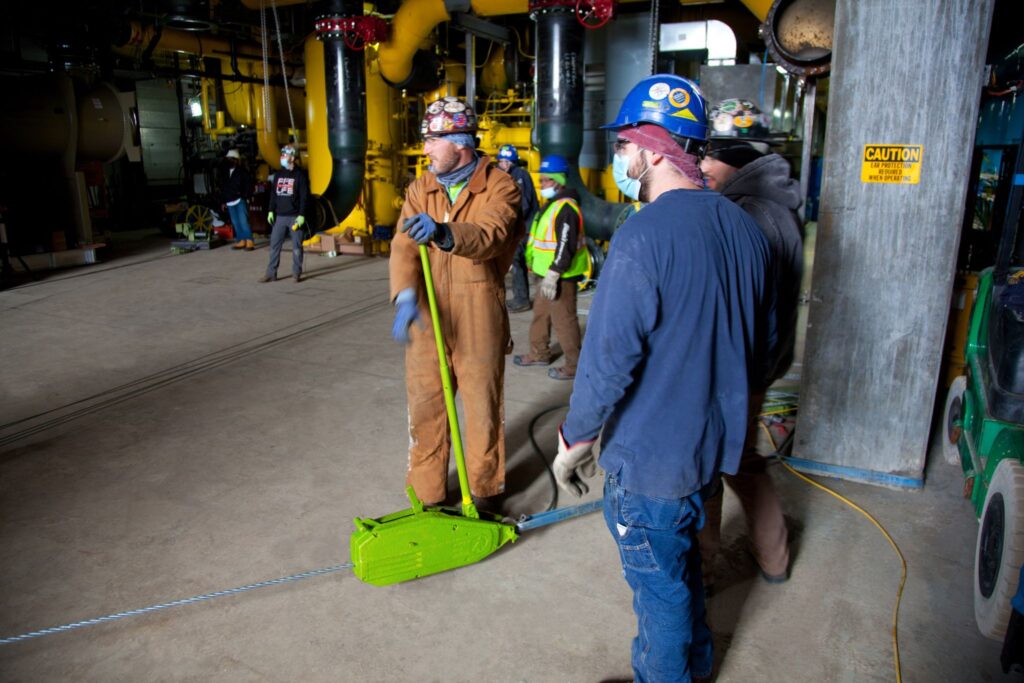
A Tractel Tirfor, aka a Griphoist, being used to move a chiller on an industrial jobsite in Chicago.
What Is a Griphoist Used For?
A Griphoist can be used across many industries because it functions as a hoist, winch, puller, tensioner, and positioning tool. It is especially useful for jobs where larger equipment cannot fit or where the work area does not have power access.
Common Griphoist applications include:
Lifting loads in controlled increments
Pulling machinery into position
Tensioning wire rope, cable, or guy lines
Aligning steel structures
Positioning precast concrete sections
Moving or setting formwork
Installing or removing machinery
Loading and unloading heavy equipment
Pulling or positioning pipe
Bridge, road, and civil construction work
Utility and telecommunications work
Maintenance and repair operations
Rigging in remote or restricted-access areas
Because a Griphoist can be anchored in different orientations, it is useful for horizontal, vertical, and angled applications when the full setup is properly planned and rated.
Construction and Civil Engineering Applications
Griphoists are often used in construction, public works, and civil engineering because they can help move, align, and position loads without requiring powered equipment.
Common construction uses include moving formwork, positioning precast concrete, aligning structural components, lifting work platforms, suspending temporary systems, dragging materials, and tensioning guy ropes.
On jobsites where access is limited or conditions change throughout the day, the portability of a Griphoist makes it a practical option for crews that need controlled pulling or lifting from different locations.
Pipe Laying and Jointing Applications
Griphoists can also be used for pipe laying, pipe alignment, and jointing work. Crews may use a Griphoist to position pipe sections for welding, pull concrete pipes together, or make controlled adjustments during installation.
Because the tool allows gradual movement, it can help crews align pipe sections without relying on larger equipment that may not fit the work area.
Steel Structure Applications
Griphoists are useful for erecting, plumbing, and aligning steel structures. Crews can use them to make small controlled adjustments when positioning beams, frames, silos, and other steel components.
This is one area where the Griphoist’s precise control is especially valuable. Instead of making large movements, crews can apply force incrementally until the component is aligned.
Industrial and Maintenance Applications
In industrial settings, Griphoists are commonly used for installation, removal, and maintenance work. They can help move machine tools, presses, fabricated components, and other heavy equipment.
Industrial crews may use a Griphoist for:
Equipment installation
Equipment removal
Machine positioning
Plant maintenance
Load shifting
Pulling and tensioning operations
Controlled alignment work
Because the tool does not require electricity or compressed air, it can be used in areas where powered equipment is not available or practical.
Elevator, Escalator, Utility, and Telecom Applications
Griphoists are also used in elevator, escalator, utility, and telecommunications work.
For elevator and escalator applications, a Griphoist can help with loading, unloading, positioning, and rigging prefabricated components. For utility and telecommunications work, it can support transformer positioning, aerial and antenna erection, overhead cable tensioning, underground cable work, and guy rope tensioning.
Other industries that may use Griphoists include oil and chemical, mining, quarrying, shipbuilding, marine engineering, rail, road transport, fire services, civil defense, and agriculture.
How Do You Choose the Right Griphoist?
Choosing the right Griphoist starts with the load, direction of pull, required travel distance, and application type. The correct model depends on whether the tool will be used for lifting, pulling, lowering, tensioning, or positioning.
Before choosing a Griphoist, consider:
Load weight
Working load limit
Required wire rope length
Direction of pull
Anchor point rating
Whether the job involves lifting or pulling
Available space
Required precision
Need for sheave blocks or direction changes
Required hooks, wire rope, and rigging accessories
Jobsite conditions and access limitations
The correct wire rope is just as important as the hoist itself. A Griphoist should only be used with the proper wire rope designed for that model.
Griphoist Models Available from LGH
The Tractel TU-32 Griphoist rental inside an LGH rental center.
LGH rents Tractel Griphoist models for lifting, pulling, lowering, tensioning, and positioning applications. Available models include the Griphoist TU-28, Griphoist TU-32, and Griphoist T-532.
The Griphoist TU-28 rental is a practical choice for many pulling, lifting, alignment, and positioning applications where portability and control are important.
The Griphoist TU-32 rental offers a larger capacity option for heavier-duty applications where the load, anchor point, wire rope, and rigging setup are properly rated.
The Griphoist T-532 rental has a 4-ton, or 8,000 lb., nominal capacity. This manual wire rope hoist is designed for lifting and pulling applications where crews need portable power without electricity. It can be used horizontally, vertically, or at an angle, and it is especially useful for longer pulls or higher lifts because the wire rope can be changed out to suit the required travel distance. The T-532 uses 5/8-inch wire rope, weighs 51 lbs., and includes overload shear pins to help protect the hoist if the rated capacity is exceeded.
LGH also carries accessories that can be paired with Griphoists, including:
Sheave blocks
Standard wire rope
Swivel hooks
Wire rope grippers
Rigging hardware
Other compatible lifting and pulling equipment
For more complex setups, sheave blocks may be used to change the direction of pull or increase mechanical advantage when the complete rigging arrangement is properly planned.
Can a Griphoist Be Used for Lifting?
Yes, a Griphoist can be used for certain lifting applications when the equipment, wire rope, anchor point, rigging hardware, and full setup are properly rated. Griphoists are designed for lifting, pulling, lowering, tensioning, and positioning, but users must follow the manufacturer’s instructions and never exceed the rated capacity.
Before lifting with a Griphoist, crews should verify:
Correct Griphoist model
Correct manufacturer-approved wire rope
Proper anchor point
Compatible hooks and rigging hardware
Clear load path
Proper inspection before use
Correct operating procedure
Load weight and working load limit
A Griphoist is a manual tool, but it still requires proper planning, inspection, and qualified use.
Key Advantages of Using a Griphoist
The Griphoist remains a valuable tool because it combines portability, versatility, and precise control.
Key advantages include:
No electric or air power required
Useful in remote or tight-access areas
Long travel distance with proper wire rope length
Precise load positioning
Ability to lift, pull, lower, and tension
Works horizontally, vertically, or at an angle
Compact and portable design
Can be paired with sheave blocks and other rigging accessories
Helpful for construction, infrastructure, utilities, industrial work, and maintenance
For many jobs, the Griphoist is not the largest or fastest option. Its value comes from control, simplicity, and flexibility in difficult conditions. Check out our YouTube video below to learn how to troubleshoot a Tractel Griphoist.
Conclusion
A Griphoist is one of the most versatile manual tools in a rigging setup. It can lift, pull, lower, tension, and position loads using a specialized wire rope that passes through the hoist body. This through-rope design gives crews long travel distance, precise control, and flexibility in locations where powered equipment may not be practical.
From construction and civil engineering to pipe work, steel structures, utilities, industrial maintenance, and equipment positioning, Griphoists support a wide range of lifting and pulling applications.
For help choosing a Griphoist, grip hoist, Tractel Griphoist, or manual wire rope hoist for your next project, contact LGH today or call 800-878-7305 to speak with a rental specialist.
Frequently Asked Questions About Griphoists
What is a Griphoist?
A Griphoist is a portable manual wire rope hoist used for lifting, pulling, lowering, tensioning, and positioning loads. It uses internal jaws to move a specialized wire rope through the hoist body.
Is a Griphoist the same as a Tirfor?
Griphoist and Tirfor are closely related terms and are often used interchangeably in the field. Both refer to Tractel manual wire rope hoists used for controlled lifting, pulling, lowering, and tensioning applications.
Can you explain how a grip hoist operates?
A grip hoist operates by using internal jaws that alternately grip and move wire rope through the hoist body. As the operator moves the handle, the jaws pull the wire rope in controlled increments. The tool can move the rope forward or backward depending on the lever being used.
What are the main features of a grip hoist?
The main features of a grip hoist include manual operation, a through-rope design, forward and reverse movement, precise load control, long wire rope travel, portability, and use in horizontal, vertical, or angled applications.
How do I choose the right grip hoist for my lifting needs?
Choose the right grip hoist by reviewing the load weight, working load limit, lifting or pulling direction, required wire rope length, anchor point, rigging hardware, and jobsite conditions. The wire rope must be compatible with the specific Griphoist model.
Can a Griphoist be used with sheave blocks?
Yes, a Griphoist can be used with sheave blocks when the full rigging setup is properly planned and all components are rated for the load. Sheave blocks can help change the direction of pull or increase mechanical advantage.
What kind of rope does a Griphoist use?
A Griphoist uses specialized wire rope designed for the hoist’s internal jaw mechanism. Generic or incompatible rope should not be used because it can damage the unit or create unsafe operating conditions.
LGH is North America’s largest single organization devoted exclusively to the provision of lifting and moving equipment for rent. LGH holds the most comprehensive inventory for hoisting, rigging, jacking, pulling, material handling, and safety equipment. With over 90,000 pieces, discover your next project solution at RentLGH.com.