What Is a Tirfor? How Tirfor Winches Work and When to Use Them
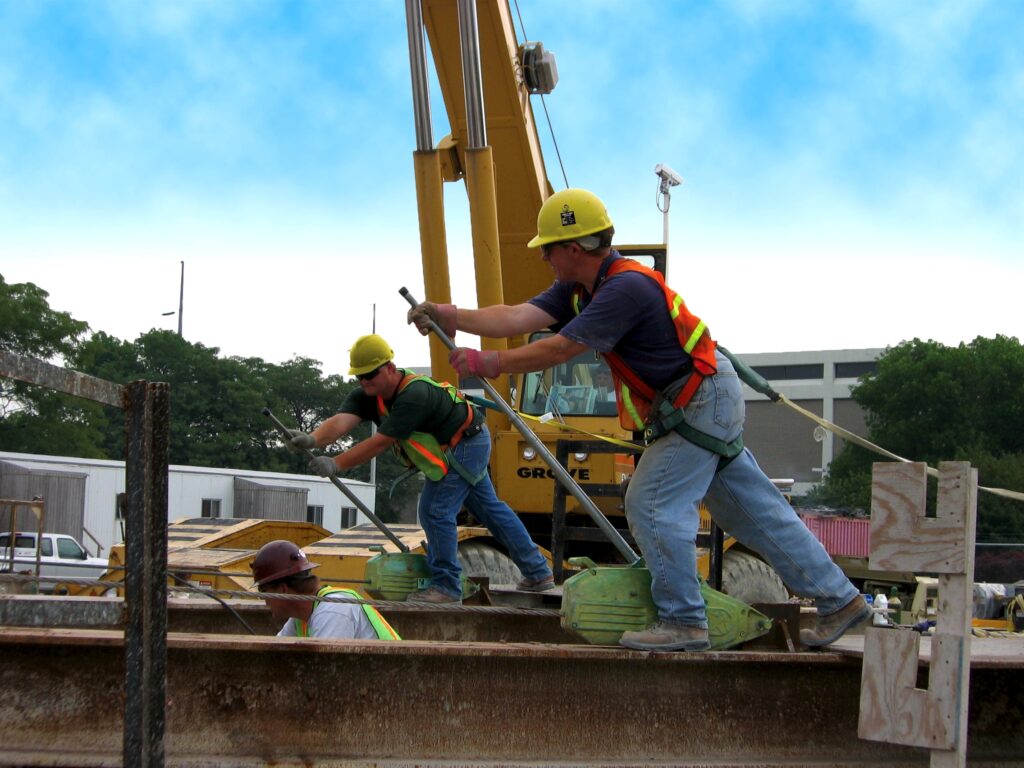
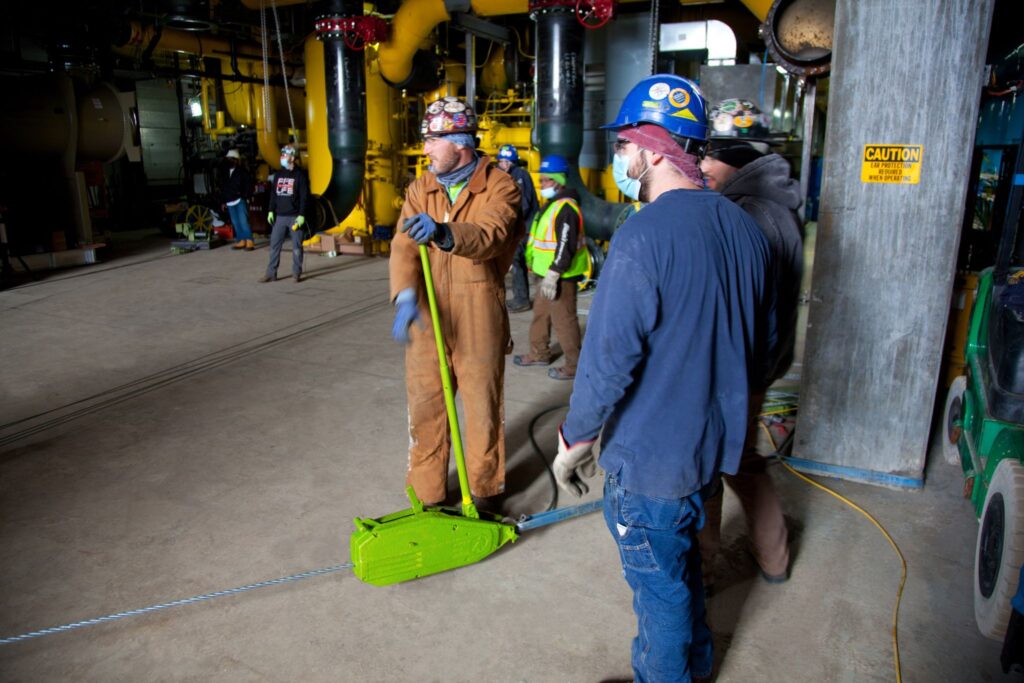
The Tractel Tirfor rental from LGH.
A Tirfor is a portable manual wire rope hoist used for lifting, pulling, lowering, tensioning, and positioning loads. Also commonly known as a “Griphoist,” a Tirfor uses a specialized wire rope that passes through the body of the hoist instead of wrapping around a drum.
In simple terms, a Tirfor is a manual wire rope pulling hoist that grips and moves wire rope through the hoist’s body. Unlike a drum winch, it does not store rope on a drum. This allows a Tirfor winch to pull, lift, lower, or tension loads over longer distances when paired with the proper Tractel wire rope.
Because a Tirfor is compact, portable, and manually operated, it is a useful solution for jobsites where access is limited, power is unavailable, or a load needs to be moved, aligned, or tensioned with accuracy. At LGH, Tirfor winch rentals are commonly rented for construction, infrastructure, maintenance, bridge work, machinery moving, and other heavy-duty applications.
History of the Tirfor
French inventor Mr. Simon Faure originally conceived the design and filed a patent for what eventually became the Tirfor in 1929. This design laid the groundwork for The Tractel Group, which would later acquire a trademark license for the Griphoist.
After extensive testing, the hoist was officially introduced in the early 1940s. Since then, the Tirfor hand winch has become a widely recognized tool for controlled lifting, pulling, lowering, and positioning applications.
Over the years, Tractel has continued to improve the original Tirfor design and protect its technology through additional patents. Improvements have focused on portability, manageability, lighter weight, quick installation, and more precise load placement.
How Does a Tirfor Work?
A Tirfor works by using internal jaw mechanisms that grip the wire rope and move it through the hoist body. As the operator moves the handle, the jaws alternately grip and release the rope, pulling it through the unit in controlled increments.
The operator can use the forward lever to pull or lift the load, or the reverse lever to lower, release, or reposition the load. The greater the load, the tighter the jaw mechanism grips the wire rope.
Because the wire rope moves through the hoist instead of winding onto a drum, the available pulling length or lifting height depends largely on the length of wire rope being used. This makes the Tirfor useful for applications where the load must be moved gradually, positioned accurately, or tensioned across a longer distance.
Is a Tirfor a Wire Rope Hoist?
Yes, a Tirfor is a type of manual wire rope hoist. It is also commonly described as a wire rope puller, wire rope pulling hoist, or Tirfor hand winch.
The key difference is that a Tirfor uses a through-rope design. The wire rope passes through the body of the hoist instead of wrapping onto a drum. This makes it especially useful when long travel distance, portability, and precise manual control are needed.
What Is a Tirfor Used For?
Jobsite workers using Tractel Tirfor rentals from LGH.
A Tirfor is used when a load needs to be lifted, pulled, lowered, tensioned, or positioned manually. Its portability and control make it especially useful in areas where larger hoists, powered winches, or cranes may not be practical.
Common applications include:
Pulling heavy machinery into position
Lifting or lowering equipment in controlled increments
Tensioning wire rope, cable, or structural systems
Aligning steel, pipe, or fabricated components
Bridge and roadwork applications
Utility and infrastructure maintenance
Load shifting in confined or hard-to-access areas
Recovery, pulling, and positioning tasks
Because a Tirfor can be anchored in different orientations, it can be used in horizontal, vertical, or angled pulling applications when the setup is properly planned and all components are rated for the load.
Tirfor Winch vs. Other Hand Winches
The main difference between a Tirfor winch and many other hand winches is how the wire rope moves through the tool. A traditional hand winch usually stores cable on a drum. As the handle turns, the drum winds or unwinds the cable.
A Tirfor does not use a drum. Instead, the wire rope passes straight through the hoist body. Internal jaw mechanisms grip the rope and move it forward or backward in controlled increments.
This design gives the Tirfor several advantages:
Longer pulling or lifting distances with the proper wire rope length
Precise forward and reverse control
No drum capacity limitation
Portable setup for remote or tight-access jobsites
Use in horizontal, vertical, or angled applications when properly configured
Manual operation without electric or air power
Traditional hand winches may work well for shorter pulls where cable storage on a drum is helpful. A Tirfor hand winch is often better when the job requires long travel, precise positioning, or flexibility in the field.
Can Tirfor Winches Be Used for Heavy-Duty Lifting?
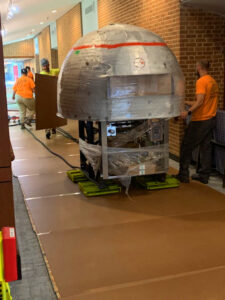
A Tirfor rental from LGH, aka a griphoist, being used to move a chiller on an industrial jobsite in Chicago.
Yes, Tirfor winches can be used for certain heavy-duty lifting tasks when the equipment, wire rope, anchor point, and rigging hardware are properly rated for the load. A Tirfor is designed for lifting, pulling, lowering, tensioning, and positioning, but the full setup must be evaluated before use.
For lifting applications, crews should confirm:
The Tirfor model has the correct working load limit.
The wire rope is the correct Tractel rope for the unit.
The anchor point is properly rated.
Shackles, hooks, sheave blocks, and rigging hardware match the application.
The load path is clear.
The operator follows the manufacturer’s instructions.
Tirfor winches are useful because they provide controlled manual movement without electric or air power. However, they should never be used beyond their rated capacity or with damaged, incorrect, or incompatible wire rope.
Tirfor Models Available from LGH
LGH offers Tractel Tirfor and Griphoist models for rental, including the TU-28, TU-32, and T-532. These manual wire rope hoists are used for lifting, pulling, lowering, tensioning, and positioning applications where portability and control are important.
LGH also carries accessories that may be used with Tirfor setups, including:
Sheave blocks
Standard wire rope
Swivel hooks
Wire rope grippers
Rigging hardware
Other compatible lifting and pulling equipment
The right Tirfor setup depends on the load weight, direction of pull, required travel distance, anchor point, rigging arrangement, and whether the application involves lifting, pulling, or tensioning.
Key Benefits of a Tirfor
The Tirfor remains a popular jobsite tool because it combines portability with precise load movement. It does not require electric or air power, which makes it useful in remote areas, tight-access locations, and temporary setups.
Key benefits include:
Portable manual operation
Precise lifting, pulling, lowering, and tensioning
Long travel distance with the proper wire rope length
Useful in horizontal, vertical, and angled applications
No electric or air power required
Effective for confined or hard-to-access jobsites
Compatible with accessories such as sheave blocks and swivel hooks
Versatile use across construction, maintenance, utilities, and infrastructure work
Conclusion
A Tirfor is a versatile manual wire rope hoist that gives crews a portable and precise way to lift, pull, lower, tension, and position loads. Unlike a traditional drum winch, it does not store cable on a drum. Instead, the Tirfor moves wire rope through the hoist body, allowing for long travel distances and controlled load movement.
Whether it is used for machinery moving, bridge work, cable tensioning, load shifting, or general rigging applications, the Tirfor remains a valuable tool for jobsites that require strength, portability, and accuracy.
LGH offers Tractel Tirfor and Griphoist models for rent, including the TU-28, TU-32, and T-532, along with accessories such as sheave blocks, wire rope, swivel hooks, and wire rope grippers. For help choosing the right Tirfor for your next project, contact an LGH lifting expert at 800-878-7305 or visit RentLGH.com/contact.
Frequently Asked Questions About Tirfor Winches
What is a Tirfor?
A Tirfor is a manual wire rope hoist used for lifting, pulling, lowering, tensioning, and positioning loads. It uses a specialized wire rope that passes through the hoist body instead of winding onto a drum.
Is a Tirfor the same as a Griphoist?
Tirfor and Griphoist are often used interchangeably in the field. Both terms refer to Tractel’s manual wire rope hoist technology used for controlled lifting and pulling applications.
What is the difference between a Tirfor and a winch?
A traditional winch winds cable onto a drum. A Tirfor grips a separate wire rope and moves it through the hoist body. This allows for longer pulling lengths and makes the unit highly portable.
What are the main differences between Tirfor winches and other types of hand winches?
A Tirfor uses internal jaws to grip and move wire rope through the hoist body. Many other hand winches wind cable onto a drum. Because the Tirfor does not rely on drum storage, it can support longer pulling or lifting distances when paired with the proper wire rope.
Can Tirfor winches be used for heavy-duty lifting tasks?
Yes, Tirfor winches can be used for certain heavy-duty lifting tasks when the model, wire rope, anchor point, and rigging hardware are properly rated. Users should always follow the manufacturer’s instructions and confirm the full lifting setup before use.
What kind of rope does a Tirfor use?
A Tirfor uses specialized wire rope designed for use with the hoist’s internal jaw mechanism. The correct rope type, diameter, and condition are essential for safe operation.
Where are Tirfor winches commonly used?
Tirfor winches are commonly used in construction, bridge work, roadwork, machinery moving, infrastructure maintenance, utilities, cable tensioning, load shifting, and other industrial applications.
Citations
“Tractel Tirfor Machines: Original & Best, the Rest is History.”
https://www.specialisedforce.com.au, Specialised Force Pty Ltd, 2017,
LGH is North America’s largest single organization devoted exclusively to the provision of lifting and moving equipment for rent. LGH holds the most comprehensive inventory for hoisting, rigging, jacking, pulling, material handling, and safety equipment. With over 90,000 pieces, discover your next project solution at RentLGH.com.