LGH Blog

Category: Rigging Tips and Techniques

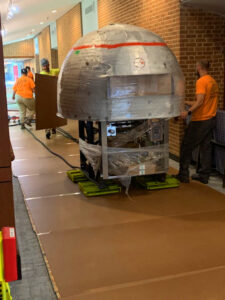
Wire rope slings and sheave blocks lifting a circular dome tank.

What is the D/d Ratio?

What You Should Know about the D/d Ratio You’ve likely come across the term “D/d ratio” in previous research and real-world applications. It’s a fundamental concept in rigging, crucial for ensuring the safety and efficiency of your operations. Let’s demystify the D/d ratio together and explore its vital role in rigging practices. The D/d ratio […]

Read More
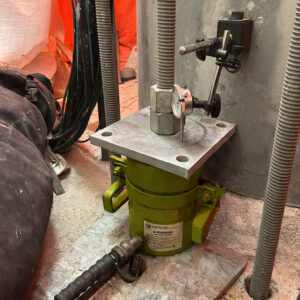
A hydraulic ram cylinder from LGH supporting a bridge

What is Point Loading?

When talking about rigging, finding the distribution of a load is critical in knowing whether it is safe to proceed or if the rigging plan needs additional work. This brings up the question: What is point loading and how does it affect a lift?

Read More

Minifor Hoist Misuses: 5 Mistakes to Avoid

Minifor Hoist Misuses: 5 Mistakes to Avoid A Minifor hoist is a portable electric cable hoist used for lightweight lifting applications where crews need a compact, easy-to-position lifting solution. Manufactured by Tractel, Minifor hoists are known for portability, fast setup, pendant control, and unlimited lifting height when paired with the proper wire rope. LGH rents […]

Read More

Gantry Crane Safety Tips: 5 Mistakes to Avoid

Gantry Crane Safety Tips: 5 Mistakes to Avoid Gantry cranes are portable lifting solutions used across construction, maintenance, industrial, HVAC, and equipment handling applications. Their A-frame design, adjustable height, adjustable span, and heavy-duty casters make them useful when crews need a temporary lifting point without installing a permanent overhead structure. However, safe operation depends on […]

Read More

Wire Rope Clips: What Does “Never Saddle a Dead Horse” Mean?

“Never Saddle a Dead Horse”: Explained It’s a familiar-sounding phrase, but what does “never saddle a dead horse” mean? The phrase is a rhetorical device that relates to wire rope. Wire rope is an exceptionally versatile tool for heavy hoisting and pulling applications. With its high tensile strength, light weight, and flexibility, wire rope is […]

Read More
A visual demonstration of the pythagoras theorem, also known as the pythagorean theorem

What is Pythagoras’ Theorem?

What is Pythagoras’ Theorem? We’re glad you asked! Pythagoras’ Theorem, also called the Pythagorean Theorem, is a geometry formula discovered by the ancient Greek mathematician Pythagoras sometime between 569 – 475 BC. The theorem states that the square of the hypotenuse of a right triangle is equal to the sum of the squares of the other […]

Read More

Effect of Angles on Sling Capacities

The Effect of Angles on Sling Capacities The effect of sling angles on sling capacity refers to how tension increases on each sling leg as the sling angle decreases from vertical. When sling angles become smaller, each sling leg must carry more force, which reduces the safe working capacity of the sling. Using slings at […]

Read More

Top 5 Misuses of Hand Chain Hoists

5 Hand Chain Hoist Misuses You Need to Avoid One of the most commonly used pieces of lifting equipment is the hand chain hoist, also known as a chain fall. They are durable, portable, and designed to help crews lift and position heavy loads with controlled manual effort. However, even a rugged hand chain hoist […]

Read More
graphic for do'sand dont's of shackles

Do’s & Dont’s With Lifting Shackles

How to Properly Use Lifting Shackles Shackles come in many types and may be used in various rigging and load securement applications. However, as with all equipment, certain guidelines must be followed to ensure lifting shackle safety during operations! This blog post highlights some common “do’s and dont’s” when it comes to using lifting shackles. […]

Read More
Riggers rigging up a load on a jobsite in safety gear.

4 Common Rigging Mistakes and How To Avoid Them

This post will walk you through four of the most common mistakes seen during rigging operations and guide you on how to avoid them during your next lift.

Read More